The New Rules of Going Global for Britain’s Founders
Jagdeep Rai explains how ambitious UK businesses can scale globally.
HSBC UK
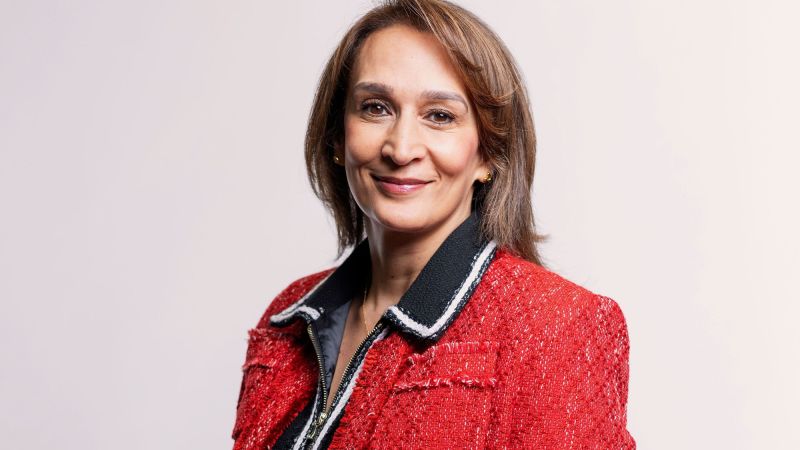
Jagdeep Rai, Managing Director and Head of UK Client Coverage, SME Business Banking
Opinions expressed by Entrepreneur contributors are their own.
You're reading Entrepreneur United Kingdom, an international franchise of Entrepreneur Media.
As Managing Director and Head of UK Client Coverage, SME Business Banking at HSBC UK, Jagdeep Rai meets ambitious business owners across the country every day. What she sees is a UK with no shortage of ideas, optimism or entrepreneurial nerve. The challenge, she believes, is turning that ambition into something that can last: businesses that are ready to finance growth, ready to scale and ready to take on the world. There comes a point when a business stops being just an idea and the questions become more practical. The customers are there. The opportunity is there. Perhaps the next big contract is within reach, or a new market is opening up. But what happens next? Can the business afford to grow at the pace it wants to? Is there enough cash to support it? Are the margins right? Does it have the people and processes in place to deliver? And, perhaps most importantly, can it keep growing without everything resting on the founder? For Rai, these are not theoretical questions. They are conversations she has with business owners across the UK every day.
“A great idea may have been enough in the past, but actually is no longer enough on its own,” she says. What she does see, though, is plenty of appetite. “One thing that you can’t fault is ambition, that desire for entrepreneurialism,” Rai says. “There’s a massive resilience.” You can hear the enthusiasm in the way she talks about the entrepreneurs she meets at HSBC events around the country. These are business owners coming together to learn, compare notes and make connections – and Rai clearly enjoys being in the room with them. “They’re ambitious, they’re positive,” she says. “I just get so energised when I talk to all of them.” That optimism is striking, particularly after the economic shocks and uncertainty businesses have had to contend with in recent years. But Rai doesn’t confuse optimism with readiness. For her, the next step is making sure businesses have the foundations to turn ambition into sustainable growth.
“The UK has the entrepreneurial momentum, that’s not the challenge,” she says. “The opportunity now is helping more viable SMEs get finance ready early on so that they can turn that growth ambition into scale and jobs across the country.” For Rai, being “finance ready” is about much more than securing funding. It means understanding the numbers, proving customer demand, having credible forecasts and cash-flow plans, putting proper governance in place and building a business that can grow without everything depending on one person. Entrepreneurship has always had a soft spot for the idea. The lightbulb moment. The founder who sees something everyone else missed. The product that changes an industry. The company that starts around a kitchen table and ends up operating across continents. Rai isn’t dismissing any of that. But once a business starts to grow, she says, the focus has to shift. The founder needs to know whether the business can actually support the ambition behind it. That means understanding unit economics. Knowing how much it costs to acquire and serve customers. Watching cash carefully. Proving that demand is real. Putting governance around the organisation. And, increasingly, building a team and infrastructure capable of repeating the founder’s success without requiring the founder to personally intervene in everything.
The distinction becomes even more important when the ambition is international. A founder may be able to run a £1m business through instinct and sheer force of personality. Running a £10m business is different. Running one across several countries is different again. At some point, the organisation has to become bigger than the individual who created it. Rai talks about the importance of “repeatable execution”. Rather than relying on one person to hold everything together, the business needs “the right infrastructure around them”. Founders are often celebrated for doing everything themselves. They make the sales calls. They negotiate with suppliers. They know the customers. They understand the product intimately. In the early days, that can be exactly what a business needs. But what works at the beginning can become a weakness later. If everything depends on one person, the company hasn’t really scaled. The founder has simply become very good at carrying more. The businesses that make the transition are the ones that start building the organisation around the growth. Rai has a neat shorthand for what she sees as the foundations of that process: the three Ds – Demand. Delivery. Discipline. “The businesses that we see scaling internationally or globally are the ones that get the fundamentals right.”
First comes demand. Not assumed demand, but evidence. Are customers buying? Are they coming back? Is there genuine traction and retention? Then delivery. Can the organisation fulfil what it has sold? Does it have the right people, processes and operational capacity? And finally, discipline – particularly when it comes to cash. “Having that cash discipline, really credible forecasting and that governance to manage growth without over stretching themselves.” It is easy to underestimate how quickly growth can consume cash. A larger order may mean buying inventory before the customer pays. A new market may mean employing people before revenue arrives. International customers may work on longer payment terms. Foreign exchange movements can affect margins. A business can therefore look extremely successful from the outside while feeling quite different from the inside. “The best founders are those that see scaling is an organisational challenge, not simply that sales target.” The question is what happens underneath the sales figure. Who is delivering the product? Who is making the decisions? What happens if demand doubles? Where does the cash come from? And what happens when the founder isn’t there? “Winning more customers and getting more business through the front door only creates value if the business can continue to serve them well.”
That distinction – between growth and scale – runs through much of Rai’s thinking. Growth brings in more business. Scale means having an organisation capable of absorbing it. Rai also advises businesses to have the finance conversation before they need it. One of the mistakes she sees is businesses waiting until the need for money becomes urgent before thinking about how to obtain it. By then, the conversation has changed. “The best-prepared SME founders are the ones who are really clear about what the finance is going to unlock for them.” It starts with a basic question: what is the money for? Working capital? Equipment? Entering a new market? Longer-term growth? Being clear about that forces the entrepreneur to think through the business itself. How much is needed? When is it needed? What will it generate? What evidence exists to support the plan? Rai says businesses can struggle when they leave those conversations too late. “Where we see businesses struggle is when they leave the conversation about finance until it’s really urgent.”
Preparation gives businesses options. It also gives a potential funder something to work with: a track record, credible forecasts, management information, realistic cash flows and a clear explanation of what the company is trying to do. “And that story is really important because it needs to be supported by realistic forecasts, clear cash flows and good governance.” But Rai is keen to move the conversation beyond money. “Finance is one thing, but also that capability support is equally important.” That means knowing where to get advice. Finding mentors. Meeting other founders. Learning from people who have already made mistakes that you would rather not repeat. It is part of the thinking behind HSBC UK’s Small Business Growth Programme, which Rai says has reached more than two million SMEs in the last year, providing training, events and insights alongside financial support. For a small business owner, those connections can be surprisingly valuable. Sometimes the most useful thing another entrepreneur can give you isn’t money. It is five minutes of experience. There is a more uncomfortable question running through Rai’s thinking, however. Who gets the chance to build these businesses in the first place? “Opportunity definitely isn’t evenly distributed.”
She points to significant disparities in access to venture capital and investment for female-only teams and Black founders, alongside the much greater barriers reported by disabled founders. The figures she cites are stark: female-only teams received just 2% of venture capital in 2024, while Black founders captured 0.9% of investment value between 2013 and 2023. Disabled founders, she says, are reported to be 400 times less likely to secure investment.
These statistics need to be understood carefully and in context, but Rai’s underlying point is straightforward. A country’s entrepreneurial potential cannot be measured only by the businesses that are already visible. There may be viable founders who have not yet found the right networks, advisers, customers or sources of capital. And if those people remain invisible, the economic cost is potentially much wider than the fortunes of individual businesses. “The opportunity is to make more viable founders visible, connected, and ready to turn that momentum into real scale, jobs and prosperity across every region across the UK.” It is a striking formulation. Not simply funded. Visible. Connected. Ready. Those three words broaden the conversation about access. Money matters, obviously. But so does knowing where to find it. So does having someone who can explain the process. So does meeting the customer who might become the breakthrough account. And so does having a network that isn’t limited to people who look, sound or operate like you.
For Rai, some of the answers may already be sitting inside existing systems. “One of the biggest missed opportunities isn’t necessarily a shortage of money,” she says. “It’s actually not making full use of the pathways and the support that’s already available.” She points to existing institutions and programmes, the expansion of Community Development Finance Institutions, better use of public data and changes to business support. Her conclusion is provocative precisely because it is not simply another demand for more capital. “Backing more viable business through better pathways. Not necessarily through more money.” The temptation to expand internationally is understandable. Once a business has proved itself in Britain, the world can look like the obvious next step. But Rai’s view of international growth is much less romantic. “Scaling internationally isn’t just selling more, it’s building the capabilities, the funding, the headroom to operate really reliably in new markets.”
International expansion brings logistics, payment terms, foreign exchange exposure, longer cash cycles and working capital requirements. There are different regulatory and commercial environments, different customer expectations and, potentially, an organisation that becomes much more complicated almost overnight. The strongest businesses don’t simply take their UK model and drop it into another country. “They choose those markets deliberately,” Rai says. They test demand. They think about how the proposition will work locally. And, crucially, they build relationships. “The strongest ones we see really look at their local market and how that will work with their local partnerships.” Being global doesn’t mean behaving identically everywhere. A business may have a global product, but customers are still local. Regulations are local. Business culture is local. Distribution is local. The companies that understand that distinction have a better chance of building something that lasts. There is another trap, too: trying to conquer too much territory too quickly. Rai sees businesses enter too many markets at once, underestimate the operational complexity and fail to put enough resources behind the move. It is a reminder that ambition can have a downside. You can want something very badly and still not be ready for it. “Scaling internationally isn’t just selling more,” Rai repeats. “It’s building the capabilities, the funding and the headroom to operate really reliably in new markets.”
The implication is almost counterintuitive. Sometimes the most ambitious thing an entrepreneur can do is move more slowly. Pick one market. Prove the model. Build the local relationships. Make sure the business can finance the journey. Then go again. It is inevitable that the conversation comes back to HSBC. But Rai’s definition of the bank’s role is broader than simply providing capital. “A bank’s role goes well beyond money.” HSBC UK supports more than 675,000 SME customers, according to Rai, and she describes the bank’s role as helping businesses understand finance readiness, strengthen the information behind their plans and navigate the different options available at different stages of growth. That can mean lending. It can mean broker routes. It can mean pre-approved lending. And where conventional finance isn’t appropriate, it can mean referrals to alternative providers. Rai highlights Community Development Finance Institutions as one route that can help broaden access for underserved communities. The principle is that there should be a clearer route to the right finance, at the right time, for the right business. But perhaps the more interesting part is what happens around finance. HSBC’s Small Business Growth Programme continues to expand, alongside its Strategies for Success programme and women’s business growth initiatives. There is a growing emphasis on events, information and connections. And Rai clearly enjoys this part of the work. She talks about travelling around the country and seeing local entrepreneurs gather in the same room. “Honestly, the buzz in the room.” They are, she says, “hungry for knowledge, hungry to meet new people”. For all the talk of capital, forecasts and governance, the thing that seems to energise her most is people. Founders talking to founders. Business owners asking questions. Entrepreneurs comparing experiences. Someone discovering a new route into a market. Someone else hearing about a mistake they can now avoid. It is the human infrastructure of entrepreneurship. And Rai is clearly a believer in it.
So what happens next? What will distinguish the entrepreneurs who thrive in a more competitive global economy? Rai’s answer begins with a word she admits is one of her favourites. “Execution.” There are more fashionable words in the entrepreneurial vocabulary. Innovation. Disruption. Transformation. But execution is where all of them become real. “I think the successful founders of the future who will thrive will innovate. They’ll build resilience. They’ll be very adaptable.” They will remain disciplined around cash and customer value. They will build proper governance. They will use the networks and support systems around them. And they will understand that being international does not mean losing touch with the individual markets that make up that international business. “They’ll be globally minded, but locally rooted.” It is perhaps the cleanest expression of Rai’s philosophy. The global entrepreneur of the future will need to think beyond their home market while understanding it better than ever.
For Rai, the entrepreneurs who will thrive in the next phase of the global economy won’t be defined by ambition alone. They will be the ones who can turn ambition into something tangible: a business with the customers, cash discipline, people and infrastructure to support its growth. And perhaps that is the real opportunity for Britain’s entrepreneurial economy – not simply to produce more great ideas, but to help more of those ideas become businesses capable of going the distance.
“Ultimately the global winners will be founders who pair ambition with execution, who can prove viability in a way that unlocks that capital partnership and long-term scale.”
As Managing Director and Head of UK Client Coverage, SME Business Banking at HSBC UK, Jagdeep Rai meets ambitious business owners across the country every day. What she sees is a UK with no shortage of ideas, optimism or entrepreneurial nerve. The challenge, she believes, is turning that ambition into something that can last: businesses that are ready to finance growth, ready to scale and ready to take on the world. There comes a point when a business stops being just an idea and the questions become more practical. The customers are there. The opportunity is there. Perhaps the next big contract is within reach, or a new market is opening up. But what happens next? Can the business afford to grow at the pace it wants to? Is there enough cash to support it? Are the margins right? Does it have the people and processes in place to deliver? And, perhaps most importantly, can it keep growing without everything resting on the founder? For Rai, these are not theoretical questions. They are conversations she has with business owners across the UK every day.
“A great idea may have been enough in the past, but actually is no longer enough on its own,” she says. What she does see, though, is plenty of appetite. “One thing that you can’t fault is ambition, that desire for entrepreneurialism,” Rai says. “There’s a massive resilience.” You can hear the enthusiasm in the way she talks about the entrepreneurs she meets at HSBC events around the country. These are business owners coming together to learn, compare notes and make connections – and Rai clearly enjoys being in the room with them. “They’re ambitious, they’re positive,” she says. “I just get so energised when I talk to all of them.” That optimism is striking, particularly after the economic shocks and uncertainty businesses have had to contend with in recent years. But Rai doesn’t confuse optimism with readiness. For her, the next step is making sure businesses have the foundations to turn ambition into sustainable growth.
“The UK has the entrepreneurial momentum, that’s not the challenge,” she says. “The opportunity now is helping more viable SMEs get finance ready early on so that they can turn that growth ambition into scale and jobs across the country.” For Rai, being “finance ready” is about much more than securing funding. It means understanding the numbers, proving customer demand, having credible forecasts and cash-flow plans, putting proper governance in place and building a business that can grow without everything depending on one person. Entrepreneurship has always had a soft spot for the idea. The lightbulb moment. The founder who sees something everyone else missed. The product that changes an industry. The company that starts around a kitchen table and ends up operating across continents. Rai isn’t dismissing any of that. But once a business starts to grow, she says, the focus has to shift. The founder needs to know whether the business can actually support the ambition behind it. That means understanding unit economics. Knowing how much it costs to acquire and serve customers. Watching cash carefully. Proving that demand is real. Putting governance around the organisation. And, increasingly, building a team and infrastructure capable of repeating the founder’s success without requiring the founder to personally intervene in everything.

Patricia Cullen • Features Writer
Entrepreneur Staff