John Crowley’s Middle Ground: A Pragmatic Path to Energy System Transformation
PHGD Group
The global energy system is straining under the weight of outdated design. Large power stations and sprawling transmission lines once suited the industrial age. Today, they struggle to integrate renewable technologies, electrified transport, and rapidly rising digital demand. Costs of grid expansion remain high, and resistance to new infrastructure is growing. The result is a system needing profound rethinking.
John Crowley, Chairman and CEO of PHGD Group, has emerged as a leading voice advocating for systemic transformation. He offers a vision that seeks to modernize electricity networks without abandoning the foundations already in place.
Crowley’s insights were shaped by a combination of experiences across energy, academia, and international governance. His career began in the energy industry, where he gained direct exposure to electricity markets during the liberalization era in Europe. This early grounding in energy systems provided both technical and structural insight into how grids function.
He later pursued an academic path in political science, focusing on comparative politics and climate-related transformations. From there, he transitioned into a senior role at a major international institution, where he worked on foresight, ethics of science and technology, and environmental change. Listed as an expert on UNESCO’s Inclusive Policy Lab, he is recognized for his expertise in environmental policy, social transformation, global ethics, and sustainable development.
This trajectory shaped Crowley’s approach to energy transition. His decades in research and governance revealed the limitations of abstract policy-making detached from tangible outcomes, while his industry background underscored the inertia of legacy systems. PHGD Group was founded as a response to that insight, an attempt to merge technical innovation with practical deployment.
“We can’t wait for a perfect, brand-new system to appear,” Crowley says. “We have to work within the infrastructure we already have, while at the same time preparing it for a decentralized future. Right now, we’re trying to bolt 21st-century technology onto 20th-century infrastructure. We aren’t there yet, but we are on our way, and when we get there, its implications will be deeply transformative.”
The diagnosis is widely shared among observers of electricity markets. Wholesale price fluctuations across Europe, including episodes of negative pricing, have highlighted structural weaknesses. Centralized grid design, built for predictable baseload generation, cannot easily accommodate variable renewable output.
“You can’t fix these structural inefficiencies with a bit of patchwork here and there. Expanding the grid through new transmission projects is often very costly, which is why consumers, regulators, and investors are all looking for alternatives,” Crowley remarks.
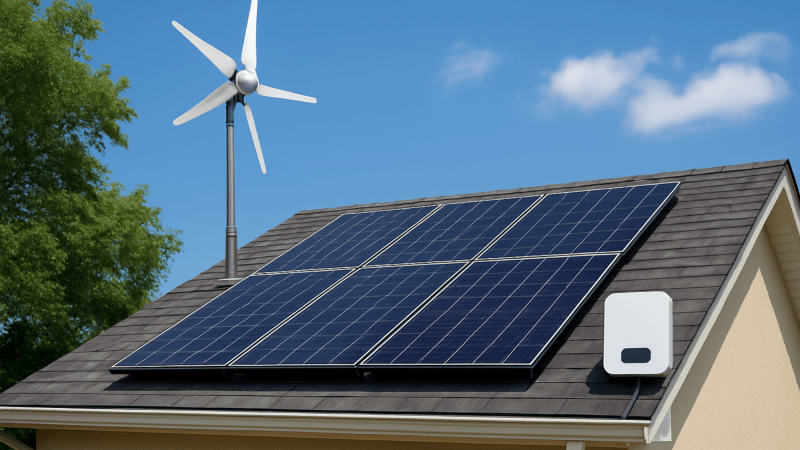
His response emphasizes a systemic shift in inverting the logic of energy provision, allowing consumers to become producers as well. Instead of concentrating production in GW-scale facilities, a decentralized framework distributes generation across rooftops, community sites, and industrial facilities.
Such a system leverages proximity to demand, reduces dependence on long-distance transmission, and allows modular growth that adapts to emerging needs. The rise of data centers illustrates the urgency of this approach. Energy-intensive digital infrastructure cannot wait for up to a decade for new grid connections, making local or on-site generation a necessity.
Yet, systemic change isn’t just about technology. In many cases, regulatory frameworks can slow or complicate the deployment of small-scale, behind-the-meter solutions, even when the technology itself is ready. In some regions, codes or interconnection rules may inadvertently make innovation more difficult, while in others, supportive policies seem to encourage faster adoption.
Cultural expectations can also influence how change unfolds. For those more familiar with top-down systems, the transition to seeing themselves as active participants in energy production can take time. After all, it involves a shift in mindset and roles. Crowley highlights these institutional and cultural factors as key considerations in shaping the transition.
To overcome these obstacles, Crowley advocates what he calls the “middle ground.” This approach builds new capacity within the framework of existing infrastructure, allowing a gradual transition rather than an abrupt rupture. The middle ground acknowledges sunk investments in legacy grids while creating pathways for distributed energy to grow alongside them.
“This acknowledges that real transformation works best when it builds on, rather than battles against, entrenched systems,” Crowley says. “That’s why pilot projects are so important. They act as proofs of concept, helping to shift regulatory attitudes, attract investment, and make new models of energy provision feel normal and achievable.”
An illustration of this principle can be found in Flexeole, a project developed under the PHGD Group umbrella. Rather than focusing exclusively on large offshore turbines or rooftop solar, Flexeole addresses a neglected segment: mid-sized wind.
Compact yet powerful enough to supply farms, cooperatives, or small industrial sites, these turbines provide a scale that bridges the gap between household panels and utility-scale projects. Importantly, throughout Europe, they also balance the seasonal variability of solar power, producing more consistently during winter months when solar generation declines. By integrating such solutions, communities can gain greater autonomy while maintaining grid connectivity.
Ultimately, Crowley’s perspective reframes the debate about energy futures. Instead of choosing between maintaining legacy systems or dismantling them entirely, his vision highlights the practical benefits of layered, adaptive design. Decentralized production, smarter regulation, and selective reinforcement of transmission networks can coexist, reducing costs while increasing resilience. The outcome is a new relationship between consumers, producers, and public frameworks. In this reimagined grid, agency is distributed, capacity is modular, and innovation is normalized.
The global energy system is straining under the weight of outdated design. Large power stations and sprawling transmission lines once suited the industrial age. Today, they struggle to integrate renewable technologies, electrified transport, and rapidly rising digital demand. Costs of grid expansion remain high, and resistance to new infrastructure is growing. The result is a system needing profound rethinking.
John Crowley, Chairman and CEO of PHGD Group, has emerged as a leading voice advocating for systemic transformation. He offers a vision that seeks to modernize electricity networks without abandoning the foundations already in place.
Crowley’s insights were shaped by a combination of experiences across energy, academia, and international governance. His career began in the energy industry, where he gained direct exposure to electricity markets during the liberalization era in Europe. This early grounding in energy systems provided both technical and structural insight into how grids function.