ElevenLabs AI Voice Agents Shift Perspectives on Automation in Business
ElevenLabs
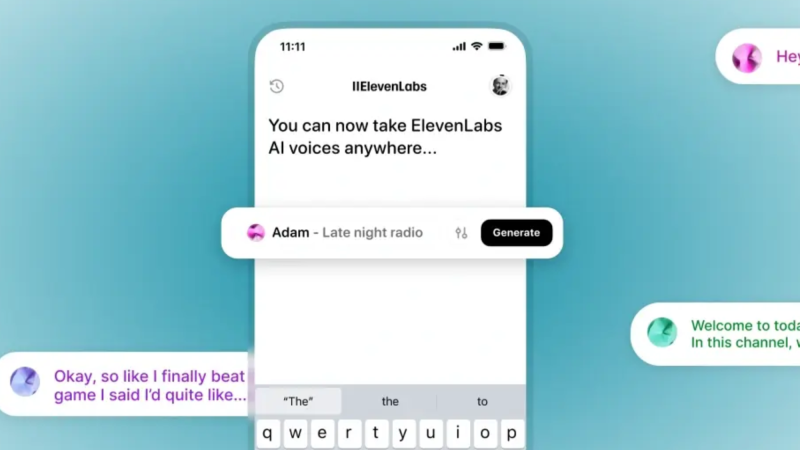
Artificial intelligence (AI) agents are finding a place in modern business operations, albeit limited by their capacity for natural communication. Companies intent on global scaling interact with international customers in a range of contexts, requiring efficient and consistent communication. ElevenLabs is working to reorient perspectives on automation, contributing toward a productive future for AI voice agents.
In contrast to early voice systems, which often felt rigid and robotic, today’s AI voice agents have been trained to sound normal. At the same time, these systems claim the capacity to adapt in context and operate at scale. For founders and enterprise leaders, this shift is more than technical; it suggests a change in a business’s allocation of human effort, design workflows, and user trust.
Why Voice May Be a Preferred AI Interface
Text-based automation defined early AI systems, and it continues to be one of its most efficient forms. Chatbots, automated emails, and scripted messaging systems were simple to deploy and control for business and customer-facing operations. On the other hand, voice has been seen as risky. Matters of speech quality and timing could put off or frustrate users much more quickly than a chatbot.
However, significant advances in speech synthesis and conversational modeling have made voice agents appear more human in their communication style. For users, effective voice communication feels more personal, intuitive, and quick to respond. For businesses, the possibility to support teams handling inbound calls, qualifying leads, and providing support may be difficult to overlook.
ElevenLabs and the New Generation of AI Voice Agents
AI voice agents designed by ElevenLabs have realism, responsiveness, and adaptability at the forefront. To this end, they mimic human conversation patterns such as pauses, interruptions, and tone variation with accuracy. Through this approach, the company aims to introduce its AI voice agents where clarity and credibility matter, such as onboarding, transactions, and customer support.
Naturalness and Trust for User Acceptance
When a voice feels artificial, whether responses lack context or tone is off, users are quick to react negatively. This response reveals one of the greatest challenges to AI voice agents, that being trust. Early voice bots often failed not because they were automated, but because they sounded disconnected from human communication.
ElevenLabs’ focus on human-sounding speech works to address this barrier directly. When voice agents can sound like a human without seeming deceptive, a balance is struck. If a company can remain transparent about AI usage, but provide high-quality voice output, these factors can contribute to credibility in spite of traditionally negative reactions to automated communication.
AI Voice Agents for a Hybrid Workforce
As opposed to replacing human employees, AI voice agents are finding a place in a kind of hybrid workforce. Constantly available and able to repeat responses endlessly, humans are given the space to navigate cases of judgment, empathy, and exception. Rather than threatening service quality in exchange for efficiency, hybrid workforces could support the best parts of both communication solutions.
A company that succeeds with AI voice agents tends to treat these tools as adaptive products rather than static deployments. Teams must review call outcomes, refine conversational flows, and align voice behavior with brand values, just as they would review a human team member’s performance. With this approach, AI can serve as a long-term capability instead of a one-off implementation.
Strategic Value for Entrepreneurs
When it comes to entrepreneurs and early-stage companies, AI agents offer a level of flexibility for business operations. With thoughtful implementation, there may be room to level the playing field between startups and established enterprises. As AI voice agents generate structured data from conversations, responsible integration can further help to inform product development and services.
A Quiet Shift With Major Implications
AI voice agents are no longer experimental. These tools are finding a role to play in everyday business operations, with platforms like ElevenLabs demonstrating just how far the technology has progressed. For business leaders, opportunities lie in the thoughtful use of these tools. When AI voice agents align with real user needs, they have the potential to enhance efficiency without sacrificing rapport.
Artificial intelligence (AI) agents are finding a place in modern business operations, albeit limited by their capacity for natural communication. Companies intent on global scaling interact with international customers in a range of contexts, requiring efficient and consistent communication. ElevenLabs is working to reorient perspectives on automation, contributing toward a productive future for AI voice agents.
In contrast to early voice systems, which often felt rigid and robotic, today’s AI voice agents have been trained to sound normal. At the same time, these systems claim the capacity to adapt in context and operate at scale. For founders and enterprise leaders, this shift is more than technical; it suggests a change in a business’s allocation of human effort, design workflows, and user trust.
Why Voice May Be a Preferred AI Interface