Beyond Prompts: Building a Creative Brain for Every Brand
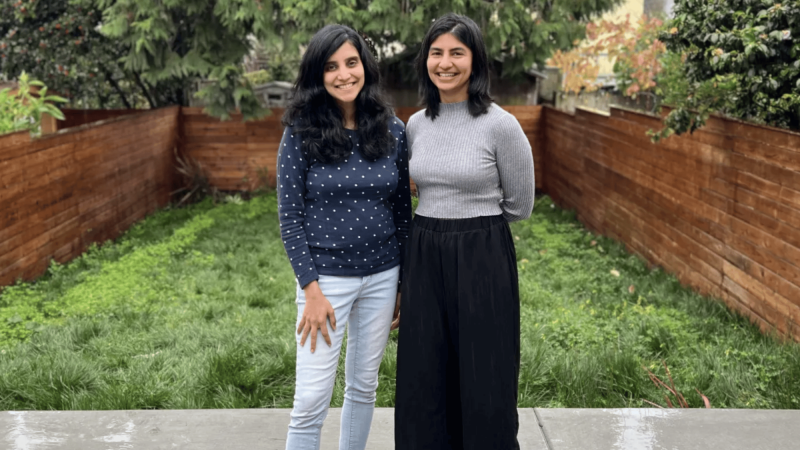
Lica World Co-Founders
In an age where content has become a kind of currency, brands no longer have the luxury of slow production cycles. They need fresh visuals constantly. They need imagery that captures attention, and they need it fast. Yet many teams still operate with tight budgets, small staffs, and the old reality of photo shoots and video edits that take weeks to complete. The demand keeps rising anyway, creating the tension most marketers feel every day.
Lica World, a San Francisco startup founded in 2023 by Purvanshi Mehta and Priyaa Kalyanaraman, stared directly at that tension and chose to redesign the process. Their premise was simple: reimagine the workflow by creating an AI graphic designer that understands brand identity, storytelling, composition, and typography far beyond mere pixel generation.
Lica is shifting design from prompt-based generations to fully editable outputs—freeing users from prompting loops and giving them real creative control.
A Company Rooted in AI and Design
Mehta brought the AI expertise to train foundational models that give the platform its intelligence, while Kalyanaraman brought product design experience. Together, they saw the same problem again and again. Companies needed high-quality visuals to grow, but producing those visuals was slow, repetitive, and often expensive. Lica was built to change that.
Inside Lica’s AI Models: The Real Engine Behind the Creativity
Behind every polished output in Lica is a set of foundational multimodal models designed not just to generate visuals but to understand the building blocks of graphic design. Lica is building the creative brain for every brand by learning how fonts, identity systems, vector structure, color theory, and layout planning work together. While most tools focus on pixel generation, Lica focuses on design reasoning at a structural and semantic level.
Rather than asking what image to create, Lica asks how a set of images, brand colors, and copy should be arranged into a coherent on-brand layout. The system is designed to understand composition, hierarchy, typography, and spatial relationships, producing structured and editable graphics. It also learns from real performance data. When a brand sees which visuals work best, that feedback can help improve its models so future creative work can become more aligned with what resonates.
Because the models respond to natural language direction, creative iteration feels intuitive. Users can say “make this feel lighter” or “try something closer to the spring campaign”, and the system can adapt. Lica can remove prompting loops and gives teams designer-level control, allowing ideas to become brand-coherent assets quickly and with increasing accuracy as the brand’s own creative brain evolves.
A clear example of Lica’s impact comes from one of its public case studies, an LA-based fashion and e-commerce brand that adopted Lica to transform its creative operations. After integrating Lica, the client increased its creative output, saw an increase in conversions, cut the time from idea to ad deployment to just 24 hours, and reimagined its entire editorial assets. The shift was both immediate and measurable across the entire funnel.
Before Lica, the client relied on traditional production cycles that depended on photo shoots, manual edits, long timelines, and coordination across external vendors. With Lica, static product shots could be turned into dynamic lifestyle visuals and ad-ready videos. Creative iteration could become faster, cheaper, and more adaptive.
These results validated what Lica’s founders believed from the beginning: creativity does not need to be slow or exclusive. With a creative brain that understands a brand’s identity and adapts over time, teams of any size can produce industry-grade content, launch campaigns quickly, and stay competitive without increasing headcount.
What Comes Next for Lica
In 2026, the pressure on e-commerce and digital marketing teams has never been higher. Platforms increasingly reward novelty, personalization, and visually rich storytelling, yet the volume and variety of creative output required to stay competitive keep rising. Most teams are still operating with lean resources and workflows built for a slower, less dynamic world.
Lica is built for this new reality. At its core is a novel foundational model for graphic design, one that understands brand identity, typography, color theory, layout structure, and vector graphics at a semantic level. This is not another pixel generator. It is a design reasoning system that gives every team the ability to think like strategists and create with a high level of control. Instead of getting trapped in production bottlenecks or prompting loops, creators can explore multiple directions, run alpha and beta variations at scale, and react instantly to what resonates. Lica puts people in the driver’s seat, enabling dynamic experimentation across campaigns, formats, and brand moments.
As Lica continues to advance this foundational model and learn from real brand performance, it is shaping what creative operations will look like in 2026 and beyond. A small team can now test ideas with the velocity of a global brand. Creative decision-making can become iterative, data-informed, and unconstrained. The ability to generate structured, editable, brand-aware outputs opens an entirely new economic model for storytelling. With companies already demonstrating what is achievable, Lica is emerging not simply as a creative tool but aims to become the underlying engine that powers the next era of brand expression.
In an age where content has become a kind of currency, brands no longer have the luxury of slow production cycles. They need fresh visuals constantly. They need imagery that captures attention, and they need it fast. Yet many teams still operate with tight budgets, small staffs, and the old reality of photo shoots and video edits that take weeks to complete. The demand keeps rising anyway, creating the tension most marketers feel every day.
Lica World, a San Francisco startup founded in 2023 by Purvanshi Mehta and Priyaa Kalyanaraman, stared directly at that tension and chose to redesign the process. Their premise was simple: reimagine the workflow by creating an AI graphic designer that understands brand identity, storytelling, composition, and typography far beyond mere pixel generation.
Lica is shifting design from prompt-based generations to fully editable outputs—freeing users from prompting loops and giving them real creative control.