The Five Questions Every Entrepreneur Should Ask When Building Their Business
Five lessons from physics for building resilient businesses that endure.
The Business Physicist
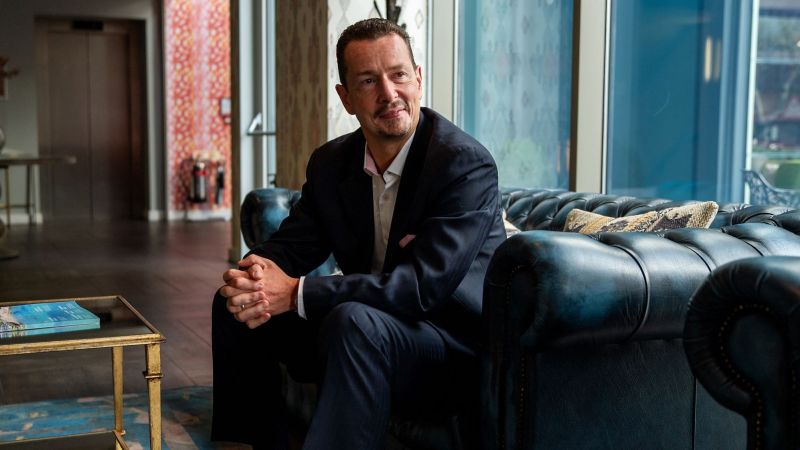
Dr. Serge Santos, The Business Physicist
Opinions expressed by Entrepreneur contributors are their own.
You're reading Entrepreneur United Kingdom, an international franchise of Entrepreneur Media.
Most business advice tells you to move fast. Physics taught me to think long. I spent years studying how systems behave under pressure. What holds. What breaks. What endures. When I moved from the laboratory to the boardroom, I found the same principles at work. The businesses that last are not the ones that grow fastest. They are the ones built on strong foundations, clear systems and rational decisions. Before chasing growth, every founder should sit with these five questions.
Question 1: “Am I building for the next quarter, or the next generation?”
I have met many founders who are obsessed with growth. They chase valuations. They optimise for the next funding round. And they often build something fragile in the process. The most resilient businesses I have seen do something different. They think in decades, not quarters. That changes everything. When you think long term, you invest in your culture. You invest in your people. You build something that can outlast you. This is not about sacrificing ambition. It is the opposite. If you build to last, the business becomes more valuable. Not less. Long-term thinking creates better governance, better decisions and stronger teams. Legacy is not a sentimental idea. It is a strategy.
Question 2: “Have I built a business, or just a job for myself?”
A business that depends entirely on its founder is not a business. It is a job with more stress and longer hours. I learned this the hard way. In the early days of my first company, a client needed an answer straightaway. We had everything ready. The knowledge, the plan, the capacity to take on the project. But I was away that week and nobody could, or dared to, make the call without me. We lost the client. That loss taught me more than any win. The business had the capability but not the permission structure. Every decision flowed through me, and when I was not there, the whole thing stalled. The answer is systems. Repeatable processes. Clear accountability that does not flow through one person. When the business can operate without you in the room, you have built something real. When it cannot, you are the ceiling.
Question 3: “Can my business survive when things go wrong?”
Long-term thinking means you can stomach pain. That is the real test. I think about this like a property investor I know. He does not care about house prices going up or down. His rental income covers his mortgage costs with a comfortable margin. So regardless of what the market does, his portfolio is safe. He sleeps well because his model is built for bad weather, not just sunshine. Business is the same. If your cash flow depends on everything going right, you are one bad quarter away from trouble. Protect your cash flow. Plan for the downturn before it arrives. And when setbacks happen, treat them as data. Understand what went wrong. Fix the system. Move forward.
Question 4: “Do I truly understand my relationship with risk?”
Risk is not a single number. It is a distribution. And most founders do not think about it that way. Here is what I mean. Your risk preference is about how much upside you are prepared to give up in exchange for a lower downside. Depending on one client who pays very well looks great on paper. But it is far more risky than serving a portfolio of clients with slightly lower margins. If that one client walks away, you have a crisis. If one of twenty walks away, you have a Tuesday. A healthy relationship with risk means knowing that if you face heavy headwinds, you have enough in reserve. The right people. The resilience to absorb the hit without putting the whole company at stake. I am happy to take a year of lower profits knowing the years that follow will be stronger. That is not caution. That is discipline.
Question 5: “Am I building the right culture?”
Strategy tells you where you want to go. Culture determines whether you get there. I think about culture the way a physicist thinks about gas. Hundreds of particles moving in what looks like chaos. Yet gases obey a handful of simple physical laws and follow clear, overall patterns. Businesses are similar. Hundreds of people making independent decisions every day. What keeps them aligned is not a mission statement on the wall. It is a shared set of behaviours that everyone understands and lives by. Two years after acquiring a company, I was still trying to break a deeply embedded culture of people hiding errors. Then one morning, one of my managers sat down with me and said: “Look, hands up. I made a mistake. This is what happened and this is what it cost us. I am sorry.” That was the moment I knew the culture had shifted. After two years of hard work, people were volunteering their mistakes. Not because they had to. Because they understood that owning a problem is the first step to fixing it. We could sit down together, do a proper post-mortem and think about what to do better next time. That culture is far more powerful than one where people hide behind a wall of dust hoping nobody notices.
As companies grow, culture becomes the thing that scales when the founder cannot. Shifting accountability away from one person towards collective responsibility builds trust. It encourages people to take ownership. And it creates something that endures beyond any individual. From the outset, founders should stop asking “how quickly can I grow?” The better question is: what am I building that will still matter twenty years from now?
Most business advice tells you to move fast. Physics taught me to think long. I spent years studying how systems behave under pressure. What holds. What breaks. What endures. When I moved from the laboratory to the boardroom, I found the same principles at work. The businesses that last are not the ones that grow fastest. They are the ones built on strong foundations, clear systems and rational decisions. Before chasing growth, every founder should sit with these five questions.
Question 1: “Am I building for the next quarter, or the next generation?”
I have met many founders who are obsessed with growth. They chase valuations. They optimise for the next funding round. And they often build something fragile in the process. The most resilient businesses I have seen do something different. They think in decades, not quarters. That changes everything. When you think long term, you invest in your culture. You invest in your people. You build something that can outlast you. This is not about sacrificing ambition. It is the opposite. If you build to last, the business becomes more valuable. Not less. Long-term thinking creates better governance, better decisions and stronger teams. Legacy is not a sentimental idea. It is a strategy.
Question 2: “Have I built a business, or just a job for myself?”
A business that depends entirely on its founder is not a business. It is a job with more stress and longer hours. I learned this the hard way. In the early days of my first company, a client needed an answer straightaway. We had everything ready. The knowledge, the plan, the capacity to take on the project. But I was away that week and nobody could, or dared to, make the call without me. We lost the client. That loss taught me more than any win. The business had the capability but not the permission structure. Every decision flowed through me, and when I was not there, the whole thing stalled. The answer is systems. Repeatable processes. Clear accountability that does not flow through one person. When the business can operate without you in the room, you have built something real. When it cannot, you are the ceiling.

Serge Santos • Founder and CEO of Funding Alternative Group
Dr. Serge Santos, The Business Physicist