YEARS: The German Company Betting Healthcare Will Move From Treatment to Prevention
Germany’s YEARS believes the future of healthcare is prevention, not treatment. Here’s why the timing might finally be right.

YEARS
Opinions expressed by Entrepreneur contributors are their own.
You're reading Entrepreneur United Kingdom, an international franchise of Entrepreneur Media.
“We built YEARS from the ground up as a fully standardized, physician-led and scientifically grounded platform. It is based on first-principles thinking, supported by advanced diagnostics and focused on measurable outcomes for every client.”
That is how Jürgen Mehrtens, Co-Founder and CEO of YEARS, describes the company’s approach to preventive healthcare.
It is also the clearest explanation of why this German company believes the future of healthcare lies not in treatment, but in prevention.
Healthcare’s Hidden Flaw
Healthcare is still largely designed to react once something has gone wrong. YEARS is trying to move that point of intervention much earlier.
“We want to give people a clear, medically meaningful picture of their health before symptoms appear,” Mehrtens explains. “Combining diagnostics, imaging, cardiovascular and metabolic testing, performance data and physician-led interpretation. The bigger vision is to help build a healthcare model where prevention becomes continuous, data-driven and actionable rather than something that happens occasionally or only after disease has already developed.”
The company sits deliberately between two worlds.
Traditional healthcare is often highly specialized and reactive. Wellness services, meanwhile, can be accessible, engaging and designed around a better customer experience, but frequently lack medical depth and a rigorous evidence base. YEARS combines physician-led preventive medicine, comprehensive diagnostics and standardized medical protocols with a more welcoming, thoughtful experience: one where people feel comfortable, well looked after and able to understand their health without the atmosphere of a conventional clinic.
But the key difference, the CEO of a clinic offering a comprehensive preventive health assessment in a single day, insists, is interpretation.
“We are not trying to generate the longest possible list of biomarkers or sell people endless interventions,” Mehrtens says. “More data is not automatically better medicine. The value lies in deciding what is relevant, what should be acted on and what should be ignored. That is why physician-led interpretation is so central to our model.”
Why Preventive Medicine is Becoming The New Executive Benefit
For executives, health may influence performance, decision-making and long-term resilience. That connection is driving a shift in how companies think about executive benefits.
More than ever, executives are more focused on their health. Research from Deloitte found that 94% of C-suite leaders agree it’s important for executives to be health-savvy, with 88% having already set explicit health-focused ambitions for themselves. Nearly half (48%) would welcome dedicated health-training programs. (Source: Deloitte – “The C-suite’s role in well-being”)
“Traditionally, executive benefits have focused on convenience, insurance or faster access to specialists,” says Niko Hems, Head of Strategy and Growth at YEARS. “Prevention is increasingly becoming part of that conversation because leaders want something different: clarity about their actual health risks and a way to act on them early.”
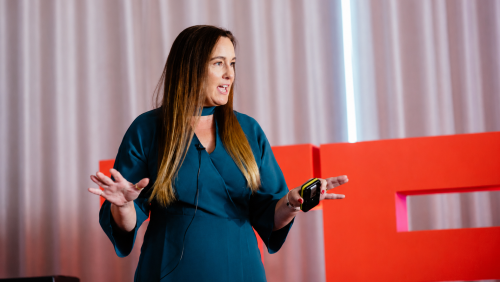
Niko Hems represents YEARS externally across keynotes, panel discussions, podcasts and interviews, while also working across growth, strategy and medical communication. It is a role that requires him to make the case for preventive medicine to audiences that have never thought much about it before.
“The response is changing,” he says. “Five years ago, you would walk into a room of executives and the conversation would be about insurance coverage and gym memberships. Now, there is genuine interest in what prevention actually means and why it matters at an individual level.”
For companies, the calculus is also shifting. Senior people are often among the hardest employees to replace, and their health is increasingly recognized as a strategic asset rather than a private concern.
“I think we will increasingly see high-quality preventive medicine become a normal part of executive compensation, much like private healthcare or retirement benefits are today,” Hems says. “The question is not whether that shift happens. It is which companies get ahead of it.”
Niko Hems frames the mission in broader terms.
“Longevity isn’t just about living longer, it is about living better,” he says. “With evidence, data, and the courage to challenge an outdated system.”
That framing matters. For YEARS, prevention is not about adding years to life. It is about making those years worth living.
The German Advantage

Germany has a particular reputation when it comes to precision and systems thinking. It is a cultural trait that shows up in unexpected places.
“There is definitely something very German about the way we think about preventive medicine,” Niko Hems says. “We like systems, measurement, precision and understanding how individual components interact. Health lends itself surprisingly well to that mindset.”
But humans, he is quick to note, are not machines.
“Precision also means understanding uncertainty,” Hems says. “For us, it is about combining high-quality measurement with medical judgment rather than pretending every number has a simple answer. That balance between technical rigor and clinical interpretation is very important to YEARS.”
Germany is an interesting place to build this kind of company precisely because there is such a strong expectation around medical quality and evidence. According to the clinic, patients in Germany often expect health claims to be supported by evidence. For a company trying to build trust in preventive medicine, a field that has historically been plagued by overpromising and underdelivering, that skepticism is almost an asset.
Where Healthcare Is Heading
The shift toward prevention reflects something bigger: a different approach to where healthcare might begin.
The misconception, YEARS argues, is that more testing automatically means better prevention. As diagnostics become cheaper and more advanced, it is increasingly possible to measure almost everything. But every test can also create noise, false positives and unnecessary follow-up. The goal should not be maximal testing. It should be maximal useful information.
Preventive medicine may be particularly useful when testing is targeted, interpreted in context and connected to a clear decision. This distinction will become even more important as AI, genomics, advanced imaging and new biomarkers enter mainstream healthcare.
Looking ahead, YEARS believes healthcare will gradually move from episodic medicine toward continuous health management. Today, most people interact with healthcare in isolated moments: a blood test, a check-up, a specialist appointment. In the future, information from biomarkers, imaging, fitness data, family history, genetics and wearables could increasingly be considered together to provide a more longitudinal view of health. That changes the central question from “Do you have a disease?” to “How is your risk evolving?”
AI could play an important role in interpreting that complexity, while physicians would remain central to the process. Medical judgment may become increasingly important as the volume of available data grows. The long-term shift is toward earlier, more personalized intervention, ideally years before a major health event occurs.
The next phase for YEARS is about proving that this model can scale beyond a single clinic. The company wants to deepen the medical model, improve longitudinal follow-up and expand access across additional locations. Corporate preventive health may become a more prominent part of employee-benefit strategies, particularly among companies looking to offer support that goes beyond traditional wellness programs. Interest could be especially strong for leadership teams, where employers may see value in more proactive and tailored health offerings.
The One Thing That Matters
The advice from YEARS is straightforward: treat your health like you treat your business. Understand the baseline before there is a crisis.
Most executives would never run a company without knowing its financial position, key risks, or performance indicators, yet many people take exactly that approach to their own health. The goal is not to optimize every biomarker or follow every longevity trend. It is to understand the things that genuinely matter. Start with cardiovascular and metabolic risk. Know your fitness level. Sleep well. Train consistently. Look at how those metrics change over time.
The goal is to make sure you are still healthy enough to do the things you care about decades from now.
For YEARS, that mission – helping people understand their health before a crisis arrives – is the work that matters. Whether it develops into a broader trend or remains a premium service for those who can access it first will depend on decisions yet to be made. But the direction is clear: healthcare built around prevention, precision and the judgment to know what actually counts.
Taken together, that is worth considering.
This article is for informational purposes only and does not substitute for professional medical advice. If you are seeking medical advice, diagnosis or treatment, please consult a medical professional or healthcare provider.
“We built YEARS from the ground up as a fully standardized, physician-led and scientifically grounded platform. It is based on first-principles thinking, supported by advanced diagnostics and focused on measurable outcomes for every client.”
That is how Jürgen Mehrtens, Co-Founder and CEO of YEARS, describes the company’s approach to preventive healthcare.
It is also the clearest explanation of why this German company believes the future of healthcare lies not in treatment, but in prevention.