How Adam Abraham Built a Trusted UK Luxury Resale Brand from the Ground Up
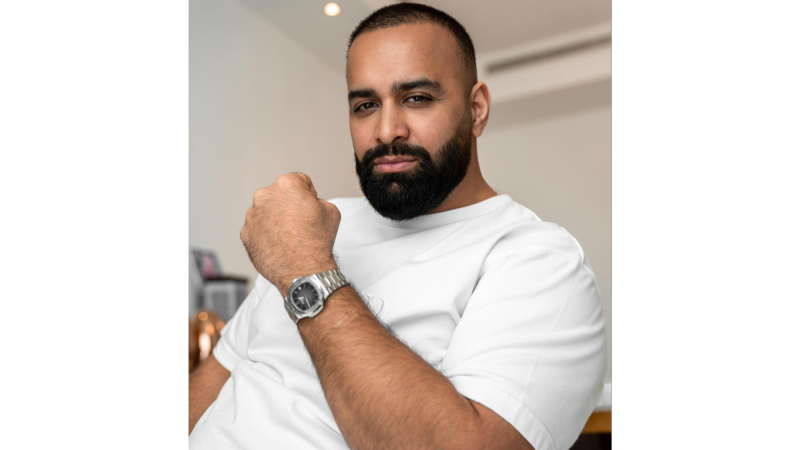
Adam Abraham
This April, Love Luxury marks five years since opening its London boutique, a milestone that would have seemed unlikely to anyone watching Adam Abraham run second-hand shops across the capital a decade and a half ago. Back then, Adam and his wife Emily were co-owners of several general resale stores. What shifted everything was a pattern they began to notice. High-end designer pieces, Hermès, Rolex, Van Cleef and Chanel, were coming through their doors with a regularity that pointed toward something much larger than a retail sideline.
That recognition set Adam on a path that led first to Prestige Buyers, a specialist venture operating on Hans Road, and eventually to Love Luxury as it exists today. The fifteen-year journey from general second-hand retail to a notable name in Britain’s pre-loved Hermès bags has been built on two things Adam returns to consistently: patience and authentication. “You have to earn your reputation in this industry,” he says. “Every client who comes to us is trusting us with serious money. That has never been something I have taken lightly.”
A Problem the Industry Was Choosing to Overlook
As Adam moved deeper into the luxury goods space, he encountered something that sat uncomfortably alongside the appeal of the sector. Counterfeit pieces were circulating among genuine articles, often indistinguishable to untrained buyers and priced at levels that mirrored authentic products. The Hermès handbag market was particularly exposed, given the difficulty in sourcing genuine Birkins and Kellys through official channels and the demand pressure that created on secondary sellers of varying integrity.
“We saw what was happening to the reputation of an industry we genuinely cared about,” Adam recalls. “There was only one way to respond to that, and it was to build something people could count on completely.”
Adam and Emily assembled a team with specific Hermès expertise, trained to identify the construction markers that separate genuine pieces from well-executed replicas. That expertise became the commercial bedrock on which client loyalty was built. The global luxury resale market reached $25.78 billion in 2024 and is projected to grow to $82.82 billion by 2032, and within that growth story, authentication has emerged as the decisive factor separating businesses that earn repeat buyers from those that do not.
The Hermès-Only Decision
Love Luxury originally traded across multiple luxury handbag brands, covering the full range of designer labels that flow through the pre-loved market. The move to focus entirely on Hermès bags came after Abraham noticed where the business’s reputation was generating the greatest pull. Clients were returning specifically for Birkins and Kellys. Overseas enquiries centred on Hermès. The authentication expertise the team had built was most sharply valued in that category, where the consequences of buying a fake carried both financial and emotional weight.
Abraham describes it as following the signal the market was sending rather than imposing a top-down decision. “We used to carry all the major bag brands,” he says, “but when your reputation in one area becomes strong enough, focusing on it exclusively is the most logical move you can make. It makes you the go-to place for Hermès, and that has always been what we were building toward.” That positioning now separates Love Luxury from generalist handbag resellers and places it in a category alongside only a small number of true Hermès specialists operating at this level in the UK.
The Digital Side of a Trust-Based Business
Love Luxury’s TikTok account now reaches 4.9 million followers, and its Instagram audience stands at 1.2 million, figures built through Emily Adam’s content-driven approach of showing clients exactly how the business works. Authentication breakdowns, sourcing processes, and behind-the-scenes access to incoming pieces produced an audience that functions as a continuously renewing source of buyer confidence.
Adam brings a different but complementary skill set to the digital operation. Two decades spent studying and applying SEO have given him a precise understanding of how online visibility converts into buyer intent. Love Luxury consistently targets high-intent search queries around buying Hermès Birkin in the UK and pre-loved Hermès bags across both its core markets, treating every piece of published content as part of a long-term authority-building effort.
“The brand, the rankings, and the visibility all support each other,” he says. “A client might find us first on TikTok, then search for us, then read the reviews. By the time they make contact, the trust is already there.“
Building Beyond London
The London boutique’s fifth anniversary coincides this April with the first year of Love Luxury’s Dubai operation, a pairing that frames the brand’s current position clearly. The UK luxury resale market was valued at $1.42 billion in 2024 and is forecast to reach $5.65 billion by 2033 at a compound annual growth rate of 16.69%, figures that speak to the strength of Adam’s core market. At the same time, the Gulf has been producing its own growing base of buyers seeking a trusted Hermès reseller, and Love Luxury’s entry into Dubai addressed that demand with an established name rather than a speculative new presence.
Adam sets out the business’s long-term aim without hedging. “We want to be the first place people think of when it comes to buying or selling pre-loved luxury, anywhere in the world,” he says. “That is the goal, and everything we are building from here is pointed at it.“
This April, Love Luxury marks five years since opening its London boutique, a milestone that would have seemed unlikely to anyone watching Adam Abraham run second-hand shops across the capital a decade and a half ago. Back then, Adam and his wife Emily were co-owners of several general resale stores. What shifted everything was a pattern they began to notice. High-end designer pieces, Hermès, Rolex, Van Cleef and Chanel, were coming through their doors with a regularity that pointed toward something much larger than a retail sideline.
That recognition set Adam on a path that led first to Prestige Buyers, a specialist venture operating on Hans Road, and eventually to Love Luxury as it exists today. The fifteen-year journey from general second-hand retail to a notable name in Britain’s pre-loved Hermès bags has been built on two things Adam returns to consistently: patience and authentication. “You have to earn your reputation in this industry,” he says. “Every client who comes to us is trusting us with serious money. That has never been something I have taken lightly.”
A Problem the Industry Was Choosing to Overlook