Why Innovation Doesn’t Scale Alone
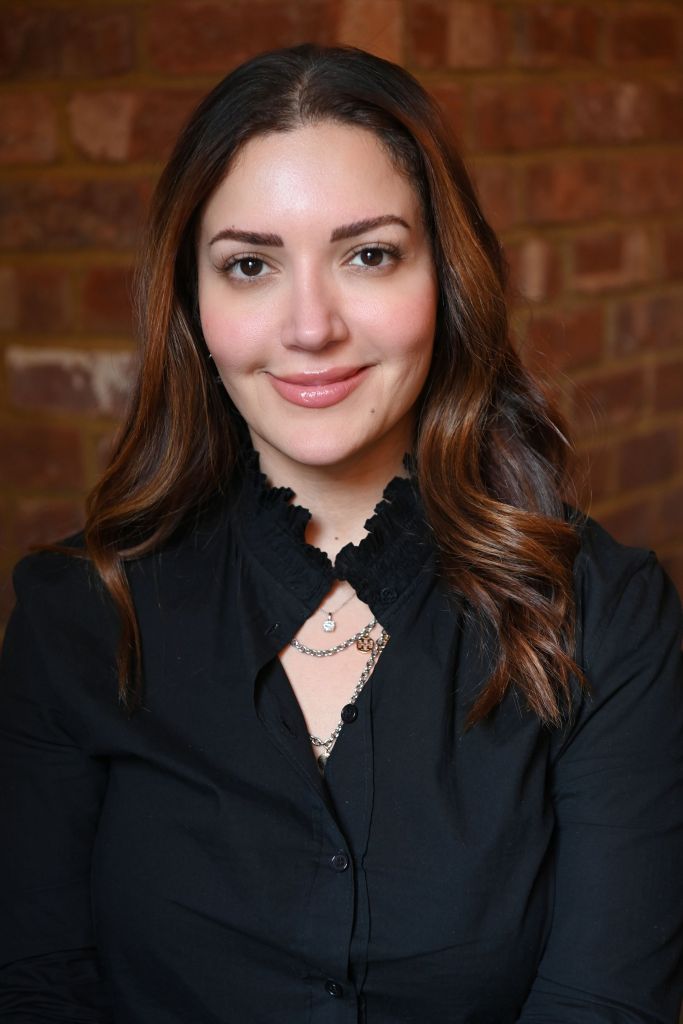
Zeynab Al-Khero explains why ecosystems drive successful global health innovation growth.

Global Chamber London
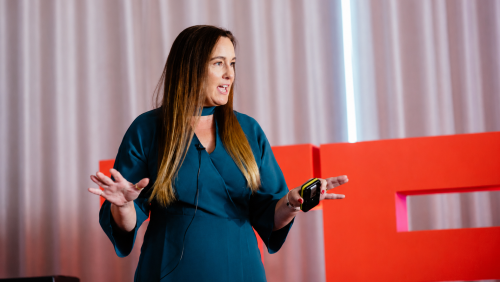
Zeynab at a Gala and Award Ceremony in London
Opinions expressed by Entrepreneur contributors are their own.
You're reading Entrepreneur United Kingdom, an international franchise of Entrepreneur Media.
For decades, the UK has produced world-class science. It has long excelled at scientific discovery, producing research that consistently ranks among the most influential in the world. Its difficulty has been translating that strength into companies capable of competing on the global stage. As investment pours into life sciences and health technology, the challenge is no longer simply generating breakthroughs, but creating the conditions for them to reach patients and markets. For Zeynab Al-Khero, international commercial growth strategist, founder of ZALK Consultancy and Executive Director of Global Chamber London, scientific excellence is only the starting point. Lasting success depends on the commercial pathways, partnerships and resilient leadership needed to carry ideas from discovery to impact. Her view has been shaped by years spent working across international markets, connecting founders with investors, regulators, healthcare systems, governments and strategic partners across the UK, Europe, North America and the Gulf. Rather than seeing innovation as a straight line from laboratory to market, she describes it as a network of interdependent relationships, where commercial success depends on far more than just the strength of the idea itself.

Innovation doesn’t scale alone
The UK remains one of the world’s most respected life sciences ecosystems, anchored by leading universities, strong clinical infrastructure and consistent global investor interest. But Al-Khero believes there is a persistent misunderstanding at the heart of how many founders approach scaling. They assume that if the science is strong enough, and the funding is there, everything else will follow. Her view is more demanding. “Capital matters – but so do trusted partnerships, market access, leadership, regulation, talent, data, customers and credibility.” These elements are not support functions. They are the conditions that determine whether innovation survives contact with the real world. In biotech and healthtech, companies do not simply compete on technology. They compete on their ability to navigate complexity: clinical validation, regulatory approval, procurement systems, reimbursement structures, institutional trust and patient confidence – all at once. “You need investors. You need clinical credibility. You need regulatory understanding. You need commercial partners and patient trust. Without that, even the best technology struggles to scale,” she adds. Increasingly, those pressures are not local. They are global from the outset. A product developed in London is often designed with Riyadh, Dubai or New York in mind before it even reaches the market. A Cambridge-based AI diagnostic may require NHS validation to unlock international credibility. A US digital health platform may seek UK clinical adoption not as an end market, but as a signal to the world. Innovation today is not anchored to geography. It is anchored to ecosystems.
The invisible infrastructure of commercial growth
In conventional start-up thinking, competitive advantage is often reduced to intellectual property, proprietary algorithms or access to capital. But Al-Khero challenges that framing. “Relationship capital is one of the most undervalued commercial assets,” she explains. Markets, she argues, do not move purely on product merit. They move through networks of trust – the accumulated credibility of people, institutions and partnerships that make adoption possible. For Al-Khero, trust is the foundation beneath those networks – the factor that allows partnerships to endure, innovation to move across borders and companies to build sustainable growth over time. Technology creates attention. Relationships create movement. In regulated industries such as healthcare, this becomes even more significant. Trusted connections can create momentum that money alone cannot buy, opening opportunities that traditional sales cycles often struggle to reach. “Introductions accelerate trust. They open markets, unlock investment, and create distribution channels.” Scaling, in this view, is not simply about visibility or growth; it is about embedding a company within networks that already carry authority. “A founder might have exceptional technology, but they still need partners in New York, Riyadh, Dubai or London to move from interest to execution,” she says.
Investment is only the beginning
Across the start-up ecosystem, fundraising is often viewed as a moment of validation – proof that a company has moved beyond its earliest uncertainties. But Al-Khero argues that capital alone does not solve the harder challenge of commercialisation. “Funding helps a business hire, build and survive – but it doesn’t automatically create trust, market access or partnerships.” This distinction is particularly important in healthcare, where scaling depends on system readiness as much as product readiness. Every market brings its own regulatory frameworks, procurement processes, reimbursement models and cultural expectations. A solution that succeeds in one country may struggle in another if those conditions are misunderstood. Even well-funded companies can falter without the infrastructure needed to support growth. “Capital accelerates what already works. It doesn’t replace strategy.” Investment, in other words, is a multiplier – not a foundation.
The invisible infrastructure of ecosystems
In an era where investment conversations, partnership discussions and expansion strategies increasingly begin online, geography matters less than the infrastructure surrounding an idea. What determines whether a company succeeds is not only the strength of its technology, but the investors, regulators, partners and institutions that help carry it into the real world. For Al-Khero, this is where many businesses falter. “Innovation rarely fails because the idea is weak. It fails because the ecosystem around it is,” she says.
Where UK credibility meets global demand
The UK continues to hold a distinctive position in global innovation. Its advantage lies not only in scientific excellence, but in the reputation attached to its institutions, healthcare system and regulatory standards. For Al-Khero, the next challenge is converting that trust into overseas potential. “The UK has strong credibility in science and healthcare. The opportunity is turning that credibility into real market access.” The Gulf Cooperation Council region represents one of the most significant opportunities, with governments investing heavily in healthcare transformation, digital infrastructure and preventative health as part of long-term national strategies. But Al-Khero cautions against viewing these markets as simple expansion opportunities. Success requires patience, local understanding and genuine commitment. “They are relationship-driven ecosystems. It’s about trust, local partnerships and long-term commitment – not transactional entry.” For many UK founders, this requires a different approach to international growth. Markets cannot be entered through replication alone. “What works in London won’t automatically work in Riyadh or Dubai,” she says. Expansion, she argues, is not a matter of copying a model from one country to another, but adapting it – commercially, culturally and relationally. “You have to listen before you pitch.”
Leadership as a commercial variable
If ecosystems determine whether innovation can scale, leadership determines whether organisations can withstand the pressures of growth. For Al-Khero, leadership is too often treated as secondary to strategy rather than a factor that shapes performance. Her concept of conscious leadership challenges that assumption. “Leadership starts in the body before it shows up in the boardroom.” She argues that the quality of decision-making is closely linked to how leaders manage pressure and uncertainty. Stress, burnout and reactivity are not simply personal challenges; they can become organisational risks. A leader operating under constant strain can narrow their thinking, weaken trust and affect the culture around them. “We often think resilience means pushing through. But sometimes resilience means pausing before your body forces you to stop.” Her perspective was shaped by years in high-pressure corporate environments, where long hours were often mistaken for effectiveness. “I thought the more hours I worked, the better I’d perform. In reality, my decisions got worse.” The lesson, she says, was not about lowering ambition, but about building a more sustainable approach to leadership.
The wellness economy as economic infrastructure
If leadership shapes an organisation’s ability to withstand pressure, then the way businesses think about human performance becomes a strategic question. Wellness has traditionally been treated as separate from ‘serious’ business. That separation is dissolving. “The future of wellness isn’t separate from business performance. It’s becoming part of it,” she says. The global wellness economy is now valued in the multi-trillion-dollar range, but its significance lies less in its size than in how it is becoming integrated into the way organisations operate. Workplace performance, leadership capability and organisational resilience are increasingly understood as functions of human sustainability. Burnout, in that context, is not an individual issue. “Burnout is a business risk,” warns Al-Khero. This reframes wellness as operational infrastructure rather than an employee benefit – a factor that can determine whether companies are able to sustain growth.
The end of the lone founder myth
The mythology of entrepreneurship still celebrates the lone visionary. Healthcare dismantles that narrative entirely. No therapy reaches patients without regulators, clinicians, investors, procurement systems and institutional confidence. Innovation is not individual genius – it is coordinated infrastructure. The companies that define the next decade of biotech and healthtech will be those that understand growth requires more than scientific discovery. It requires the ability to navigate complexity, build lasting partnerships and sustain the people behind the innovation. As Al-Khero argues, “the companies that will win the future are the ones that understand growth is both commercial and human.” The hardest part of innovation has never been the moment of discovery; it is the long journey that follows, where ideas must earn their place in the world.
For decades, the UK has produced world-class science. It has long excelled at scientific discovery, producing research that consistently ranks among the most influential in the world. Its difficulty has been translating that strength into companies capable of competing on the global stage. As investment pours into life sciences and health technology, the challenge is no longer simply generating breakthroughs, but creating the conditions for them to reach patients and markets. For Zeynab Al-Khero, international commercial growth strategist, founder of ZALK Consultancy and Executive Director of Global Chamber London, scientific excellence is only the starting point. Lasting success depends on the commercial pathways, partnerships and resilient leadership needed to carry ideas from discovery to impact. Her view has been shaped by years spent working across international markets, connecting founders with investors, regulators, healthcare systems, governments and strategic partners across the UK, Europe, North America and the Gulf. Rather than seeing innovation as a straight line from laboratory to market, she describes it as a network of interdependent relationships, where commercial success depends on far more than just the strength of the idea itself.
Innovation doesn’t scale alone
The UK remains one of the world’s most respected life sciences ecosystems, anchored by leading universities, strong clinical infrastructure and consistent global investor interest. But Al-Khero believes there is a persistent misunderstanding at the heart of how many founders approach scaling. They assume that if the science is strong enough, and the funding is there, everything else will follow. Her view is more demanding. “Capital matters – but so do trusted partnerships, market access, leadership, regulation, talent, data, customers and credibility.” These elements are not support functions. They are the conditions that determine whether innovation survives contact with the real world. In biotech and healthtech, companies do not simply compete on technology. They compete on their ability to navigate complexity: clinical validation, regulatory approval, procurement systems, reimbursement structures, institutional trust and patient confidence – all at once. “You need investors. You need clinical credibility. You need regulatory understanding. You need commercial partners and patient trust. Without that, even the best technology struggles to scale,” she adds. Increasingly, those pressures are not local. They are global from the outset. A product developed in London is often designed with Riyadh, Dubai or New York in mind before it even reaches the market. A Cambridge-based AI diagnostic may require NHS validation to unlock international credibility. A US digital health platform may seek UK clinical adoption not as an end market, but as a signal to the world. Innovation today is not anchored to geography. It is anchored to ecosystems.
The invisible infrastructure of commercial growth
In conventional start-up thinking, competitive advantage is often reduced to intellectual property, proprietary algorithms or access to capital. But Al-Khero challenges that framing. “Relationship capital is one of the most undervalued commercial assets,” she explains. Markets, she argues, do not move purely on product merit. They move through networks of trust – the accumulated credibility of people, institutions and partnerships that make adoption possible. For Al-Khero, trust is the foundation beneath those networks – the factor that allows partnerships to endure, innovation to move across borders and companies to build sustainable growth over time. Technology creates attention. Relationships create movement. In regulated industries such as healthcare, this becomes even more significant. Trusted connections can create momentum that money alone cannot buy, opening opportunities that traditional sales cycles often struggle to reach. “Introductions accelerate trust. They open markets, unlock investment, and create distribution channels.” Scaling, in this view, is not simply about visibility or growth; it is about embedding a company within networks that already carry authority. “A founder might have exceptional technology, but they still need partners in New York, Riyadh, Dubai or London to move from interest to execution,” she says.

Patricia Cullen • Features Writer
Entrepreneur Staff