Why finance must now play the long game
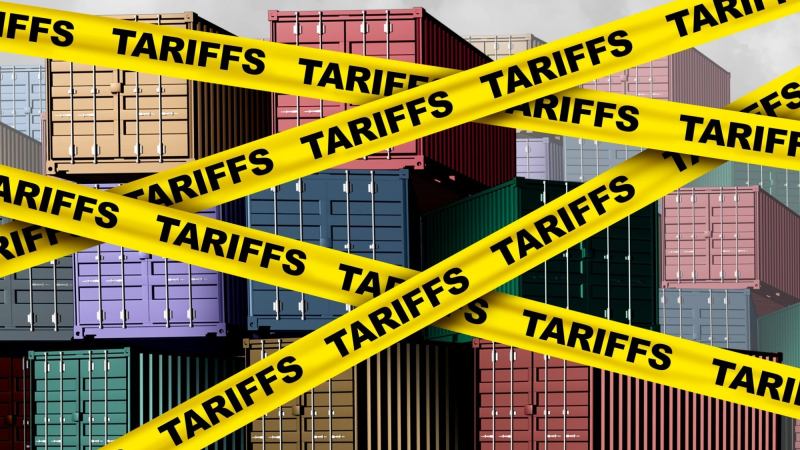
The current tariff-driven economic disruption is undoubtedly severe. Policies telegraphed prior to the election were not taken seriously, forcing many businesses on the back foot.
Shutterstock
Opinions expressed by Entrepreneur contributors are their own.
You're reading Entrepreneur United Kingdom, an international franchise of Entrepreneur Media.
However, the finance sector’s response doesn’t have to continue being so reactive. First and second order market effects may have caught some off guard, but in reality, these could be seen as the latest of a long series of challenges since 2008.
The point is, we’ve been here before. Not with identical conditions, but with similarly destabilising effects; from the Eurozone crisis to Brexit to the pandemic. Each event has tested the industry’s ability to adapt, but also revealed that durability is built over time, not improvised under pressure. Firms might not realise it, but many already have the playbook to navigate it. While short-term priorities are important, businesses must resist becoming consumed by them. In times of turbulence, tunnel vision is a common pitfall – it drives leaders to fixate on the immediate consequences, at the expense of long-term resilience.
A business that centres its messaging, brand, and strategy around temporary conditions risks losing direction, and most importantly its relationship with its customers. Leadership requires guiding your organisation and customers not through the next few months, but through the next few years or even decades. A long-term vision enables firms to sidestep short-termism and build a business model that meets customer needs consistently over time, by evolving alongside them. Get this right in a moment of uncertainty, and the long-term loyalty of your customers will likely follow.
Lessons from past turmoil
As someone who began his career in the aftermath of the 2007/2008 financial crisis, I’ve seen firsthand how disruption separates the resilient from the reactive. The firms that emerged strongest shared a few common traits: clarity on the value they delivered to customers, and a future strategy rooted in those fundamentals.
It can be tempting to think that a radical situation necessitates a radical change of direction, and sometimes a dramatic course correction is needed. The financial institutions that performed the best post-crash did not set out to fundamentally alter their model overnight, but instead doubled down on the core values that had served them and their customers for so long. Even some firms with significant exposure to the very sub-prime mortgages causing the crash focused on tighter principles and flourished again.
They coupled this with a patient vision of the future, taking the key learnings from the preceding years and steadily feeding this into a long-term progressive strategy. In this way they treated the crisis as a test of their endurance – rather than a signal to pull out of the race.
There’s also a psychological component here. Teams that are encouraged to think long-term are less prone to reactionary decision-making. Like skyscrapers that are built to bend during an earthquake, teams that have clearer priorities and fewer internal pivots operate with more coherence — even under stress. the best leaders reinforce this mindset from the top, ensuring their teams are focused on direction rather than distraction.
The Erosion of Customer Trust
While tariff disruptions and market instability may feel like new challenges, the truth is that the finance sector has been wrestling with a much longer crisis: the slow erosion of public trust. Many financial institutions have fundamentally failed to demonstrate accountability, generosity, and innovation post-crash. Customers generally feel like they are not being adequately rewarded for the money they deposit in their bank, and major banks have often been slow to adapt their products to modern technology.
Stagnating savings rates, inflexible and outdated products, and a lack of transparency has prevented the industry from making any meaningful recovery in consumer trust. It is perhaps no surprise that, ten years on from the crash, 66% of Britons reported no trust in banks to work in the best interests of society, and 62% of Britons feared that the sector could lead them into another crash. Britons currently have little trust in their bank’s ability to manage periods of turmoil. Recent polling found that almost half do not trust their banks to help them manage thier finances throughout a recession.
Trust is clearly not being earned back. A ‘lay low’ approach has done little to rebuild relations with the British public, who are instead looking for active signs of transparency, support, and accountability from the sector. With current economic uncertainty unlikely to dissolve in the foreseeable future, major banks must be aware of their responsibility to protect consumer wealth – and should communicate their commitment to this clearly. Banks that add value to customers’ lives before, during, and after a ‘crisis’ will thrive – reliably delivering this should be the priority of the industry, rather than drastic restructuring or product changes that do nothing to grow consumer trust.
Building a resilient company
When dealing with current periods of unrest, and planning for future episodes, the question then becomes clear – how do you build a company that is resilient to the inevitable shocks and surprises that the future will bring? Prioritising customer trust is a key component of this, as I have mentioned. If you want your customers to support you throughout periods of growth and decline, you have to demonstrate that you will value and reward them during both. These values must also be reflected in your technological offering. Customer-centric product design is essential, and the tech that your customers rely on should be scalable, reliable, and create game-changing experiences. Customers will notice if product infrastructure lags behind developments in the industry. They will also certainly notice if their banking infrastructure fails when under stress, as many did a few months ago when IT failures caused millions of Brits to lose access to their finances. So getting the basics right is non-negotiable.
New technologies can be implemented to mitigate these risks, but this is also a fundamentally people-based business. The future of finance belongs to those who forge strategic partnerships with other industry players, collaborate with innovators who share your vision, and learn from others. I see some firms staying insular, reticent to share knowledge, isolating themselves. If you know why your customers need you, and are determined how to make that experience unbeatable, then you shouldn’t be afraid to partner to make it happen.
Long-term thinking is the ultimate disruptor
Time and time again, the businesses that thrive in periods of disruption are those that anticipate, and openly manage stress with their teams, without panicking. In an industry obsessed with instant and, frankly, knee-jerk reactions, long-term thinking is the most innovative foundation. Those who stay committed to this value will emerge stronger, no matter what lies ahead.
However, the finance sector’s response doesn’t have to continue being so reactive. First and second order market effects may have caught some off guard, but in reality, these could be seen as the latest of a long series of challenges since 2008.
The point is, we’ve been here before. Not with identical conditions, but with similarly destabilising effects; from the Eurozone crisis to Brexit to the pandemic. Each event has tested the industry’s ability to adapt, but also revealed that durability is built over time, not improvised under pressure. Firms might not realise it, but many already have the playbook to navigate it. While short-term priorities are important, businesses must resist becoming consumed by them. In times of turbulence, tunnel vision is a common pitfall – it drives leaders to fixate on the immediate consequences, at the expense of long-term resilience.
A business that centres its messaging, brand, and strategy around temporary conditions risks losing direction, and most importantly its relationship with its customers. Leadership requires guiding your organisation and customers not through the next few months, but through the next few years or even decades. A long-term vision enables firms to sidestep short-termism and build a business model that meets customer needs consistently over time, by evolving alongside them. Get this right in a moment of uncertainty, and the long-term loyalty of your customers will likely follow.

Andrea de Gottardo • CEO of UK digital bank Kroo
Andrea de Gottardo is the CEO of Kroo, a fully licensed UK digital bank known... Read more