How Smart Start-ups Are Winning in 2025
In a tightening market, entrepreneurs who trade fanfare for focus are gaining a clear and lasting advantage

Pesto AI
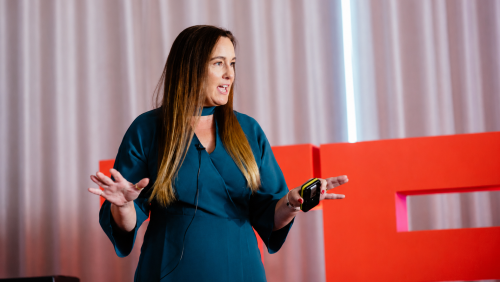
Kate Hofman, CEO and co-founder of Pesto AI
Opinions expressed by Entrepreneur contributors are their own.
You're reading Entrepreneur United Kingdom, an international franchise of Entrepreneur Media.
In a start-up culture often defined by speed, scale, and spectacle, building something quietly effective can feel radical. But for founders working in complex, often overlooked industries, the path to real impact starts not with disruption – but with discipline.
“I’m a non-technical founder,” says Kate Hofman, CEO and co-founder of Pesto AI, an AI-powered platform designed to help food and drink businesses streamline operations, “and no-code tools like Lovable and Manus have blown me away. Not only has my productivity shot up, but my technical understanding has skyrocketed, because I’ve got a new way of interacting with code and tech tools.”
Her start- up, Pesto AI, works with food and drink brands – sectors often overshadowed in venture capital circles by shinier, software-native domains. But it is here, in the complexity of physical goods and perishable logistics, that Hofman sees the deepest need for real innovation. “Ultimately it means we’ll be able to solve more problems for our customers by bringing the right tech into the food and drink industry.”
This year, that quiet clarity is paying off. Pesto AI is expanding, its platform increasingly recognised for practical AI integrations in an industry where margins are tight and tech fatigue is real. But the journey has required some hard rewiring – of product thinking, of leadership habits, and of personal belief. “I thought building a great product would speak for itself. But with the pace of AI and its impact on the software industry, I’ve totally reversed my belief,” Hofman reflects. “Tech isn’t a moat anymore. In reality, if you don’t tell the story clearly, and explain why your product matters and the difference it will make for your customers, it won’t cut through, no matter how good it is.”
It’s a refreshingly candid admission, and one that few early-stage founders would volunteer so freely. But Hofman’s approach is rooted in deliberate openness – especially with her team. She holds monthly one-to-one feedback sessions with each of her co-founders. It’s a ritual that has sharpened the company’s internal culture and exposed some of her own blind spots. “One thing I’ve been working on that’s come out of those sessions is to stop my self-doubt,” she says. “There are so many challenges you face as an early stage start-up, never mind as a female founder – the last thing I or my company needs is for my self-doubt to sabotage something!”
Many founders balance self-awareness with self-doubt, shaped by a culture that often equates confidence with competence – a dynamic that can be especially challenging for women in male-dominated fields. Hofman chooses steadiness over certainty, focusing instead on continual learning.
“For me, the most underrated edge UK founders have right now is constraint,” she says. “The economic climate can feel brutal, and especially for the food and drink brands we work with at Pesto AI. But that pressure forces us to stay laser-focused on solving real problems. We can’t afford fluff! Every feature we build has to deliver tangible value. It’s challenging, but it sharpens your instincts and your product.”
This, then, is Hofman’s vision of a start-up: not a sugar-rush of launches and pivots, but a slow-burn exercise in focus – driven less by market hype and more by product-market empathy. Her lens is broader than Pesto AI. Hofman speaks not just as a founder, but as someone invested in reshaping the start-up ecosystem itself – particularly in the UK.
“I’m excited for the next decade of the UK start-up ecosystem,” she says. “I see the UK becoming a powerhouse for purpose-driven high-growth start-ups, driving sustainable economic growth through products and services that have a meaningful impact on businesses, people and planet.” It’s an aspirational vision, but not a naïve one. Hofman is acutely aware of what’s still missing. “We’ve got a long way to go to bring the kind of diversity of leadership into the ecosystem that will ultimately deliver stronger results and better returns,” she says. “But I can see the first shoots of that already happening.”
In many ways, she is part of those first shoots: a female, non-technical founder building AI infrastructure for one of the most legacy-bound sectors in the economy – and doing so without the typical playbook. The fact that she’s succeeding, on her own terms, suggests the ecosystem is beginning to change.
Hofman’s voice cuts through the noise. She isn’t chasing quick wins or fleeting fame – her focus is on building something that lasts. In a start-up world often obsessed with haste and hype, her steady, deliberate approach is a reminder that real change often takes time. And it’s almost always worth the wait.
In a start-up culture often defined by speed, scale, and spectacle, building something quietly effective can feel radical. But for founders working in complex, often overlooked industries, the path to real impact starts not with disruption – but with discipline.
“I’m a non-technical founder,” says Kate Hofman, CEO and co-founder of Pesto AI, an AI-powered platform designed to help food and drink businesses streamline operations, “and no-code tools like Lovable and Manus have blown me away. Not only has my productivity shot up, but my technical understanding has skyrocketed, because I’ve got a new way of interacting with code and tech tools.”
Her start- up, Pesto AI, works with food and drink brands – sectors often overshadowed in venture capital circles by shinier, software-native domains. But it is here, in the complexity of physical goods and perishable logistics, that Hofman sees the deepest need for real innovation. “Ultimately it means we’ll be able to solve more problems for our customers by bringing the right tech into the food and drink industry.”