Hammad Zaidi Turned Adversity into Art, Advocacy, and a Life Worth Watching
Many view disability as a limitation. However, for others, it’s a compass that points them to not what they can’t do but to everything they must try.

Shutterstock
Opinions expressed by Entrepreneur contributors are their own.
You're reading Entrepreneur United Kingdom, an international franchise of Entrepreneur Media.
Many view disability as a limitation. However, for others, it’s a compass that points them to not what they can’t do but to everything they must try. Hammad Zaidi, a writer, filmmaker, entrepreneur, and advocate, is one of those resilient individuals who didn’t let disability hold them back. In fact, he allowed it to propel him forward, informing his voice, sharpening his vision, and guiding him to the red carpets of international film festivals.
Zaidi was born in Lahore, Pakistan. He suffered a fall as an infant that caused a traumatic brain injury, which made the left side of his body partially paralyzed. It altered the course of his life before he could even walk. Zaidi’s family moved to the United States in 1969 to search for better medical care and a brighter future.
Settling into a small apartment in Kansas City, Zaidi’s parents, Shaukat and Shamim faced challenges in building a new life from scratch. With his father bussing tables and his mother juggling motherhood with convenience store jobs, young Zaidi had to be resourceful, resilient, and determined not to let circumstances write his destiny.
Life had plans for Zaidi, as he had to experience another life-defining moment. In 1980, at 12, he was held at gunpoint after a neighborhood baseball game. Such an incident could break anybody, but Zaidi utilized it to strengthen his resolve to discover his highest self. That same year, he stretched beyond his physical limits. Zaidi looked at his body in the mirror. For the first time, he loved what he saw.
The third defining moment came decades later. Zaidi left his job and education to chase a dream across the Atlantic. He then met Gary, a terminally ill man who taught him how to live fully. These instances in Zaidi’s life, all the terrifying, humbling, and liberating moments, became the foundation of who he is today.

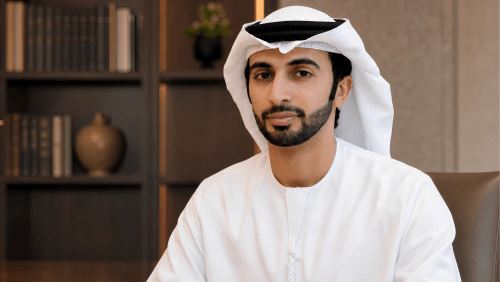
Hammad Zaidi, Ceo and Founder of The Lonely Seal
Today, Zaidi wears many hats. He’s the founder and CEO of The Lonely Seal Company Group, a multifaceted entertainment company. A lifelong educator and mentor, he’s served on film festival juries and lectured at top universities. Zaidi would argue that despite all his accomplishments, none is more personal and poignant than Limping On Cloud 9.
Limping On Cloud 9 started in 2017 as a podcast co-hosted with his blind friend, Jonathan. From mere conversations, the podcast has become a portal into Zaidi’s soul. Here, he bared himself through stories of a disabled kid growing up in the Midwest, chasing girls, dodging bullies, surviving trauma, and navigating an able-bodied world with wit and determination.
Episodes like “How a Dying Man Taught Me How to Live,” “412 Resumes & My First Job in Film,” and “How a UCLA Beanie in a Snowdrift Changed My Life’s Path” offer snapshots of a life well-lived.
The podcast was only the beginning. Zaidi is extending the impact by turning it into a novel, a feature film, and an audiobook. The motion picture adaptation, currently in development, offers a generational narrative that begins in 1947 India. It delves into the story of his father as a young boy who fled a violent mob that stormed his family’s palace. The film also follows Zaidi from his early days in Kansas City. Overall, it showcases a narrative of survival, humor, and redemption inspired by Zaidi’s lived experiences.
With a life so dynamic, it’s hardly surprising that Zaidi returned to a dream stemming from his childhood. He knew early on he couldn’t be a professional athlete with his limited mobility. Zaidi then vowed to own a sports franchise someday. That dream has now taken form in the Ryz Sports Network, a 24/7 ad-supported streaming sports channel that Zaidi co-founded with longtime industry veteran Neil Brubaker. Now, Ryz is known as an equitable, accessible, and global platform that offers continuous live sports from around the world.
Zaidi doesn’t define success by credits or titles but by the ability to grow from failure. His views on failure were even published in The Wisdom of 100 by Michael Rucker, PhD, where he wrote: “It is difficult to find a blueprint to success, but there are plenty of well-known paths to failure… It’s become my mission to actively seek out tremendous life experiences, good and bad, because it’s those experiences that make us the sum of who we are. My mission has allowed me to attend the last 18 straight Super Bowls (now 33), make 10 trips to the Canadian Yukon (now 11 trips) to see a three-day concert under the midnight sun, and it’s allowed me to try to inspire everyone I meet to live out their dreams to their fullest capabilities.”
Many view disability as a limitation. However, for others, it’s a compass that points them to not what they can’t do but to everything they must try. Hammad Zaidi, a writer, filmmaker, entrepreneur, and advocate, is one of those resilient individuals who didn’t let disability hold them back. In fact, he allowed it to propel him forward, informing his voice, sharpening his vision, and guiding him to the red carpets of international film festivals.
Zaidi was born in Lahore, Pakistan. He suffered a fall as an infant that caused a traumatic brain injury, which made the left side of his body partially paralyzed. It altered the course of his life before he could even walk. Zaidi’s family moved to the United States in 1969 to search for better medical care and a brighter future.
Settling into a small apartment in Kansas City, Zaidi’s parents, Shaukat and Shamim faced challenges in building a new life from scratch. With his father bussing tables and his mother juggling motherhood with convenience store jobs, young Zaidi had to be resourceful, resilient, and determined not to let circumstances write his destiny.