Cracking the Ceiling
A view from the top on women in work

CGI UK and Australia
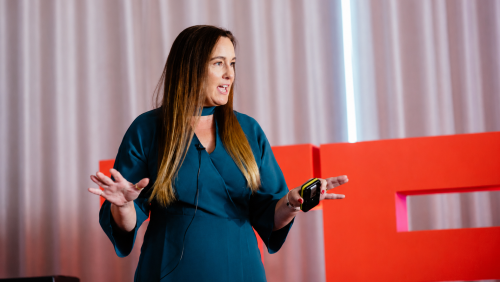
Tara McGeehan, President of CGI UK and Australia
Opinions expressed by Entrepreneur contributors are their own.
You're reading Entrepreneur United Kingdom, an international franchise of Entrepreneur Media.
For decades, gender parity in the workplace has been the subject of discussion, debate, and data. But despite years of targeted initiatives, executive pledges, and shifting public discourse, women remain underrepresented in senior roles across most industries – particularly in science and technology. One executive who has seen both the limitations and the potential of change from inside the C-suite is Tara McGeehan, President of CGI UK and Australia, a London based global IT and business consulting services firm.
“Throughout my career, I have learnt that as women, we often subconsciously put limitations on ourselves for a variety of reasons,” she says. “I have also learnt that sometimes limitations are put upon us outside of our comprehension or ability to control.” These barriers – both internal and systemic – remain a defining feature of the female professional experience. Yet McGeehan argues that meaningful progress begins with the choices made at the very outset of a woman’s career, specifically, where and with whom she chooses to work.
“For women looking to start a career, it is important to work for a company that emulates and reflects your values,” she advises. “Does it already employ role models you can look up to and learn from? Will it inspire you? Can you see yourself thriving and developing in your career there?”
McGeehan advocates for a level of scrutiny on employers that is often reserved for applicants. In an increasingly talent-led labour market, she believes candidates should feel empowered to ask hard questions. “Ask yourself these questions or better still, ask them at the interview stage and see if it’s the right fit for you. You want to work in a comfortable, supportive, and inclusive environment that supports you in your growth and success.”
The ability to thrive in such an environment, she notes, is also tied to confidence and communication. Speaking up, particularly early in one’s career, can be a challenge. But for McGeehan, it is essential. “Once you have secured your first role, I’d encourage you to share your thoughts and ideas. Diverse talent creates diverse ideas. This, in turn, pushes boundaries and innovation.”
Innovation, she suggests, is not the product of a singular vision, but of collective input from across levels and backgrounds. “It’s important to have strong female voices across the whole business, be it those in leadership positions or those in their first professional role.”
Despite improvements in representation, McGeehan remains clear-eyed about the distance still to go. “There’s still a long way to go in tackling the glass ceiling, and so none of us, regardless of our role, can afford to let up in our efforts to make our industry as diverse, equitable, and inclusive as it absolutely must be.”
That sense of shared responsibility – at all levels – is a consistent theme in her commentary. While individual advancement is important, collective advocacy remains central to progress. So too does ambition, often viewed with discomfort or suspicion when expressed by women in the workplace. McGeehan is unequivocal: such ambition is not only acceptable, it is necessary.
“My final piece of advice is that it’s okay to aspire to a successful career as a woman,” she says. “If you have the ambition and the drive, and are working with a company that embraces this, there’s no reason why you shouldn’t achieve it.”
Her words suggest a quiet but resolute optimism: that change is possible, but not inevitable. It must be built – consciously, collaboratively, and continuously.
For decades, gender parity in the workplace has been the subject of discussion, debate, and data. But despite years of targeted initiatives, executive pledges, and shifting public discourse, women remain underrepresented in senior roles across most industries – particularly in science and technology. One executive who has seen both the limitations and the potential of change from inside the C-suite is Tara McGeehan, President of CGI UK and Australia, a London based global IT and business consulting services firm.
“Throughout my career, I have learnt that as women, we often subconsciously put limitations on ourselves for a variety of reasons,” she says. “I have also learnt that sometimes limitations are put upon us outside of our comprehension or ability to control.” These barriers – both internal and systemic – remain a defining feature of the female professional experience. Yet McGeehan argues that meaningful progress begins with the choices made at the very outset of a woman’s career, specifically, where and with whom she chooses to work.
“For women looking to start a career, it is important to work for a company that emulates and reflects your values,” she advises. “Does it already employ role models you can look up to and learn from? Will it inspire you? Can you see yourself thriving and developing in your career there?”

Patricia Cullen • Features Writer
Entrepreneur Staff