Why Smart Money Backs Franchising
Why franchising offers stability, support and lower risk during uncertainty.
bfa
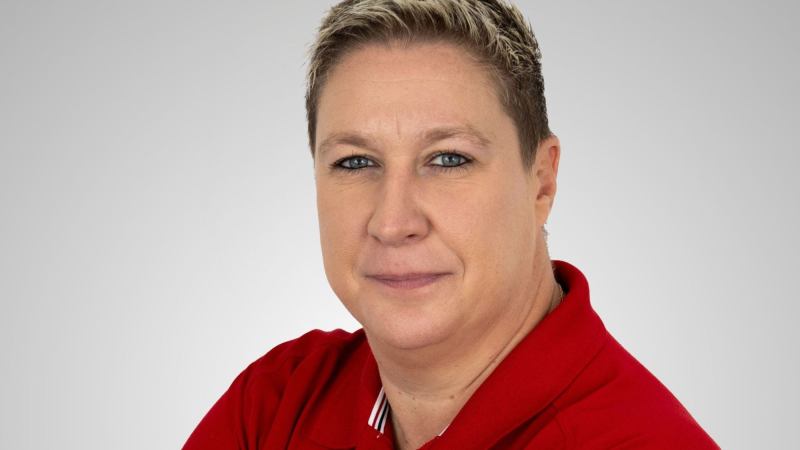
Pip Wilkins, CEO, British Franchise Association
Opinions expressed by Entrepreneur contributors are their own.
You're reading Entrepreneur United Kingdom, an international franchise of Entrepreneur Media.
With the OBR cutting the UK’s growth forecast to just 1.1% in the recent Spring Statement and unemployment predicted to climb to 5.3% this year, economic uncertainty is a reality for entrepreneurs and business owners alike. In times like these, investors are increasingly looking for business models that offer structure and resilience rather than starting from scratch and many are turning to franchising.
What is business format franchising?
Quite simply business format franchising, or more simply ‘franchising’ is a legal agreement between two parties that, in exchange for an initial fee and ongoing monthly payments, one will not only teach the other how to run a branch of their business but will also give them all the support and guidance they need to replicate their own success.
Why franchise rather than go it alone?
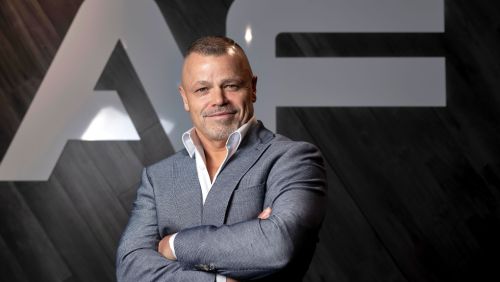
John Preston, MD of children’s maths tutoring franchise Mathnasium UK explains, using his own franchise as an example: “An independent tutoring business carries all the risk of figuring things out from scratch – the curriculum, the systems, the marketing, the operations. With Mathnasium, franchisees step into a proven model that has been refined over decades. The systems work. The curriculum works. Our role is to provide the framework and ongoing support so franchisees can focus on what actually drives growth: delivering a great experience for families.
Who buys a franchise?
Rab Selvaratnam owns multiple Mathnasium centres in Ealing, Watford, St Albans and Harrow. Rab says: “Before joining Mathnasium, I worked in banking within a strategy team in Canary Wharf. I was in middle management and doing well, but I started questioning whether that was the path I wanted for the next ten or twenty years. I wanted something where I could build my own business and have more control over how I spent my time.” Undoubtedly his banking background played a part in seeking out a financially more secure business path. Rab says: “I did look at other options, but the more due diligence I did, the more appealing franchising became.”
Why is franchising so successful?
There are two main pillars which raise franchising above the competition during economically stormy waters: a tried and tested business model and experienced franchisor support and, as Rab explains he realised that not having to figure everything out on his own was well worth the investment. He said: “With a strong franchise system, the path has already been paved. The systems, processes and financial model are already tested, so you’re not reinventing the wheel. For me, that dramatically reduced the risk, compared to starting a completely independent business.”
The tried and tested business model
The truth is, when you buy a franchise, you are paying for the inside knowledge, the years and years of testing, failing, succeeding and hitting on that sweet spot that gave them a successful business. They’ve made all the expensive mistakes, so you don’t have to. You just have to follow the model. Rab says: “One of the biggest advantages with a franchise is that you can focus on what you’re good at and lean on the franchisor’s systems and support for the rest. Mathnasium provides the framework, from the operational model to training and marketing, so you’re never starting from zero. Especially in the early stages, that guidance makes a huge difference.”
Expert support
Support is a huge part of the success of franchising. Most franchisees come into their new businesses without any prior knowledge of the sector at all and that’s ok, in fact, that’s preferable. A franchisee with a firmly entrenched idea of how the business should be run may not be to everyone’s advantage. John explains how far their support goes: “Our support doesn’t stop at the end of induction. We work closely with franchisees across operations, marketing, recruitment and business performance, particularly in those first few years when the foundations are being built. The goal is to help franchisees build sustainable businesses over the long term, not just get them through the door and leave them to it.”
Can anyone buy a franchise?
In theory however, no franchisor wants a franchisee to fail, it’s bad for the brand, so the selection process is rigorous, as John explains: “Every franchisee becomes the face of Mathnasium in their community, so we’re careful about who joins the network. We look for people who genuinely care about children’s education, have the commercial ability to run a business and critically have the grit to push through the harder moments.” In some brands 80% of applications are rejected. It is by no means just about writing a cheque.
In true ex banker style, Rab offers his advice to potential new franchisees on buying a franchise. He advises them to: “Do your due diligence and really stress-test the model. When I was exploring Mathnasium, I spoke to as many franchisees as possible and looked carefully at the numbers.”
Pip Wilkins, CEO of the BFA said: “We are very proud that the franchising sector has had a commercial failure rate of less than 6% for over 20 years, compared to 50% of all start-ups failing within the first three years. The combination of a repeat business model and expert support are a recipe for economic success, no matter how choppy the waters.”
With the OBR cutting the UK’s growth forecast to just 1.1% in the recent Spring Statement and unemployment predicted to climb to 5.3% this year, economic uncertainty is a reality for entrepreneurs and business owners alike. In times like these, investors are increasingly looking for business models that offer structure and resilience rather than starting from scratch and many are turning to franchising.
What is business format franchising?
Quite simply business format franchising, or more simply ‘franchising’ is a legal agreement between two parties that, in exchange for an initial fee and ongoing monthly payments, one will not only teach the other how to run a branch of their business but will also give them all the support and guidance they need to replicate their own success.
Why franchise rather than go it alone?
John Preston, MD of children’s maths tutoring franchise Mathnasium UK explains, using his own franchise as an example: “An independent tutoring business carries all the risk of figuring things out from scratch – the curriculum, the systems, the marketing, the operations. With Mathnasium, franchisees step into a proven model that has been refined over decades. The systems work. The curriculum works. Our role is to provide the framework and ongoing support so franchisees can focus on what actually drives growth: delivering a great experience for families.