Farmed, Not Franchised
How The Black Farmer scaled nationally without franchising or formulas
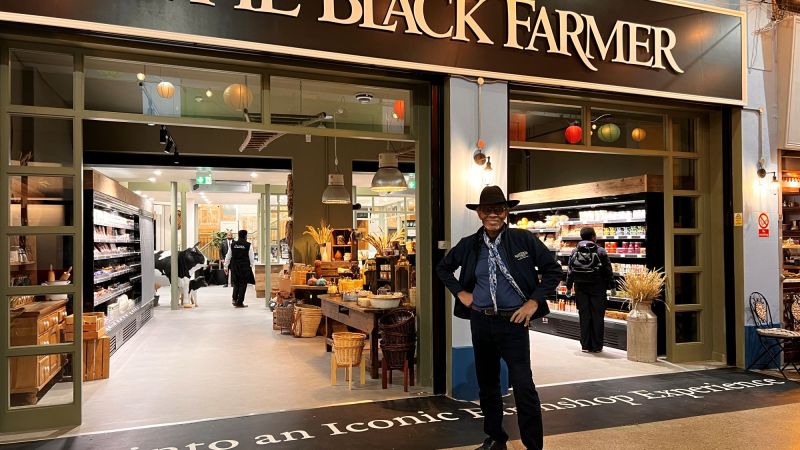
The Black Farmer
Wilfred Emmanuel-Jones, founder, The Black Farmer
Opinions expressed by Entrepreneur contributors are their own.
You're reading Entrepreneur United Kingdom, an international franchise of Entrepreneur Media.
For a monthly theme centred on franchising – its systems, repeatability and promise of scalable certainty – the story of The Black Farmer offers something slightly out of frame. It is, on the face of it, a success story in British food retail. But it is not a franchise. Nor did it begin as one. Instead, it is a case study in a different kind of expansion model: one built on narrative, persistence, retail distribution, and a long, sometimes awkward process of navigating UK grocery gatekeepers. The result is The Black Farmer – a brand that now sits on supermarket shelves across the UK, extending into online retail and selective farm shop-style ventures. Yet its origins lie not in business strategy, but in something more personal and far less structured: a childhood promise made in Birmingham.
The farm that began as a promise
Wilfred Emmanuel-Jones traces the origins of his business back to Jamaica, where he was born in Parrandon, before moving to Birmingham at the age of three. He describes his upbringing in the UK as taking place in what he calls an “urban jungle”, a world that felt far removed from any sense of rural life. Yet there was a counterpoint. His father kept an allotment – a small patch of land that became, in Emmanuel-Jones’ telling, something more significant than food production. It was an escape, routine, and early exposure to land as a possibility. “That allotment really became my oasis away from the urban misery I was living in,” he says. At 11, he made a promise to himself: one day, he would own a farm. It is the kind of childhood ambition that might normally fade into biography rather than business. For Emmanuel-Jones, it became a structuring principle – a personal sense of purpose that shaped the decisions that followed. He often returns to the idea that clarity of purpose is what drives direction. “If you don’t know what your personal purpose is,” he says, “you’re just in survival mode.” It is a framing that sits uneasily with conventional business thinking, where planning, forecasting and structured progression are often treated as the foundation of success. Emmanuel-Jones, by contrast, treats purpose as the starting point and everything else – education, career, even opportunity – as secondary.
School, survival and learning outside the system
His route through education did not suggest a conventional trajectory. Dyslexic and disengaged from formal schooling, he describes his time at secondary school as unsuccessful by most measures. The system, he suggests, simply did not fit the way he processed the world. After school came the army, and then catering – a move that, at the time, was less career choice than institutional sorting. He worked as a chef at a time when kitchens were not associated with celebrity culture or media visibility, but with hierarchy, pressure and repetition. Yet even then, he describes a kind of internal consistency. Whatever he was doing, the idea of owning a farm remained fixed. That long-term focus becomes one of the defining elements of his story – and one he contrasts sharply with what he sees as a modern tendency towards short-cycle thinking in business. In his view, many entrepreneurial journeys fail not because of lack of ideas, but because of a lack of sustained direction.
Breaking into the BBC: proximity as strategy
The next stage of his career moved into broadcasting. He went on to work at the BBC as a producer-director, entering television despite having no conventional route in, and building his way into the industry. The conventional channels did not respond. So he approached the institution from the outside. At BBC Pebble Mill in Birmingham, he began volunteering in a way that was deliberately unorthodox. He helped security staff open gates. He worked alongside cleaners. He spent time simply being present in the building – close enough to opportunities to make himself visible. Eventually, he moved into broadcasting, working his way into the BBC in entry-level roles. He has described being an outsider in the industry – without the background or networks usually associated with it – but he was given a chance to start as a runner, which opened the door into television production. That entry point led to a long career in television, including work as a producer and director on food programmes. It also provided something less tangible but arguably more important: an education in how narratives shape perception. He worked with chefs who would later become household names, including Gordon Ramsay at an early stage in his television career. Emmanuel-Jones’ role, as he describes it, was often to manage difficult personalities and translate them into broadcastable content. It was, in effect, brand-building – but in a media context.
Learning how brands behave
Looking back, the BBC years appear less like a job and more like a training ground in storytelling, audience behaviour and cultural positioning. Food, in particular, became a lens through which to understand consumer engagement. Personalities mattered. Stories mattered. Familiarity mattered. These ideas would later become central to The Black Farmer, but at the time they remained implicit. After 15 years, Emmanuel-Jones left the BBC to set up his own food and drink marketing agency. It was a significant move: no guaranteed clients, no financial security, and no clear runway. But he says he saw it less as a calculated gamble and more as stepping into the unknown. “People are trying to erase uncertainty,” he says. “There’s only one certain thing in life, and that is life is uncertain.” That belief sits at odds with conventional business thinking – and, by extension, with the logic of franchising, which is built on reducing uncertainty through replication and standardisation. Emmanuel-Jones, by contrast, treats uncertainty as a constant rather than a problem to eliminate. His agency went on to work with brands including Kettle Chips, Lloyd Grossman sauces, and Plymouth Gin. It was commercially successful enough to allow him to pursue a goal that had never left him: buying a farm.
Recognising the gap
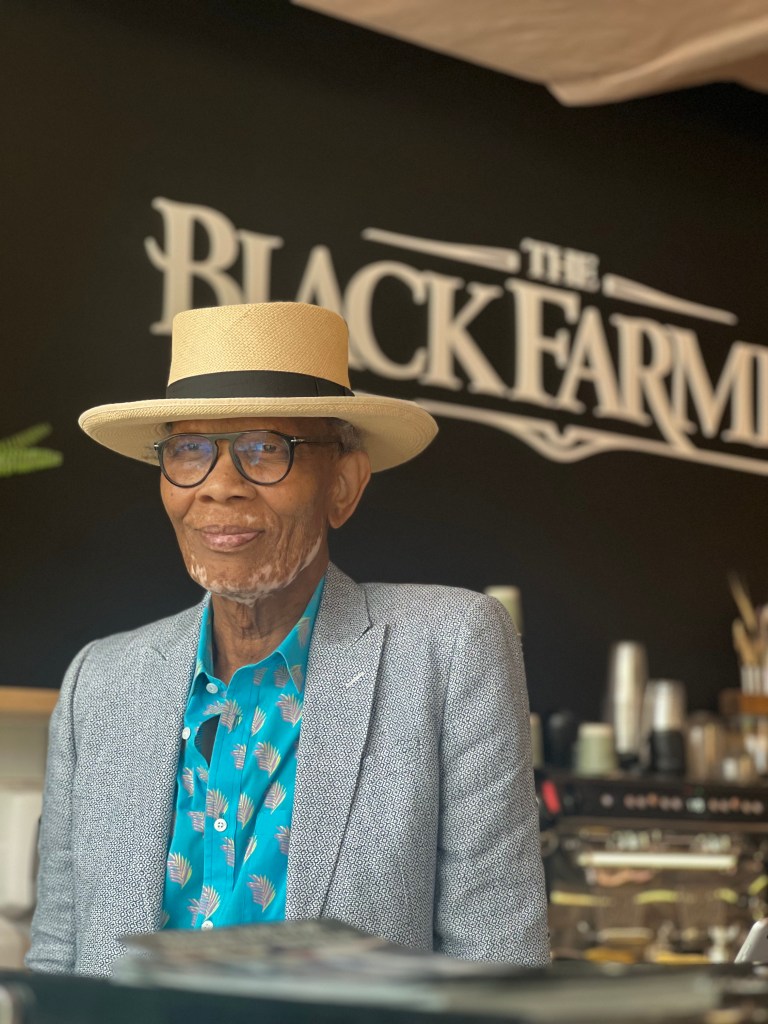
When he eventually bought land in the UK, the moment carried clear symbolic weight. The promise to his 11-year-old self had been fulfilled. But the reality of being a Black farmer in rural Britain brought new dynamics. He describes suspicion, misunderstanding and isolation – including one incident where neighbours reportedly assumed his polytunnels were being used to grow cannabis. More broadly, he began to recognise a structural absence: the lack of diversity in farming and food production, and the absence of brands that reflected that reality in any orthodox way. That gap became the foundation for The Black Farmer. Importantly, Emmanuel-Jones resisted the idea that it should be positioned as a niche or ethnic brand. Instead, he wanted something deliberately conventional. “I wanted a mainstream brand,” he says. The decision to enter the sausage category was not arbitrary. It was strategic. “In Britain, you can’t get more mainstream than sausages.” From the outset, the brand faced resistance. Supermarkets were unsure how to position it. Early research warned against the name itself, suggesting it would alienate consumers. He ignored that advice. “Research tells you what people thought yesterday,” he says. “It can’t tell you what people are thinking tomorrow.” It is a line that captures a broader philosophy: conviction over consensus. The brand launched with gluten-free sausages, aimed at a mainstream audience rather than a niche dietary segment. But the early challenge was not product – it was access. Supermarkets said no. So Emmanuel-Jones did something more direct. He took the product to agricultural shows and farm events across the country, focusing not on buyers but on consumers. The strategy was simple: get people to taste the product. Once they did, demand began to build. He then encouraged those consumers to contact supermarkets directly. “It was a street fight,” he says of the period. It is an unusual phrase in the context of food retail, but it captures something important about the way the brand grew: not through structured rollout, but through pressure from below.
Retail without the franchise model
Over time, The Black Farmer secured supermarket listings and became established in mass-market retail. But its growth model remained distinct from franchising. There were no franchisees replicating units. No standardised store rollouts. No operational duplication across territories. Instead, the business expanded across three interconnected channels:
- supermarket retail
- online direct-to-consumer sales
- and physical farm shops
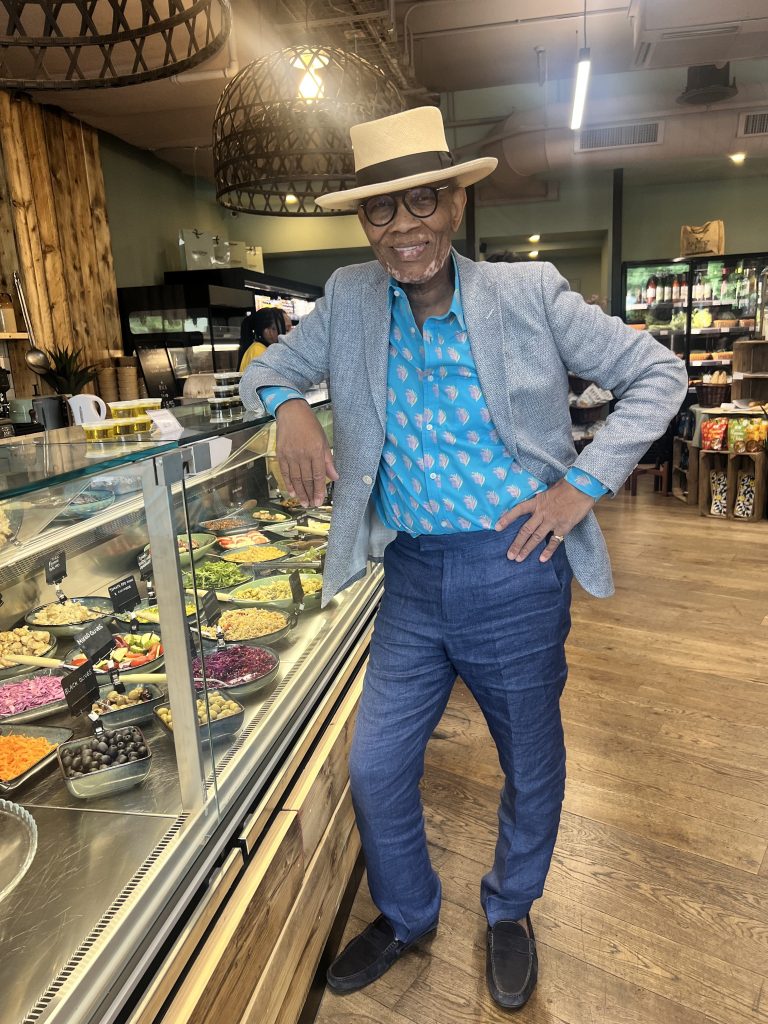
The farm shops – including sites in Brixton and White City – represent a further evolution. They are not simply points of sale, but what Emmanuel-Jones describes as “relational retail”. In contrast to transactional models (supermarkets, delivery platforms), these spaces are designed to encourage time, atmosphere and engagement. “They’re a bit like a spa,” he says. The intention is not efficiency, but experience. In franchise terms, this is significant. Much of modern franchising focuses on consistency and repeatability. Emmanuel-Jones’ model instead prioritises emotional connection and environment as drivers of brand strength.
Brand as infrastructure
Over time, his ambition has expanded beyond food. He describes a vision in which The Black Farmer could extend into pubs, hotels and broader lifestyle spaces – not unlike the expansion strategies of brands such as Virgin. But he is also realistic about the distinction between creating a brand and operating a business. “There are people who are good at running businesses,” he says, “and people who create things.” The implication is that scale eventually requires both. He is open about the challenges of investment. Traditional funders, he suggests, tend to prefer proven models rather than experimental brands. As a result, much of the business has grown without large external backing. That independence, he argues, has come with a trade-off – slower scaling, but greater control. He also notes a common pattern among founders who exit too early and later regret it.
The long view
Now, more than 20 years after the brand’s launch, Emmanuel-Jones describes The Black Farmer as being at a new stage of readiness. Established in the UK, recognised by consumers, and embedded in retail, the question is no longer whether the brand works – but where it goes next. International expansion is a clear direction, particularly in English-speaking markets such as Australia, Canada, New Zealand and the United States. He believes the brand’s themes – identity, inclusion, and cultural positioning – translate globally. And, notably, he does not rule out franchising as part of that future. “I would franchise it.” After building the brand outside franchising logic, he now sees franchising as a possible tool for scaling what already exists. Alongside this, Emmanuel-Jones is interested in how technology is reshaping entrepreneurship itself. He is particularly focused on artificial intelligence and its implications for work, creativity and education. In his view, the traditional path – school, university, profession – is already weakening. “We are going into the age of the entrepreneur,” he says. In that context, he sees tools like AI not as replacements for human creativity, but as amplifiers of it. His own experiments include digital systems embedded into the brand, including an AI assistant based on his voice and philosophy. It is another extension of the same pattern: brand, story, and technology converging into infrastructure.
Outsiders and scale
What ultimately runs through Emmanuel-Jones’ story is an argument about who gets to build successful businesses in the first place. Innovation, he suggests, often comes from outsiders – people operating beyond the assumptions and structures of established systems. That idea sits comfortably within a franchise-focused issue precisely because it complicates one of franchising’s central promises: that scale is primarily a question of structure. In Emmanuel-Jones’ case, scale emerged differently – first through conviction, then through distribution, then through consumer demand. Systems came later. And that may be what makes The Black Farmer more than a business success story. It is not simply an alternative to franchising, but a reminder that brands are rarely built through systems alone. Before replication comes belief; before structure, identity.
For a monthly theme centred on franchising – its systems, repeatability and promise of scalable certainty – the story of The Black Farmer offers something slightly out of frame. It is, on the face of it, a success story in British food retail. But it is not a franchise. Nor did it begin as one. Instead, it is a case study in a different kind of expansion model: one built on narrative, persistence, retail distribution, and a long, sometimes awkward process of navigating UK grocery gatekeepers. The result is The Black Farmer – a brand that now sits on supermarket shelves across the UK, extending into online retail and selective farm shop-style ventures. Yet its origins lie not in business strategy, but in something more personal and far less structured: a childhood promise made in Birmingham.
The farm that began as a promise
Wilfred Emmanuel-Jones traces the origins of his business back to Jamaica, where he was born in Parrandon, before moving to Birmingham at the age of three. He describes his upbringing in the UK as taking place in what he calls an “urban jungle”, a world that felt far removed from any sense of rural life. Yet there was a counterpoint. His father kept an allotment – a small patch of land that became, in Emmanuel-Jones’ telling, something more significant than food production. It was an escape, routine, and early exposure to land as a possibility. “That allotment really became my oasis away from the urban misery I was living in,” he says. At 11, he made a promise to himself: one day, he would own a farm. It is the kind of childhood ambition that might normally fade into biography rather than business. For Emmanuel-Jones, it became a structuring principle – a personal sense of purpose that shaped the decisions that followed. He often returns to the idea that clarity of purpose is what drives direction. “If you don’t know what your personal purpose is,” he says, “you’re just in survival mode.” It is a framing that sits uneasily with conventional business thinking, where planning, forecasting and structured progression are often treated as the foundation of success. Emmanuel-Jones, by contrast, treats purpose as the starting point and everything else – education, career, even opportunity – as secondary.
School, survival and learning outside the system
His route through education did not suggest a conventional trajectory. Dyslexic and disengaged from formal schooling, he describes his time at secondary school as unsuccessful by most measures. The system, he suggests, simply did not fit the way he processed the world. After school came the army, and then catering – a move that, at the time, was less career choice than institutional sorting. He worked as a chef at a time when kitchens were not associated with celebrity culture or media visibility, but with hierarchy, pressure and repetition. Yet even then, he describes a kind of internal consistency. Whatever he was doing, the idea of owning a farm remained fixed. That long-term focus becomes one of the defining elements of his story – and one he contrasts sharply with what he sees as a modern tendency towards short-cycle thinking in business. In his view, many entrepreneurial journeys fail not because of lack of ideas, but because of a lack of sustained direction.

Patricia Cullen • Features Writer
Entrepreneur Staff