Greener Pastures
The UK’s next growth story
British Business Bank
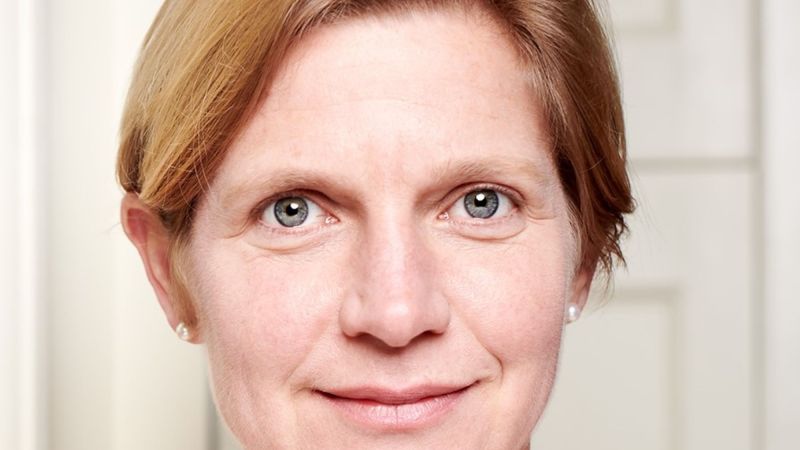
Hannah Gilbert, Director of Sustainability at the British Business Bank
Opinions expressed by Entrepreneur contributors are their own.
You're reading Entrepreneur United Kingdom, an international franchise of Entrepreneur Media.
With renewable energy and clean tech leading the charge, Entrepreneur UK speaks to Hannah Gilbert, Director of Sustainability at the British Business Bank.
Which green sectors show the strongest growth potential for UK businesses, based on current economic data?
The Office for National Statistics (ONS) publishes data on the environmental goods and service sector (EGSS), which shows economic activity (as measured by Gross Value Added- GVA) has doubled between 2010 and 2022 (100% increase).
Specific EGSS sectors have grown even more including renewable energy (140% increase), environmental education (347% increase) and low emission vehicles, carbon capture and storage, and inspections and control (109% increase). The number of jobs in EGSS sectors have also increased by 37% to 479,800 in 2022. Despite a slowdown in equity funding conditions over recent years, investors still see potential for investing in the clean tech sector. 43% of UK VC fund managers surveyed in our latest UK VC Financial Returns report currently consider investing in clean energy. The Bank’s UK Business angel survey also shows a shift in business angel investor preferences towards the clean tech sector. The proportion of business angels investing in energy, environment and clean tech increased from 20% in 2019 to 35% in 2025. Our Small Business Equity Tracker 2024 report looked at equity investment and comparisons between the UK and US across sectors. It found that the UK’s relative position in green tech sectors has improved significantly in recent years, with the UK share of the global market increasing from 2.6% to 4.5% over the past decade.
What trends are you seeing in SME access to finance for green initiatives?
Our recently published ‘SMEs and Net Zero’ report explores in detail the extent to which smaller businesses in the UK understand and are engaged with net zero. The research shows that a majority of SMEs (57%) see a lack of available finance or grants as a key barrier for progressing to net zero.
The Bank’s own SME finance survey suggests the proportion of firms who prioritise environmental sustainability reporting access to external finance as a barrier to becoming environmentally sustainable has been largely flat over the last few years, with between 26-28% of those firms prioritising environmental sustainability reporting access to finance to be a barrier in 2022-2024 surveys. The SMEs and Net Zero report findings also showed that demand for finance for green initiatives remains muted among smaller businesses as they face many near-term competing priorities. Whilst smaller businesses generally perceive there to be benefits to their organisation of progressing towards net zero (63% see at least one benefit), transitioning to net zero is a low priority for most smaller businesses over the next 12 months, including most of those in high-emitting sectors. 6% of SMEs are currently accessing green finance or grants and a further 9% have plans to access green finance or grants in the future. This rises to 14% among medium-sized businesses with a further 15% of medium-sized businesses planning to access green finance or grants in the future.
Smaller businesses in the utilities, waste and energy supply sectors are the most likely to prioritise working towards net zero with 39% of businesses in these sectors stating achieving net zero was a high priority and a further 33% stating it is a medium priority.
How is the UK financial system adapting to support sustainable innovation?
The UK is consistently ranked first in the world for sustainable finance. Supporting British industry and creating good, skilled jobs up and up down the country is core to the government’s industrial strategy and plan to grow the economy, ensuring businesses can take advantage of the transition to new low carbon technologies as they reduce their emissions and that they have the finance to innovate, adopt and enable the opportunities in the transition to net zero. As noted earlier, we have already seen a high number of new jobs created in EGSS sectors. Our research shows that investment value and investor appetite has risen in green sectors, including clean tech, green tech and energy-related industries in the last few years:
- Our Small Business Equity Tracker reports look at equity finance for smaller businesses in the UK. The report published in 2023 looks specifically at clean tech companies and shows that equity investment in clean tech companies in the UK has been on the rise the last few years to reach a record £0.9bn in 2022, though it has since reversed some of this progress in recent years. The Bank welcomes the growth of the clean tech industry in the UK given the scale of investment that is needed for the transition to a net zero economy.
- Our Small Business Equity Tracker 2024 report looked at equity investment and comparisons between the UK and US across sectors. It found that the UK’s relative position in green tech sectors has improved significantly in recent years, with its share of the global market increasing from 2.6% to 4.5% over the past decade. The report also found green tech-focused companies are more likely to raise follow on funding than companies in the overall UK equity market (49% of green tech focused companies raised a second round of funding compared to 45% for the overall market), which was an improvement compared to previous start up cohorts.
- However, the report also found that deal sizes to green tech-focused companies are not scaling up to the same extent as businesses in other sectors. Average deal sizes for green tech focused companies are larger than the overall equity market over the first three funding rounds. Over rounds four to six though, green tech-focused deals are smaller than comparable deals in the overall equity market which could signify a possible funding gap as this sector is generally more capital intensive than other sectors.
- Our latest Small Business Equity Tracker report, published in 2025, shows that there is also an increased focus from angel investors on energy-related industries. The proportion of angel investors surveyed investing in energy, environment and cleantech rose from 20% to 35% between 2019 and 2025, whilst 43% of UK VC fund managers surveyed in our UK VC Financial Returns 2025 report currently consider investing in clean energies.
From an economic perspective, how resilient are UK green businesses to market shocks?
It is not possible to assess how resilient UK green businesses are to market shocks compared to other sectors, as no data source covers this information, though there are some indications from bank surveys. For example, a recent survey undertaken by Rabobank among its SME customers found that SMEs with low ESG performance were about twice as likely as high performers to run into arrears over the year. The SME Finance monitor survey suggests around 22% of SMEs overall in H1 2025 described themselves as struggling, with revenue falling short of outgoings. Over time, the proportion of SMEs reporting that they are struggling has increased from 18% in Q1 2023 to 24% in Q2 2025.
Which government policies or programs are proving most effective at stimulating green entrepreneurship?
The Government announced its Modern Industrial Strategy in 2025, setting out eight growth-driving sectors. Four of these sectors are -vital to stimulating green entrepreneurship – Clean Energy, Advanced Manufacturing, Digital and Technologies and Financial Services, which includes sustainable finance. As part of the Government’s announcement, the British Business Bank will be committing £4bn across the eight sectors, crowding in c. £12bn of private capital. We expect the British Business Bank’s Industrial Strategy Growth Capital to therefore deliver around £16bn of capital to invest across the eight sectors over the next four years.
Looking at the data, what key indicators should entrepreneurs track when building a sustainable business?
From an entrepreneur’s perspective, relevant key indicators will depend on the size of the business, funding stage, sector and business model. We supported a toolkit for start-ups and their investors last year, which helps businesses to understand and improve their ESG performance and includes a free library of resources. You can find the toolkit here: https://toolkit.esgvc.co.uk/
With renewable energy and clean tech leading the charge, Entrepreneur UK speaks to Hannah Gilbert, Director of Sustainability at the British Business Bank.
Which green sectors show the strongest growth potential for UK businesses, based on current economic data?
The Office for National Statistics (ONS) publishes data on the environmental goods and service sector (EGSS), which shows economic activity (as measured by Gross Value Added- GVA) has doubled between 2010 and 2022 (100% increase).
Specific EGSS sectors have grown even more including renewable energy (140% increase), environmental education (347% increase) and low emission vehicles, carbon capture and storage, and inspections and control (109% increase). The number of jobs in EGSS sectors have also increased by 37% to 479,800 in 2022. Despite a slowdown in equity funding conditions over recent years, investors still see potential for investing in the clean tech sector. 43% of UK VC fund managers surveyed in our latest UK VC Financial Returns report currently consider investing in clean energy. The Bank’s UK Business angel survey also shows a shift in business angel investor preferences towards the clean tech sector. The proportion of business angels investing in energy, environment and clean tech increased from 20% in 2019 to 35% in 2025. Our Small Business Equity Tracker 2024 report looked at equity investment and comparisons between the UK and US across sectors. It found that the UK’s relative position in green tech sectors has improved significantly in recent years, with the UK share of the global market increasing from 2.6% to 4.5% over the past decade.
What trends are you seeing in SME access to finance for green initiatives?
Our recently published ‘SMEs and Net Zero’ report explores in detail the extent to which smaller businesses in the UK understand and are engaged with net zero. The research shows that a majority of SMEs (57%) see a lack of available finance or grants as a key barrier for progressing to net zero.
The Bank’s own SME finance survey suggests the proportion of firms who prioritise environmental sustainability reporting access to external finance as a barrier to becoming environmentally sustainable has been largely flat over the last few years, with between 26-28% of those firms prioritising environmental sustainability reporting access to finance to be a barrier in 2022-2024 surveys. The SMEs and Net Zero report findings also showed that demand for finance for green initiatives remains muted among smaller businesses as they face many near-term competing priorities. Whilst smaller businesses generally perceive there to be benefits to their organisation of progressing towards net zero (63% see at least one benefit), transitioning to net zero is a low priority for most smaller businesses over the next 12 months, including most of those in high-emitting sectors. 6% of SMEs are currently accessing green finance or grants and a further 9% have plans to access green finance or grants in the future. This rises to 14% among medium-sized businesses with a further 15% of medium-sized businesses planning to access green finance or grants in the future.
Smaller businesses in the utilities, waste and energy supply sectors are the most likely to prioritise working towards net zero with 39% of businesses in these sectors stating achieving net zero was a high priority and a further 33% stating it is a medium priority.

Patricia Cullen • Features Writer
Entrepreneur Staff