UK built environment has a chance to lead on Net Zero – if policy and funding catch up, says Genous CEO
UK can lead Net Zero by aligning policy, funding, planning.
Geneus
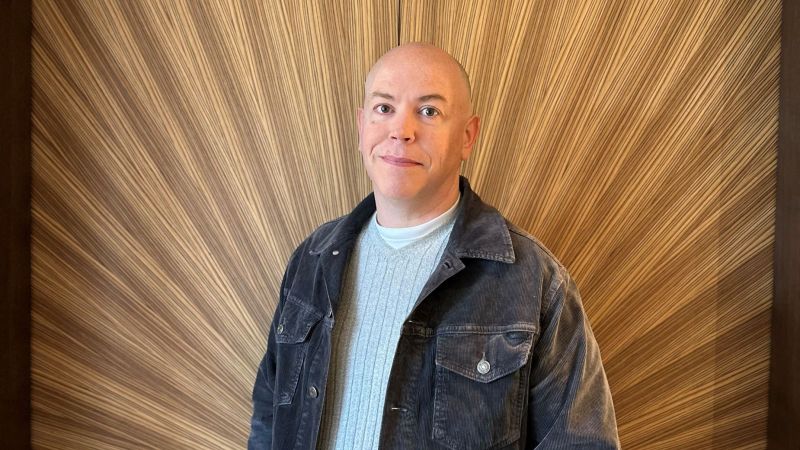
Simon Bones, CEO, Genous
Opinions expressed by Entrepreneur contributors are their own.
You're reading Entrepreneur United Kingdom, an international franchise of Entrepreneur Media.
Simon Bones, founder and CEO of Genous, is candid about the state of the UK’s clean tech, proptech, and green real estate sectors – but he also sees a clear path forward.
“I’m not sure we’re leading anywhere, unfortunately. The government’s Boiler Upgrade Scheme [for heat pumps] is a sensible option, but predominantly needs to exist because of the relative cost of gas and electricity (electricity is too expensive) and lack of finance.”
Bones highlights an opportunity for innovation, noting that support for companies like Genous is limited. “There is little support for genuine innovators … and a preference from government for opaquely calculated funding numbers and public sector approaches to complex problems, which never ends well.” Yet he believes practical solutions are possible.
From ambition to action
To turn Net Zero from policy ambition into homes and offices that are actually built, retrofitted, and financed at scale, Bones identifies three essentials for customers:
“Three things are necessary from a customer perspective. They need: (1) to be able to find out what an ‘intelligent retrofit’ looks like for their property (what it is, what it will cost and what it will save), easily, quickly and cheaply; (2) to have access to funds so they can afford it (through secured lending for owners or legislative pressure for tenants); and (3) have easy and high-quality service provision.”
He stresses that industry and regulators can help make these solutions real: “The industry and regulators also need to be better at delivering business models that give customers what they need and not just what is convenient for the industry and regulators.”
Capital, regulation, and planning: challenges, but not insurmountable
Bones is clear-eyed about the barriers but optimistic about what could change. “Raising capital for climate-positive businesses is very hard unless you’re a product business or a pure tech business – and neither of those is actually the problem; the problem is a lack of service businesses, which remain very hard to fund.”
He sees opportunities for regulatory improvement as well: “Regulation tends to prioritise red-tape that doesn’t actually drive quality, and a preference for spend to go through public-sector approaches that aren’t fit for purpose. While planning is now much improved on heat pumps but remains hopelessly backward on solar.”
On upcoming initiatives, he remains hopeful: “We haven’t seen the Warm Homes Plan yet, or the Future Homes Standard, but the latter sounds like it’s been watered down by the vested interests of housebuilders … and we will reserve judgment on the former until we see it.”
A vision for Net Zero today
Bones lays out a practical, achievable vision for a Net Zero UK:
“Electrification and more closed-loop systems are critical to get to net zero. Hydrogen is not the answer, and has been used by the industry to delay on electrification, while utility network inadequacy means that high-input, high-output on-site generation and heating systems will not be possible without thoughtful design that minimises flows to and from individual buildings.”
“Funding for this electrification should come overwhelmingly from the private sector and be based predominantly on secured lending, whether tied to properties or owners/landlords. Electricity needs to get cheaper and gas and oil more expensive to make the case simpler.”
“We need planning to make solar easier, utilities to be forced to step up (but with an acceptance that significant investment is going to be required on distribution networks in particular) and heat pump + solar + battery + EV charger to be the default model that houses in particular move to.”
“Lastly, electrification only gets to net zero if the grid gets greener. More renewable generation is needed, and this should be increasingly funded and owned by government not private capital, which is wasteful and won’t step up as needed.”
Bones’ view is clear: the UK can lead the way on Net Zero, but only by aligning policy, funding, and planning to make electrified, climate-positive buildings the norm rather than the exception. With the right structures in place, the potential to turn ambition into real streetscapes and balance sheets is within reach. The opportunity is there – and with concerted effort, the UK could turn its climate ambitions into tangible leadership in clean tech and sustainable development.
Simon Bones, founder and CEO of Genous, is candid about the state of the UK’s clean tech, proptech, and green real estate sectors – but he also sees a clear path forward.
“I’m not sure we’re leading anywhere, unfortunately. The government’s Boiler Upgrade Scheme [for heat pumps] is a sensible option, but predominantly needs to exist because of the relative cost of gas and electricity (electricity is too expensive) and lack of finance.”
Bones highlights an opportunity for innovation, noting that support for companies like Genous is limited. “There is little support for genuine innovators … and a preference from government for opaquely calculated funding numbers and public sector approaches to complex problems, which never ends well.” Yet he believes practical solutions are possible.

Patricia Cullen • Features Writer
Entrepreneur Staff