Model Behaviour
Why strong systems underpin sustainable franchise growth and profitability.
Not Just Travel
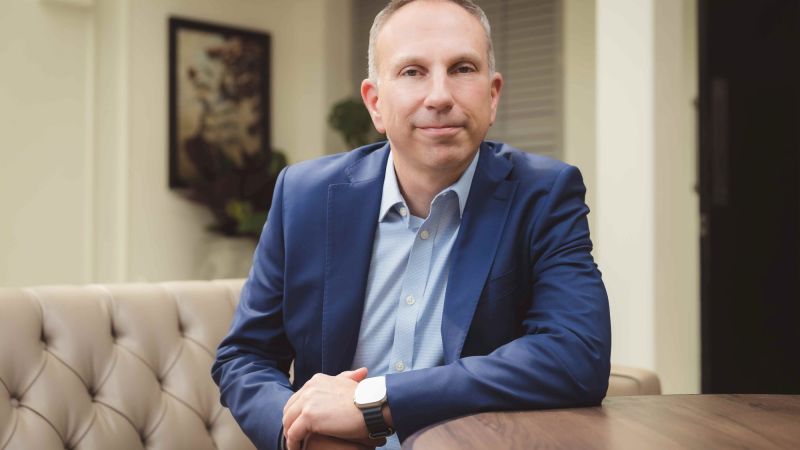
Steve Witt co-founder of Not Just Travel and The Travel Franchise
Opinions expressed by Entrepreneur contributors are their own.
You're reading Entrepreneur United Kingdom, an international franchise of Entrepreneur Media.
Franchising has long sold itself on a deceptively straightforward promise: take a successful business model, replicate it consistently and growth will follow. But in reality, sustainable scale is rarely that simple. Behind every successful franchise network sits an operational structure capable of supporting growth long after the excitement of expansion fades. Across sectors ranging from hospitality and fitness to travel and property, franchise systems are discovering that long-term success depends less on rapid recruitment and more on whether the infrastructure behind the business can scale alongside the network itself. Training, communication, technology and operational support are increasingly becoming the real differentiators between franchise systems that plateau and those that continue to grow sustainably.
For Steve Witt, co-founder of Not Just Travel and The Travel Franchise, support infrastructure is the single most important factor in whether a franchise system succeeds at scale. “Training and support, without question,” he says. “That is where we put the money, and it is the single biggest reason franchisees who join us go on to build real businesses rather than just buy themselves a job.” Witt believes too many franchise systems focus heavily on recruitment without investing enough into what happens after franchisees join the network. At Not Just Travel, investment is concentrated around three core areas: training, technology and ongoing operational support. “We run our Millionaires Retreat and our Elite experiences, where Paul and I work directly with consultants on how to grow, not just how to sell,” he explains. “We don’t just teach our franchisees how to sell holidays, we teach them how to grow businesses.”

That distinction matters more as franchise systems become larger and more operationally complex. The challenge is no longer simply attracting franchisees, but ensuring standards, culture and performance remain consistent across an expanding network. “When our franchisees succeed, the company succeeds,” Witt says. “It really is that simple, and most franchise systems forget it.” The operational pressures that come with scale are not unique to franchising. Across modern growth industries, businesses are increasingly discovering that expansion places enormous strain on systems originally designed for much smaller operations. Processes that work effectively across ten locations can become far harder to manage at fifty or a hundred. Communication becomes more layered, operational oversight weakens and maintaining consistency requires significantly more structure than many founders initially anticipate. “The franchisors that scale well are the ones who treat support infrastructure, technology and culture as P&L line items that have to grow ahead of network size, not behind it,” Witt says. “The strain doesn’t come from being too big; it comes from being too big for the systems you built when you were smaller.” That philosophy has shaped the company’s approach to technology investment. Alongside franchisee support programmes, Not Just Travel continues investing heavily into internal systems and consumer-facing tools designed to improve both franchisee efficiency and customer experience. “The franchisee experience is the product,” Witt says. “Get that wrong and nothing else matters.”
For Mohammad Shaikh, CEO of Eatphoria – the multi-brand quick-service restaurant group behind Wraps & Wings – scalable infrastructure is equally central to sustainable growth. But in hospitality, where margins remain under constant pressure, efficiency has become just as important as support. “What Eatphoria does exceptionally well is give our franchise partners a model that is designed for scale from the outset,” Shaikh says. The group, which currently operates 50 locations and plans to scale to 100 by 2030, has built its proposition around shared operational infrastructure. Multiple food brands can operate from the same kitchen set-up, allowing franchisees to maximise output without significantly increasing overheads. “Our portfolio is built around complementary brands that can operate from the same kitchen infrastructure,” Shaikh explains. “That allows partners to trade across multiple dayparts without added complexity.” It reflects a broader shift taking place across modern franchising. Scale is no longer simply about opening more units. Increasingly, franchise groups are focused on extracting more value from existing infrastructure through technology, operational efficiency and shared systems.
But greater efficiency also increases the importance of consistency. “Franchise systems typically start to strain when complexities create inconsistencies in execution,” Shaikh says. “Whether that’s product quality or service standards, one poor experience has an impact not only on one site, but on the wider brand and potentially other franchisees too.” That interconnectedness remains one of franchising’s defining strengths and vulnerabilities. Every location benefits from collective brand recognition, but operational failures also become collective. As franchise networks grow, maintaining culture, communication and standards becomes significantly more difficult.
For franchisees themselves, scaling from one unit to multiple locations often requires an entirely different skill set. “Going from one unit to ten is not ten times the work, it’s a completely different job,” Witt says. “You change from someone who works in your business to someone who works on your business.” It is a transition many operators underestimate. The practical expertise that helps someone successfully run one location does not automatically prepare them to lead teams, manage communication structures or maintain standards across multiple sites. “The thing you were brilliant at – the actual craft – is the thing you’re no longer allowed to spend most of your day on,” Witt explains. Communication itself also becomes more complex as organisations grow. “Going from being able to lean across and talk to someone, to having to get smarter at communicating to a wide group of people with different backgrounds – that’s a huge shift,” he says. “Everyone on your team having the same values is essential.”
Those pressures are becoming increasingly visible across hospitality and service-based franchising as operators navigate rising labour costs, inflationary pressure and changing consumer expectations. Franchisees are also becoming more commercially sophisticated, evaluating franchise systems not simply on brand recognition, but on the quality of operational support, technology and long-term business viability. The strongest franchise systems are increasingly those that recognise scale itself is not the goal. Sustainable profitability, operational consistency and franchisee success matter far more than headline expansion numbers alone. Which is why, despite operating in very different sectors, both Witt and Shaikh ultimately return to the same conclusion: fundamentals still matter most. “My advice would always be to focus on the core fundamentals of hospitality,” Shaikh says. “Ensuring staff are motivated and engaged, stores are clean and welcoming and that the product tastes great.”
For all the technology, infrastructure and expansion strategies shaping modern franchising, the businesses most likely to succeed long term may still be the ones capable of doing simple things consistently well. Because ultimately, scale does not replace strong operational foundations. It depends on them.
Franchising has long sold itself on a deceptively straightforward promise: take a successful business model, replicate it consistently and growth will follow. But in reality, sustainable scale is rarely that simple. Behind every successful franchise network sits an operational structure capable of supporting growth long after the excitement of expansion fades. Across sectors ranging from hospitality and fitness to travel and property, franchise systems are discovering that long-term success depends less on rapid recruitment and more on whether the infrastructure behind the business can scale alongside the network itself. Training, communication, technology and operational support are increasingly becoming the real differentiators between franchise systems that plateau and those that continue to grow sustainably.
For Steve Witt, co-founder of Not Just Travel and The Travel Franchise, support infrastructure is the single most important factor in whether a franchise system succeeds at scale. “Training and support, without question,” he says. “That is where we put the money, and it is the single biggest reason franchisees who join us go on to build real businesses rather than just buy themselves a job.” Witt believes too many franchise systems focus heavily on recruitment without investing enough into what happens after franchisees join the network. At Not Just Travel, investment is concentrated around three core areas: training, technology and ongoing operational support. “We run our Millionaires Retreat and our Elite experiences, where Paul and I work directly with consultants on how to grow, not just how to sell,” he explains. “We don’t just teach our franchisees how to sell holidays, we teach them how to grow businesses.”
That distinction matters more as franchise systems become larger and more operationally complex. The challenge is no longer simply attracting franchisees, but ensuring standards, culture and performance remain consistent across an expanding network. “When our franchisees succeed, the company succeeds,” Witt says. “It really is that simple, and most franchise systems forget it.” The operational pressures that come with scale are not unique to franchising. Across modern growth industries, businesses are increasingly discovering that expansion places enormous strain on systems originally designed for much smaller operations. Processes that work effectively across ten locations can become far harder to manage at fifty or a hundred. Communication becomes more layered, operational oversight weakens and maintaining consistency requires significantly more structure than many founders initially anticipate. “The franchisors that scale well are the ones who treat support infrastructure, technology and culture as P&L line items that have to grow ahead of network size, not behind it,” Witt says. “The strain doesn’t come from being too big; it comes from being too big for the systems you built when you were smaller.” That philosophy has shaped the company’s approach to technology investment. Alongside franchisee support programmes, Not Just Travel continues investing heavily into internal systems and consumer-facing tools designed to improve both franchisee efficiency and customer experience. “The franchisee experience is the product,” Witt says. “Get that wrong and nothing else matters.”

Patricia Cullen • Features Writer
Entrepreneur Staff