Hospitality’s Endurance in an Era of Costs
Rising costs reshape hospitality through resilience, innovation, community, and smarter operations.
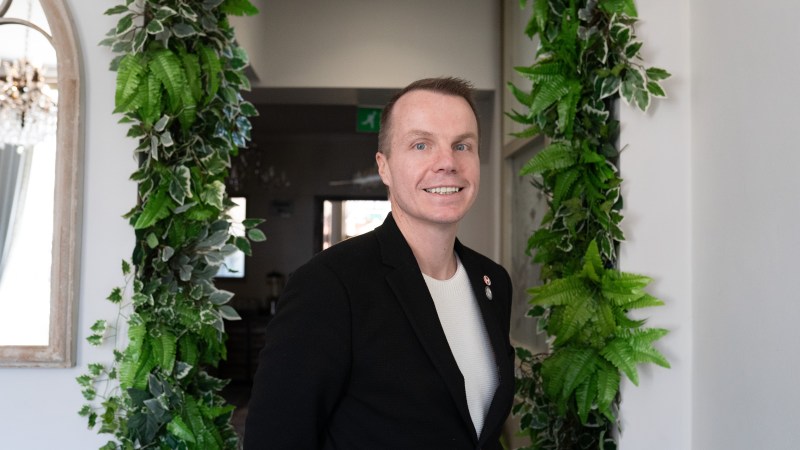
SAVVY Collective
Steven Hesketh, founder of SAVVY Collective, a hospitality-focused strategy and marketing consultancy group
Opinions expressed by Entrepreneur contributors are their own.
You're reading Entrepreneur United Kingdom, an international franchise of Entrepreneur Media.
UK hospitality is under pressure from business rates, labour costs and inflation, forcing operators into trade-offs, according to Steven Hesketh, founder of SAVVY Collective. “There’s nothing that many businesses can do about it other than swallow them, so to speak.” He says this is driving higher prices or reduced services: “It ultimately does mean higher prices and or reduction of services.” Operators are making subtle, often invisible cuts to absorb costs. “Everyone’s just trying to be as clever as they can be.” Hesketh cites once-unthinkable changes now becoming routine, such as removing bedroom water or altering pillow setups: “Do you put water in the bedrooms? Now you take them out and maybe you put filtered water in your own reusable bottles. Do you do things like single pillows on the bed and the second pillow in the wardrobe?” Even small increases matter. “At one of our properties, it works out to be something as bonkers as £6 extra per room per night.” He adds that these pressures are hard to absorb and limit investment: “You just can’t hide or swallow that. You just really can’t.” With COVID loans still being repaid alongside rising business rates, he says: “We’re just coming to the end of paying off our COVID loans and all this type of stuff. And then you’re hit with your business rates increased. What’s ultimately happening is that longer term investment into your product is taking the biggest hit.”
Recruitment pressures and structural change
Recruitment and training are also being reshaped by cost and wage pressures, with Hesketh saying the traditional model of developing young staff in-house is becoming harder to sustain. “Gone are the days where you’ve gone, let’s recruit some youngsters in, let’s train them up, let’s get them ready.” Operators, he says, are now forced to prioritise immediate productivity over long-term development. “You are now so pushed for time and cost when recruiting.” Rising wages have also narrowed the gap between entry-level and experienced staff. “For an extra quid or two, you may as well just get a more experienced team member.” He acknowledges this reduces opportunities for younger workers, particularly where training time is limited. “Sadly, their wage is pretty much the same… that extra time to invest in the training of someone that has those soft skills you need for hospitality, so to speak.” Despite this, he argues hospitality still plays a vital social and developmental role. “We are without doubt one of the most resilient industries out there.” And for young people in particular, he highlights the human value of the workplace. “The joy of them working with teams… some of their strongest relationships can be with the people they work alongside.”
AI, automation and the limits of technology
On artificial intelligence, Hesketh is cautiously optimistic, rejecting the idea that it threatens hospitality jobs and instead seeing it as a practical tool for efficiency. “I think it’s a case of not being scared, and just embracing the inevitable.” He describes AI as a way to improve speed and decision-making. “Can we get sharper, smarter, quicker answers?” In particular, he highlights its value for independent operators with limited resources, where small efficiency gains matter. Even routine admin and communication tasks can be improved through AI. However, he draws a clear line at replacing human roles in guest-facing settings. “What I’m not a big fan of is the robotic barman.” For Hesketh, hospitality depends on human connection that technology cannot replicate. “When you go to a lovely bar, actually part of the fun is having that little bit of banter.” He warns that over-automation risks eroding that experience. “That sense of connection cannot be taken away.”
Independent hotels vs global chains
On competition between independent operators and large hotel groups, Hesketh takes a pragmatic view. While acknowledging the advantages of scale enjoyed by major brands, he argues that independents often outperform on agility and innovation. “I have always had this opinion that we’re 2-3% behind on occupancy to the big brands.” However, he suggests that tougher trading conditions can narrow that gap by favouring flexibility over scale. “As times get tough, I think that does sway to our advantage.” Independent operators, he says, are able to move quickly and experiment with new concepts in ways large groups cannot replicate. “The independents are very nimble, and can make things happen fast.” He cites examples of rapid reinvention driven by necessity rather than capital investment. “They’ve actually transformed what was an office into a lovely private dining room with a Harry Potter-type theme…within a week.” Such agility, he argues, creates opportunities for differentiation even in a highly competitive market. “You just wouldn’t get that in the big corporate hotel world.” However, he acknowledges that independents face structural disadvantages in capital expenditure and refurbishment cycles. “Whereas these big hotel chains can maybe have funds that sort of, we’ll just throw a million at that one.” By contrast, smaller operators often rely on limited internal resources for reinvestment. “For me to invest £100,000 in my product, I just couldn’t do that right now.”
Community as economic infrastructure
Despite these challenges, Hesketh argues that the long-term strength of hospitality lies in its integration with local communities. “The success for me has always been about our engagement with the community.” He describes community involvement as a practical business strategy rather than a marketing exercise, encompassing schools, charities and local partnerships. “If you support the school’s charity, that really bodes well that you’re a local business supporting 300 kids at a local school.” These relationships, he says, generate long-term goodwill that translates into sustained customer loyalty. “My experience has always been that they’ll support you.” He argues that businesses which fail often underestimate the importance of local integration. “Communities support communities.”
Outlook: constrained but cautiously optimistic
Looking ahead, Hesketh sees growth through consolidation, partnerships and acquiring underperforming assets. “We are looking to grow over these next 12 plus months.” He believes many independent hotels are sound but exhausted after prolonged pressure. “Those owners are probably a little bit tired… and actually their businesses are still great businesses.” He notes demand remains resilient for leisure and social experiences. “They still want to go and have a nice birthday treat… they still want to get out and have a coffee with their friends.” Even as spending shifts, he says hospitality retains its social role. Reflecting on the sector’s ongoing challenges, from rising costs to operational pressures, he adds: “It’s a marathon, not a sprint.” He argues the sector’s future will be defined by endurance, adaptability and incremental efficiency under sustained cost pressure.
UK hospitality is under pressure from business rates, labour costs and inflation, forcing operators into trade-offs, according to Steven Hesketh, founder of SAVVY Collective. “There’s nothing that many businesses can do about it other than swallow them, so to speak.” He says this is driving higher prices or reduced services: “It ultimately does mean higher prices and or reduction of services.” Operators are making subtle, often invisible cuts to absorb costs. “Everyone’s just trying to be as clever as they can be.” Hesketh cites once-unthinkable changes now becoming routine, such as removing bedroom water or altering pillow setups: “Do you put water in the bedrooms? Now you take them out and maybe you put filtered water in your own reusable bottles. Do you do things like single pillows on the bed and the second pillow in the wardrobe?” Even small increases matter. “At one of our properties, it works out to be something as bonkers as £6 extra per room per night.” He adds that these pressures are hard to absorb and limit investment: “You just can’t hide or swallow that. You just really can’t.” With COVID loans still being repaid alongside rising business rates, he says: “We’re just coming to the end of paying off our COVID loans and all this type of stuff. And then you’re hit with your business rates increased. What’s ultimately happening is that longer term investment into your product is taking the biggest hit.”
Recruitment pressures and structural change
Recruitment and training are also being reshaped by cost and wage pressures, with Hesketh saying the traditional model of developing young staff in-house is becoming harder to sustain. “Gone are the days where you’ve gone, let’s recruit some youngsters in, let’s train them up, let’s get them ready.” Operators, he says, are now forced to prioritise immediate productivity over long-term development. “You are now so pushed for time and cost when recruiting.” Rising wages have also narrowed the gap between entry-level and experienced staff. “For an extra quid or two, you may as well just get a more experienced team member.” He acknowledges this reduces opportunities for younger workers, particularly where training time is limited. “Sadly, their wage is pretty much the same… that extra time to invest in the training of someone that has those soft skills you need for hospitality, so to speak.” Despite this, he argues hospitality still plays a vital social and developmental role. “We are without doubt one of the most resilient industries out there.” And for young people in particular, he highlights the human value of the workplace. “The joy of them working with teams… some of their strongest relationships can be with the people they work alongside.”
AI, automation and the limits of technology
On artificial intelligence, Hesketh is cautiously optimistic, rejecting the idea that it threatens hospitality jobs and instead seeing it as a practical tool for efficiency. “I think it’s a case of not being scared, and just embracing the inevitable.” He describes AI as a way to improve speed and decision-making. “Can we get sharper, smarter, quicker answers?” In particular, he highlights its value for independent operators with limited resources, where small efficiency gains matter. Even routine admin and communication tasks can be improved through AI. However, he draws a clear line at replacing human roles in guest-facing settings. “What I’m not a big fan of is the robotic barman.” For Hesketh, hospitality depends on human connection that technology cannot replicate. “When you go to a lovely bar, actually part of the fun is having that little bit of banter.” He warns that over-automation risks eroding that experience. “That sense of connection cannot be taken away.”

Patricia Cullen • Features Writer
Entrepreneur Staff