William Masih Is Positioning Wellin5 for Institutional Scale In Behavioral Healthcare
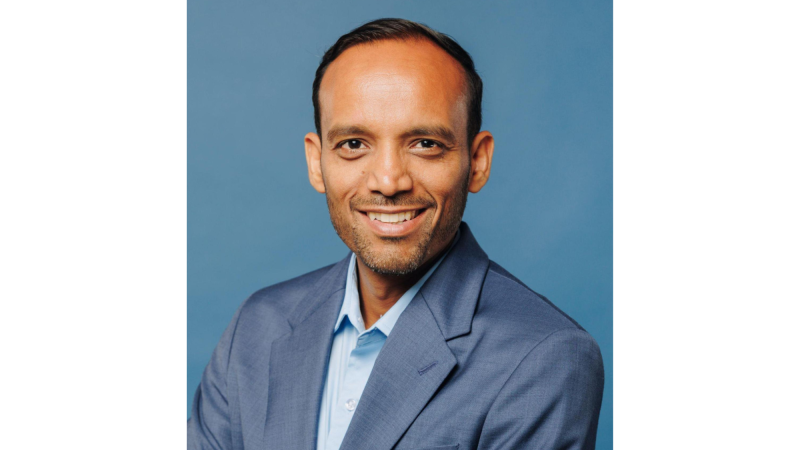
William Masih
Ask most behavioral health founders how they got here, and the answer involves a personal mission, a moment of clinical insight, or a story about a family member. Ask William Masih, and the answer is operational. He started a virtual therapy company in Canada more than a decade ago, ran it through the conditions that made telehealth either work or fail, and concluded that the future of the category was not in a single channel. The conclusion shaped everything Wellin5 has done since.
Masih is the CEO and founder of Wellin5, a hybrid behavioral healthcare platform that has spent the past decade building an operating model centered on clinics, clinicians, and technology rather than any one of them. The company has served tens of thousands of patients through virtual therapy services and now supports two standalone products — one for direct care delivery and one for provider-facing tools. In 2020, it completed its first acquisition and spent the following years integrating it before moving on to the next deal.
The operator’s frame
Masih talks about Wellin5 the way a chief operating officer would, not the way a founder pitching at a conference does. He uses words like consolidation, disciplined, selectively, and aligned capital. He resists the startup and telehealth company labels with roughly equal energy. He has told advisors that the company is in a consolidation phase rather than a growth-stage one, and that the audience he is building toward is family offices rather than venture investors.
“With more than a decade in behavioral health, we’ve built the experience to navigate a complex, fragmented market in a way most single-focus operators cannot,” Masih has said.
The institutional frame is not incidental to the strategy. It is the strategy. Behavioral healthcare in the United States is in the early innings of a consolidation cycle, and the companies that come out of it in good shape may be the ones whose capital structure, operating discipline, and clinical integration are built for institutional scale rather than for the next funding round.
Building for the next phase
According to Wellin5, the company has entered preliminary, conditional financing discussions that remain subject to definitive agreements and allow the counterparty to withdraw before execution. The structure reflects the same logic Masih applies to acquisitions: capital that is staged, conditional, and tied to operational milestones rather than deployed in a single push.
Kevin Harrington, original Shark Tank investor and pioneer of the infomercial industry, currently serves as an investor and strategic advisor to Wellin5. Bringing decades of experience in strategic growth, M&A, brand scaling, and broader market expansion, Harrington has worked closely with the company’s leadership on acquisition strategy, institutional positioning, and the advancement of key growth initiatives.
“What the company is building is highly differentiated, and I believe the market is only beginning to recognize the size of the opportunity ahead,” Harrington said. “William Masih and the Wellin5 team are executing with a level of vision and discipline that is uncommon at this stage, particularly in the way they are approaching consolidation, scalability, and long-term market positioning.”
The next phase will be defined by what Masih has called “a more active phase of expansion within key U.S. markets, prioritizing regional density as we build out our network.” That language is deliberate. Regional density is what helps a behavioral health platform behave like a system rather than as a collection of acquired logos. It is also harder, slower, and less marketable than national-footprint announcements. Masih appears comfortable with that trade.
What he is building is unusual in the category. A behavioral health company run with the operating posture of an institutional platform. A founder who talks about the work in the language of capital structure and clinical integration rather than in the language of mission statements. A pace that has produced one fully integrated acquisition in five years rather than fifteen partially integrated ones.
Whether the institutional thesis holds will be visible over the next several years. What is visible already is the discipline Masih has brought to it.
Forward-looking statements: This article contains forward-looking statements regarding Wellin5’s financing arrangements, acquisition strategy, and operational plans. Actual results may differ from those described.
Ask most behavioral health founders how they got here, and the answer involves a personal mission, a moment of clinical insight, or a story about a family member. Ask William Masih, and the answer is operational. He started a virtual therapy company in Canada more than a decade ago, ran it through the conditions that made telehealth either work or fail, and concluded that the future of the category was not in a single channel. The conclusion shaped everything Wellin5 has done since.
Masih is the CEO and founder of Wellin5, a hybrid behavioral healthcare platform that has spent the past decade building an operating model centered on clinics, clinicians, and technology rather than any one of them. The company has served tens of thousands of patients through virtual therapy services and now supports two standalone products — one for direct care delivery and one for provider-facing tools. In 2020, it completed its first acquisition and spent the following years integrating it before moving on to the next deal.
The operator’s frame
Masih talks about Wellin5 the way a chief operating officer would, not the way a founder pitching at a conference does. He uses words like consolidation, disciplined, selectively, and aligned capital. He resists the startup and telehealth company labels with roughly equal energy. He has told advisors that the company is in a consolidation phase rather than a growth-stage one, and that the audience he is building toward is family offices rather than venture investors.