Robert Polacek Champions Global Fluency for Designing for the Way the World Lives
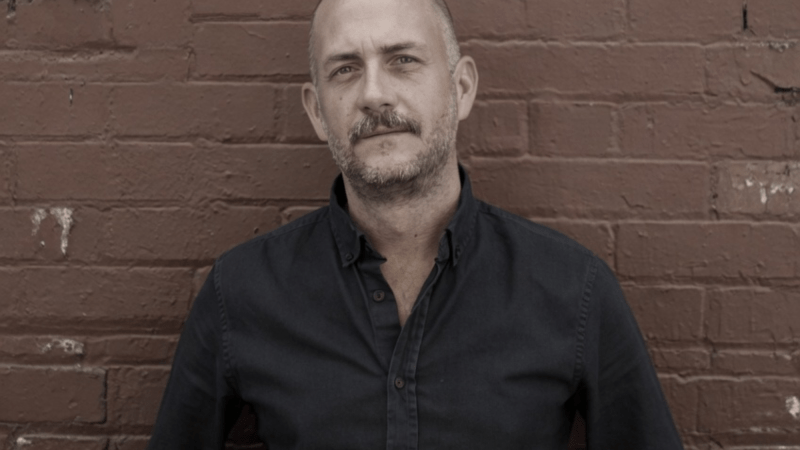
Robert Polacek
Designers often arrive at projects with answers already in hand. Robert Polacek, co-founder and Creative Director of RoseBernard Studio, is not that designer. With a design practice spanning numerous countries, Polacek has built an entire working mindset around the opposite approach: listening comes first, designing comes second, and the real work happens in the space between those two things.
From his experience, a hotel room often carries a different meaning depending on where it stands. In London, it may serve as a compact retreat for a business traveler moving through the city at speed. In Abu Dhabi, the same square footage may need to accommodate ceremonial dining or large-scale hospitality rituals rooted in culture and tradition. Recognizing those cultural nuances, he adds, exemplifies the essence of good design.
At RoseBernard Studio, this perspective has informed the work across North America, the Middle East, Europe, Asia, and North Africa. Working within diverse cultures and community experiences taught Polacek that hospitality design cannot be reduced to aesthetics alone.
“There’s a purpose behind every creative decision in a project,” Polacek says. A successful space, he argues, depends on understanding how people actually live within it. “That understanding not only affects the design, but directly influences the guest experience,” he adds.
The studio’s growing presence in the UK marks the next phase of that outlook. London, Polacek notes, functions as a meeting point for international business, and more importantly, as a lucrative hub for design dialogue and creative exchange.
Cultural fluency, he highlights, has become RoseBernard’s defining strength. The studio prioritizes active listening as the start of every project to let the client’s vision dictate the direction. According to Polacek, years of designing for diverse international markets have elevated how the firm manages collaboration and operational execution.
“The biggest thing I’ve learned is to listen more than you speak,” Polacek says. “Clients already understand how they operate. Our job is not to walk in and force a new system onto them. Our job is to understand what outcome they want and design around that.”
Those outcomes, he adds, can vary dramatically from project to project. One client may seek a legacy property intended to remain untouched for decades. Another may view hospitality entirely through the lens of investment strategy. Polacek believes both approaches require equal respect.
“Not every project needs to be some award-winning magazine cover. If the property operates properly, if the guest experience works, and the client succeeds in what they set out to do, then the design has done its job,” he explains.
Polacek notes that these lessons often emerge through details invisible to guests. He points to a project in Abu Dhabi, where his team designed specialized kitchen systems capable of roasting an entire camel for large-scale events and celebrations. Similarly, he recalls how a cruise ship project demanded only electric kitchens due to maritime fire regulations. In other regions, cultural or religious customs shaped the organization of food preparation spaces. He says, “You have to understand how people live, eat, and move through a property. That changes the architecture of the experience. It influences every design choice, culminating in something that resonates.”
The studio’s collaborative approach extends well outside its internal team. In the UK, particularly, Polacek sees partnerships with local historians, artisans, and specialists as essential to preserving architectural context and creating more thoughtful spaces. He points to recent work with UK-based art sourcing teams as examples of how outside perspectives can reshape an entire project. “They brought a completely different way of thinking to the work, which changed the guest room package entirely. It became stronger because of that collaboration,” he shares.
This persistent willingness to learn from others continues to shape the firm’s international expansion. Instead of presenting themselves as outsiders entering new territory, Polacek positions RoseBernard Studio as a practice already shaped by global experience. He says, “We’re not new to the international game. We’ve already worked across different cultures and different ways of living. Those experiences define the approach to every project.”
Polacek believes hospitality itself is evolving in ways that make cultural understanding even more consequential. Younger travelers, he notes, increasingly prioritize immersion and experience over surface-level luxury. Design, in that sense, needs to modify its purpose to create environments that are emotionally and culturally authentic.
From London to Las Vegas, from cruise ships to Middle Eastern resorts, RoseBernard Studio continues to approach design as a system of performance in adaptability and cultural integrity. The spaces may differ dramatically from one continent to another, but Polacek believes the principle ultimately lies in the sole belief that good hospitality design begins with an immersive understanding of how the world lives.
Designers often arrive at projects with answers already in hand. Robert Polacek, co-founder and Creative Director of RoseBernard Studio, is not that designer. With a design practice spanning numerous countries, Polacek has built an entire working mindset around the opposite approach: listening comes first, designing comes second, and the real work happens in the space between those two things.
From his experience, a hotel room often carries a different meaning depending on where it stands. In London, it may serve as a compact retreat for a business traveler moving through the city at speed. In Abu Dhabi, the same square footage may need to accommodate ceremonial dining or large-scale hospitality rituals rooted in culture and tradition. Recognizing those cultural nuances, he adds, exemplifies the essence of good design.
At RoseBernard Studio, this perspective has informed the work across North America, the Middle East, Europe, Asia, and North Africa. Working within diverse cultures and community experiences taught Polacek that hospitality design cannot be reduced to aesthetics alone.