New £25m manufacturing line marks the next chapter for Lucozade and Ribena at Coleford factory
£25m Apollo 5 line unites Lucozade and Ribena production in Coleford
Suntory Beverage & Food Great Britain & Ireland
Apollo 5 line
Opinions expressed by Entrepreneur contributors are their own.
You're reading Entrepreneur United Kingdom, an international franchise of Entrepreneur Media.
Suntory Beverage & Food Great Britain & Ireland has announced a £25m investment in a new high-speed production line at its Coleford factory, bringing Lucozade and Ribena together on a single state-of-the-art manufacturing line for the first time.
The development forms part of a wider £57m supply chain investment programme aimed at boosting manufacturing capability and future-proofing the site. The announcement comes as the Coleford factory marks 80 years since it was first built, underlining the company’s long-standing presence in the Forest of Dean.
A single high speed line
Named “Apollo 5,” the new production line will replace two older Ribena lines that currently separate concentrate and ready-to-drink formats. By consolidating production onto one flexible system, the business expects to reduce operational complexity and significantly improve efficiency.
Apollo 5 will be capable of producing up to 55,000 bottles per hour. Advanced rapid-changeover technology will allow teams to switch between Lucozade and Ribena quickly, enabling both brands to be manufactured on the same line in response to demand.
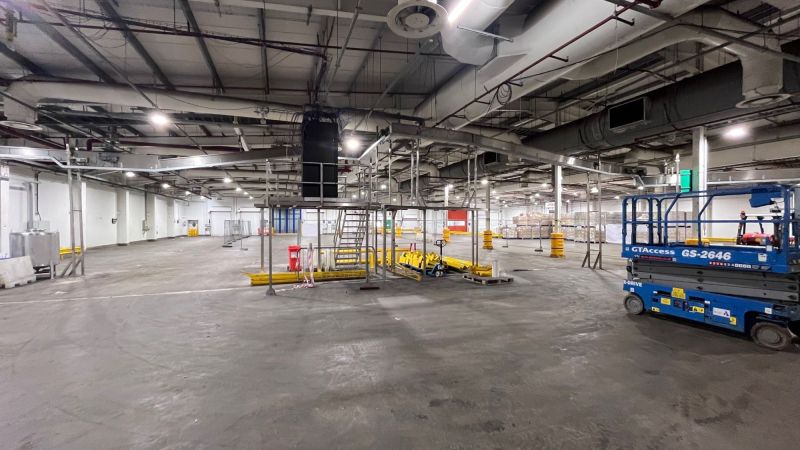
The line will be housed in a repurposed production area within the existing Coleford facility. Once operational, it is expected to enhance the site’s ability to adapt to evolving consumer trends while maintaining high output levels.
Investing for the long term
The new line is scheduled to be operational in early 2027 — the same year Lucozade celebrates its centenary. Company leaders say the timing reflects a commitment to ensuring the brand remains well-positioned for the next 100 years.
Elise Seibold, Chief Operating Officer at Suntory Beverage & Food GB&I, said the investment represents a significant milestone for the factory and its workforce.
“This next chapter is about investing in our factory to strengthen the future of two iconic British brands, Lucozade and Ribena,” she said. “We’re dedicating £25m to this new line to set us up for long-term success and it wouldn’t be possible without the support from our Suntory owners in Japan. As we celebrate 80 years since our factory was first built, it reinforces our commitment to the Forest of Dean in the South West and we’re proud to be major contributors to the regional economy.”
The £25m project sits within a broader £57 million supply chain investment programme designed to enhance productivity and modernise infrastructure across the business.
Driving regional economic growth
Construction of Apollo 5 is expected to generate £2.1m of spend with local organisations across Gloucestershire, Herefordshire and South Wales. As one of the largest employers in the area, the Coleford factory supports hundreds of skilled jobs spanning engineering, operations and supply chain management.
Company officials say the investment will help safeguard these roles while strengthening long-term growth prospects. By adopting advanced automation and streamlining production, the site is expected to operate more competitively within the UK manufacturing landscape.
Matt Bishop, MP for the Forest of Dean, welcomed the announcement.
“This investment is welcome news for the Forest of Dean,” he said. “It underlines Suntory Beverage & Food GB&I’s long-term commitment to the area and the skilled people who work there, producing two of Britain’s most known brands. It also shows how our area can be central to the UK’s growth mission, driving innovation and manufacturing excellence right here, from the heart of the Forest of Dean.”
Sustainability at the core
Sustainability is a central pillar of the Apollo 5 project. The line will use aseptic filling technology, which relies on heat and pressurised air to sterilise bottles before filling. This process reduces water consumption and requires less energy compared with traditional cleaning methods.
The investment builds on a major sustainability project announced last year to electrify the factory and reduce reliance on a gas turbine. Together, these initiatives are intended to lower the site’s carbon footprint and unlock further opportunities for sustainable packaging innovation across its brands.
The company frames these efforts under its corporate value of “Growing for Good,” emphasising that business growth and positive environmental impact should go hand in hand.
Honouring heritage, embracing innovation
From its base in the Forest of Dean, Suntory Beverage & Food GB&I combines deep British heritage with Japanese manufacturing expertise. The company points to Suntory’s “Monozukuri” philosophy — a principle centred on craftsmanship and continuous improvement — as a guiding influence behind its operational strategy.
Work on Apollo 5 is set to begin later this year, with the first production run planned for early 2027. As the Coleford factory marks eight decades of manufacturing, the new line signals a forward-looking commitment to efficiency, sustainability and economic growth — ensuring that Lucozade and Ribena continue to be produced in the heart of the Forest of Dean for generations to come.
Suntory Beverage & Food Great Britain & Ireland has announced a £25m investment in a new high-speed production line at its Coleford factory, bringing Lucozade and Ribena together on a single state-of-the-art manufacturing line for the first time.
The development forms part of a wider £57m supply chain investment programme aimed at boosting manufacturing capability and future-proofing the site. The announcement comes as the Coleford factory marks 80 years since it was first built, underlining the company’s long-standing presence in the Forest of Dean.
A single high speed line
Named “Apollo 5,” the new production line will replace two older Ribena lines that currently separate concentrate and ready-to-drink formats. By consolidating production onto one flexible system, the business expects to reduce operational complexity and significantly improve efficiency.

Patricia Cullen • Features Writer
Entrepreneur Staff