TWINii Turns Years of Expert Experience Into Knowledge You Can Access On Demand
Rebecca Blaker and Paul Richardson on making decades of expertise accessible through AI.
TWINii
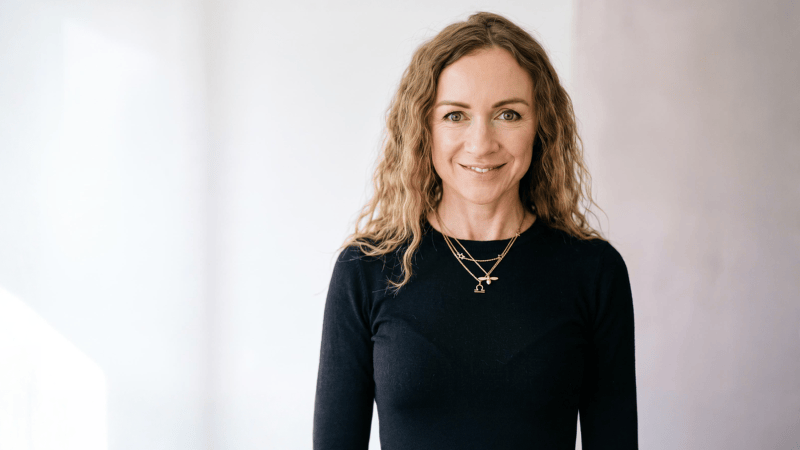
Rebecca Blaker, CEO and co-founder
Opinions expressed by Entrepreneur contributors are their own.
You're reading Entrepreneur United Kingdom, an international franchise of Entrepreneur Media.
AI is changing how we access expertise. But what happens when the knowledge locked inside a book, a career or decades of experience becomes something people can actually talk to? That is the idea behind TWINii, a new platform that turns an expert’s books, interviews, talks, podcasts and lived experience into an AI-powered conversation. Rather than replacing the original work, TWINii is designed to give people another way into it – allowing them to ask questions, add context and explore an expert’s thinking in a more personal way.
The platform launches with more than 200 experts currently available or soon to publish their TWINiis, spanning business, marketing, behavioural science, publishing and leadership. Among them is entrepreneur Paul Richardson, former co-owner of AllSaints, former executive chairman of Gymshark and current executive chairman of HERA. For the experts themselves, the proposition is equally interesting. They decide what material their TWINii draws from, set its boundaries and tone, and control how their knowledge is made available. To explore what this could mean for the future of expertise – and the relationship between people, knowledge and AI – I spoke to TWINii co-founder and CEO Rebecca Blaker and Paul Richardson.
We’ve never had more information at our fingertips. So what made you believe we need something more, and that TWINii could be the answer?
Rebecca: After a career in finance, I set up my own health and wellbeing coaching business, and for years I earned my living an hour at a time. Then Covid forced me to move everything online almost overnight. What I saw was that people could still access content and information, but what they really missed was being able to talk things through with someone they trusted, whenever they wanted to. That stayed with me. We have more information than ever, but when you’re trying to make sense of something, information on its own is often not enough. You want judgement, context and the ability to ask the next question in the moment. I’d lived the expert’s side of the problem too. You can spend years building your knowledge, frameworks and experience, but there are only so many conversations one person can have in a day. Taking the business online got me hooked on technology, so I moved into the app world, where I spent four years helping people use apps to scale what they do beyond an hour at a time. TWINii brings those two things together, so more people can access an expert’s work and ask their questions. That became the starting point for TWINii: making trusted expertise available on demand, so people can explore the thinking of someone they trust whenever they need it, while experts make more of their life’s work accessible without having to be there every time.
You’ve spent decades building businesses, from AllSaints to Gymshark. What has experience taught you that you could never learn from information alone?
Paul: Most of the questions founders ask me are not the glamorous ones. They are about warehouses, returns, sell-through, cash conversion, staff problems, choosing investors or knowing when to step back from operating. They are the things that rarely make it onto a conference stage, but they quietly decide whether a business succeeds or fails. You can find information on all of those things, but experience teaches you how they actually play out when the answer is not obvious and the consequences are real. I’ve answered a lot of those questions over the years, usually one founder at a time over a coffee or a Teams call. That’s what interests me about TWINii. It gives more people a way to ask those practical questions and explore how I would think through them, using knowledge and experience I’ve built over years.
What did you see was missing from the way we consume expertise that made you think there was a business to build?
Rebecca: Most expertise is still a one-way conversation. You can read a book, listen to a podcast or watch a talk, but you can’t stop and ask the author or expert a question about the thing that matters to you. And often those questions only come once you’ve had time to think about what you’ve heard.That’s what I felt was missing. We’ve become incredibly good at making expert content available, but not at making the expertise itself accessible. At the same time, experts are getting comments, DMs and questions they simply don’t have the time to answer. I know that feeling well. When your time is the product, there’s a hard ceiling on how many people you can help. The internet made it possible to reach huge audiences, but it didn’t give people meaningful access to the expert’s thinking when they actually need it. That was the opportunity I saw. Experts have already spent years building knowledge across books, research, frameworks, talks and lived experience. TWINii makes that life’s work conversational, so people can ask questions and explore ideas on demand, while giving the expert a new way to extend the value of something they already own.
You joined Gymshark when it was still in its early stages and saw it grow into a global business. When you look at TWINii today, what feels familiar, and what feels completely different?
Paul: At Gymshark, it was my experience and expertise that was called upon to give some foundation and stability to the energy and enthusiasm that the young team brought to the table. At TWINii, cutting-edge AI is used to help that experience and expertise reach a larger audience. At Gymshark, I believe it was the combination of experience and expertise with energy and enthusiasm that made it unstoppable. TWINii has that same capability, but in an AI world.
You’ve been working closely with your founding cohort of experts. What has surprised you most about what they want from TWINii?
Rebecca: What surprised me most is how differently experts are using it. One author has built his TWINii around his book, so readers can keep asking questions long after they’ve turned the last page. Experts who speak for a living are putting their TWINii on their final slide, so the audience can carry on asking once the talk ends. And for one expert, it’s all about the long tail: the people who want his thinking but could never get time in his diary or the budget to book him. What they all want is control. They’ve spent years building their reputation and their body of work, so they want to know what goes into their TWINii, what it can talk about and where the boundaries sit. They want their knowledge and perspective represented in a way they’re comfortable with. Another interesting piece of feedback has been what the conversations can tell the experts about their audience. Social platforms can show you what got a like, a view or a comment. A conversation tells you what someone is actually trying to understand, where they are getting stuck and what they want to know next. That creates a much richer relationship between experts and their audience, and gives experts a better sense of where their knowledge can be most useful.
If TWINii achieves what you’re setting out to do, how could it transform the way people access and learn from expertise?
Rebecca:I think two-way conversation could become the natural next step after traditional engagements. You read the book, listen to the podcast or attend the workshop, and instead of the experience ending there, you can keep exploring the ideas, ask the questions that come up afterwards and talk them through when they are actually relevant to you. That doesn’t replace the author, coach or expert. It makes more of their thinking available on demand and extends the value of what they’ve already created.
Paul: For me, it comes down to access. There are only so many people I can sit down with personally, which means a lot of experience that could be useful to someone may never reach them. If TWINii changes that, you don’t have to know the right person, be in the right room or catch them at the right time. You can get access to how they think when you are actually facing the problem. That is where I think it becomes really valuable.
AI is changing how we access expertise. But what happens when the knowledge locked inside a book, a career or decades of experience becomes something people can actually talk to? That is the idea behind TWINii, a new platform that turns an expert’s books, interviews, talks, podcasts and lived experience into an AI-powered conversation. Rather than replacing the original work, TWINii is designed to give people another way into it – allowing them to ask questions, add context and explore an expert’s thinking in a more personal way.
The platform launches with more than 200 experts currently available or soon to publish their TWINiis, spanning business, marketing, behavioural science, publishing and leadership. Among them is entrepreneur Paul Richardson, former co-owner of AllSaints, former executive chairman of Gymshark and current executive chairman of HERA. For the experts themselves, the proposition is equally interesting. They decide what material their TWINii draws from, set its boundaries and tone, and control how their knowledge is made available. To explore what this could mean for the future of expertise – and the relationship between people, knowledge and AI – I spoke to TWINii co-founder and CEO Rebecca Blaker and Paul Richardson.
We’ve never had more information at our fingertips. So what made you believe we need something more, and that TWINii could be the answer?
Rebecca: After a career in finance, I set up my own health and wellbeing coaching business, and for years I earned my living an hour at a time. Then Covid forced me to move everything online almost overnight. What I saw was that people could still access content and information, but what they really missed was being able to talk things through with someone they trusted, whenever they wanted to. That stayed with me. We have more information than ever, but when you’re trying to make sense of something, information on its own is often not enough. You want judgement, context and the ability to ask the next question in the moment. I’d lived the expert’s side of the problem too. You can spend years building your knowledge, frameworks and experience, but there are only so many conversations one person can have in a day. Taking the business online got me hooked on technology, so I moved into the app world, where I spent four years helping people use apps to scale what they do beyond an hour at a time. TWINii brings those two things together, so more people can access an expert’s work and ask their questions. That became the starting point for TWINii: making trusted expertise available on demand, so people can explore the thinking of someone they trust whenever they need it, while experts make more of their life’s work accessible without having to be there every time.

Patricia Cullen • Features Writer
Entrepreneur Staff