The New Rules of Digital Business
AI is reshaping workplace roles, productivity, hiring and human judgement.
SOFTSWISS
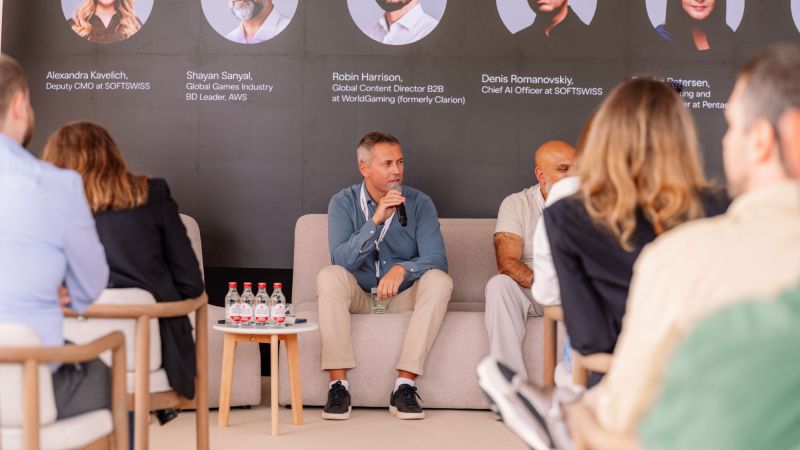
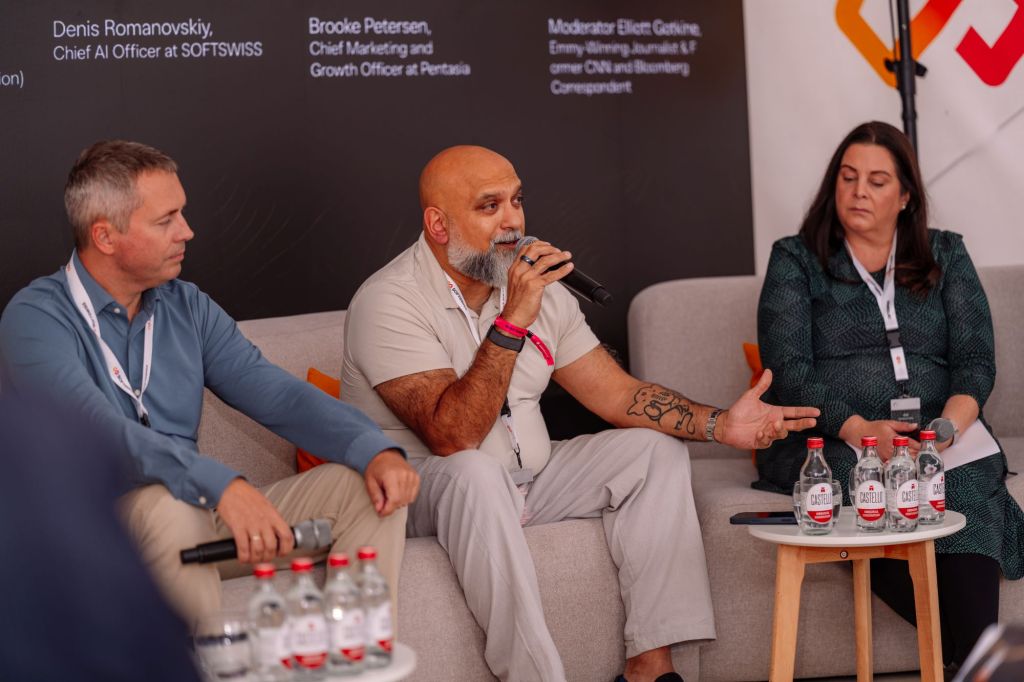
Denis Romanovskiy, Chief AI Officer at SOFTSWISS
Opinions expressed by Entrepreneur contributors are their own.
You're reading Entrepreneur United Kingdom, an international franchise of Entrepreneur Media.
As AI moves from experiment to everyday business, SOFTSWISS is seeing first-hand how it is reshaping teams, roles and the value of human judgement.
The most revealing thing about AI in the workplace may be what happens to the humans using it. As businesses move from experimenting with AI to relying on it, the shape of work is changing too: teams are getting leaner, roles are shifting and companies are rethinking what they need people to do. In iGaming, where technology, regulation and cybersecurity meet, those changes are already becoming visible.
The first phase was easy to understand. Employees were given chatbots. They asked them to write emails, summarise documents, generate images, analyse data and help with code. Companies ran pilots, launched co-pilots and experimented with increasingly capable models. The next phase is considerably more consequential: what happens when businesses start redesigning themselves around those systems?
That question is particularly visible in iGaming, a sector where technology, payments, cybersecurity, regulation and consumer behaviour collide at extraordinary speed. According to the newly released 2027 iGaming Trends Report from SOFTSWISS, produced in partnership with WorldGaming, the industry is becoming an early testing ground for changes that are likely to spread into fintech, SaaS, ecommerce and other digital businesses. The report, based on a survey of more than 500 iGaming professionals, contributions from more than 65 industry experts and wider desk research, estimates that global iGaming gross gaming revenue will reach €307.3bn in 2026. It also gives the sector the highest digital maturity score among eight industries assessed, at 4.67 out of five. But the more interesting figures concern what happens inside the companies themselves.
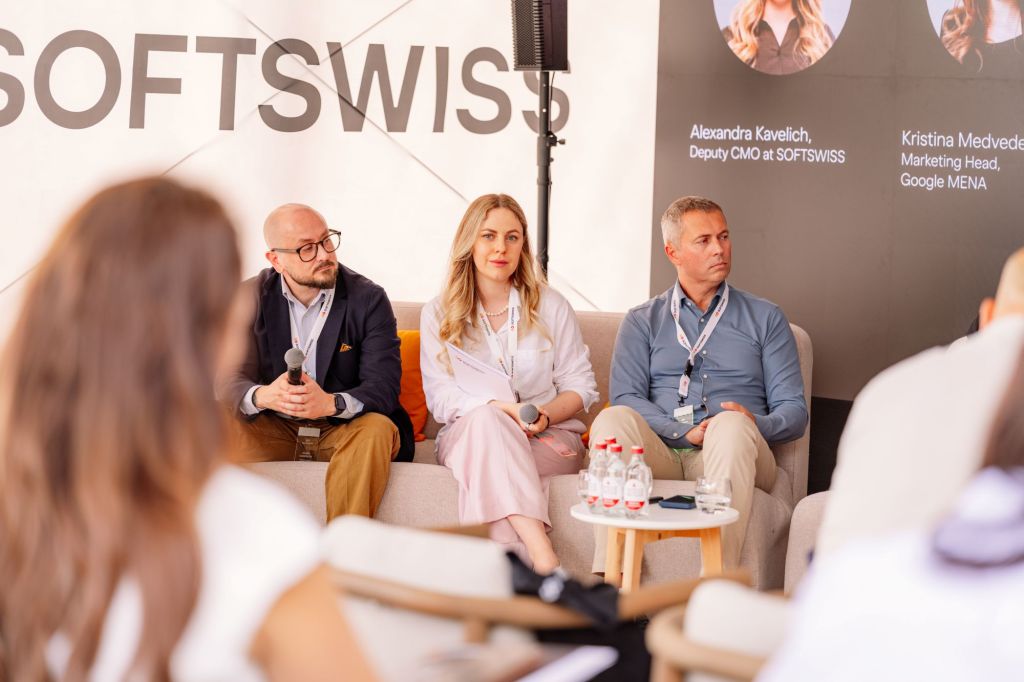
AI proficiency is increasingly becoming a baseline expectation across product, marketing, technology and operations. Businesses are experimenting with AI product managers, AI engineers, heads of AI and other new roles, while leaner teams are being asked to accomplish more. At the same time, some traditional organisational structures are beginning to look less certain. Dedicated chief product officer roles, the report suggests, are becoming rarer as product responsibilities spread across technology, marketing and the C-suite. For Denis Romanovskiy, Chief AI Officer at SOFTSWISS, the immediate impact of AI is already visible in something deceptively simple: individual productivity.
“We can look at the internal adoption of AI,” he said during a discussion around the report. “When I say internal, I mean how we implement AI in companies for business process automation and employee productivity. External adoption is how we treat our clients and improve our products and services.” The internal gains are already becoming visible, he said. “The biggest success we’re seeing is around personal productivity,” Romanovskiy said. “People in companies who have their own AI tools can really improve their speed of work and the quality of the work they produce.” He also said companies are beginning to respond accordingly. “These personal tools can mean companies don’t need to hire as much,” he said. “And they’re seeing productivity increases of 20%, 30% or even 50%.” It is the sort of statement that makes the employment implications of AI difficult to avoid. If one employee can produce significantly more with the help of AI, a company may not need to hire as many people to produce the same amount of work. But that is not necessarily the same as saying the jobs themselves disappear.
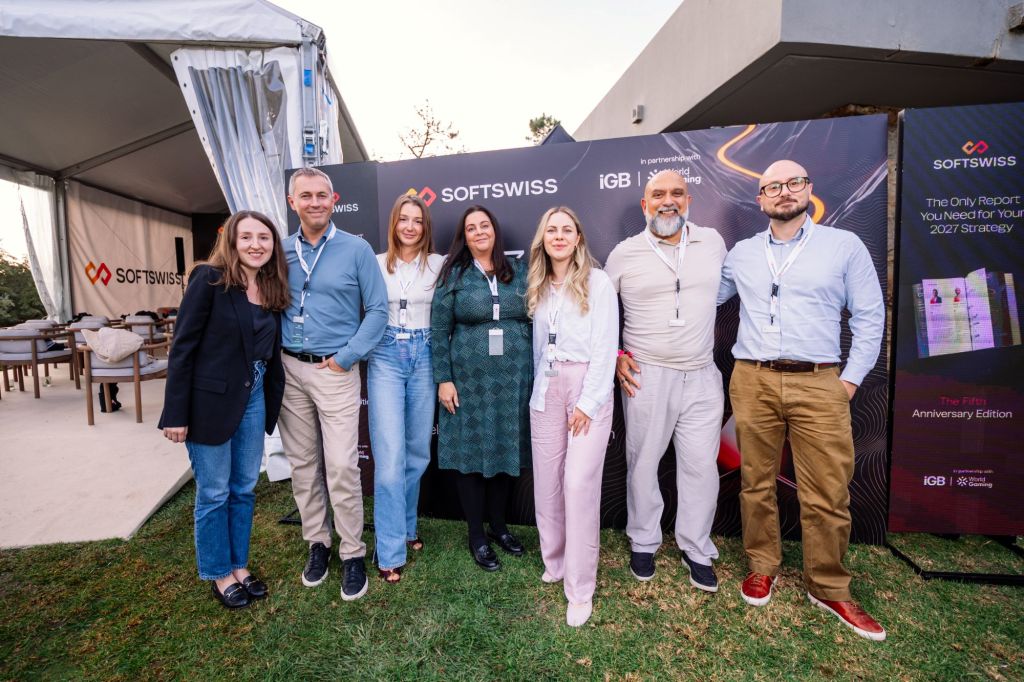
Romanovskiy draws a line between today’s productivity tools and the more profound transformation that would come with autonomous AI agents capable of completing work from beginning to end. “If we’re talking about something that is two times more productive, five times, 10 times more productive, I think we’re still not there,” he said. The reason is organisational. “Because here we’re talking about autonomous agents that can do work end to end,” he said. “And for that, we need to rethink the roles within a company. We probably need to change the organisational structure, train people, improve our governance and security, and make sure the infrastructure is ready for that.” That may be the less glamorous side of the AI boom, but it is arguably the more important one.
For Shayan Sanyal, Global Games Industry Business Development leader at Amazon Web Services, businesses are still at an unusually early point in the technology’s development. “I think it’s important to take a step back for a minute and realise how early we actually are with AI,” he said. “Roughly speaking, AI today is where the internet was 10 years ago, before cloud computing.” There is already widespread adoption. The problem is what comes afterwards. “The report speaks to 85% of betting and gaming companies around the world having adopted AI,” Sanyal said. “The problem is industrialisation – moving these experiments into production.” That distinction is becoming one of the defining features of the current AI economy. It is relatively easy for a company to announce an AI initiative. It is considerably harder to turn an experiment into something that works reliably, securely and economically at scale. “The cost of expertise, integration and resources still hasn’t hit a floor point,” Sanyal said. “That friction is really the reason why adoption hasn’t been wide-scale.”
Yet the businesses that have overcome some of those obstacles are beginning to report tangible results. Sanyal said the most common thread he sees across companies is the compression of time. The benefits can range from getting products to market faster to improving operational efficiency, changing the way customers interact with services and reducing costs. He cited a gaming company that had used AI to cut the time needed to create game backgrounds from roughly 20 days to four. He also pointed to DoorDash, where a voice assistant helped reduce transfers to human agents by nearly half and contributed to an annual cost saving of $3m. “When we see these move into production, we’re actually seeing real dollars and real impact, both on the top line and the bottom line.” Sanyal said.

And this is where the argument about jobs becomes more complicated. If AI makes a task five times faster, the obvious question is whether four-fifths of the people previously doing it are still required. Brooke Petersen, Chief Marketing and Growth Officer at Pentasia, sees a different kind of transition taking shape. “I think we’re going to see not so much roles disappearing, but tasks changing, and the way companies are structured changing too,” she said. Petersen said the jobs most exposed are those involving predictable, repeatable, rules-based work and large amounts of data. Customer support, customer services, marketing, content, compliance work and even parts of software development are already being affected. “At the moment, people can do their jobs 30%, 40% or 50% faster than they used to,” Petersen said.
That leaves employers with a question that is more difficult than simply deciding who should be made redundant. “So the question shouldn’t be, who are we going to get rid of?” she said. “The question should be, what does the future model of our business look like, and what do we need those people to be doing if they’re not doing what they do today?” There is a potentially uncomfortable implication for the next generation of workers. “Because we are going to get to a point very soon where the lower-level jobs we’ve just talked about will be able to be done 80% or 90% better than a human can do them,” Petersen said.
The phrase “lower-level jobs” is significant. Entry-level work has traditionally been how people acquire experience: they perform repetitive tasks, learn the systems and gradually take on more responsibility. If AI absorbs those tasks, businesses will have to rethink how people acquire those skills in the first place. The same transformation is already visible in recruitment. Petersen’s company operates recruitment brands across gaming and fintech, giving her a view of two sectors experiencing similar changes. AI has made sourcing, screening, research and assessment faster. But faster does not necessarily mean better.
Romanovskiy describes a new problem emerging from the automation of hiring. “What I see from my experience is that we speed up everything, and we get a huge list of very good candidates, but they all look alike,” he said. Why? “Because the candidates did their homework. They used AI to prepare their CVs. They used AI to prepare for the interview.” The irony is hard to miss. Employers use AI to make recruitment more efficient. Candidates use AI to make themselves more attractive to employers. Both sides become more automated, and the process designed to distinguish one person from another starts producing increasingly similar outputs.
“So, as a result, we sped up this process of recruitment, but we slowed down the interviews,” Romanovskiy said. The answer, he suggests, is not simply to abandon AI. “The takeaway is that, you know, you need to rethink the process after you implement AI into it.” What, then, should people actually learn? Romanovskiy’s answer is straightforward. “To be safe, to be sure that you will stay with the company and industry and prosper, I think you need to learn how to use AI,” Romanovskiy said.

But AI literacy is only part of the picture. Petersen argues that as machines become better at generating information, humans may become more valuable for their ability to decide what that information means. She identifies three areas of human capability that will matter increasingly: judgement, relationships and agency. “It’s about asking the right questions, right?” Petersen said. “Can you ask the right questions? Can you spot signal from noise? Can you make a decision if the data is incomplete? Can you build those relationships? And ultimately, can you take a project from start to finish?”
That is a subtly different vision of an AI-enabled workplace from the one in which humans simply supervise machines. It suggests that the value of a worker may increasingly lie in deciding what the machine should be asked to do, recognising when its answer is wrong, understanding the context in which it operates and taking responsibility for the outcome. The implications extend beyond the office. For an industry such as iGaming, where businesses operate across numerous regulated territories, AI is also changing the economics of international expansion. But technology cannot make regulation predictable.
The limits of AI become clearer when businesses try to expand into new markets. Brazil has become a reminder that regulation and politics can overturn even well-developed commercial assumptions. Olga Resiga, Chief Business Development Officer at SOFTSWISS, argues that companies should focus less on identifying a theoretically attractive market and more on whether it is actually ready. “Everybody considered Brazil to be a huge market, and you see what’s happening now. It also shows that probably even AI could not have predicted this, because there’s still a human there,” she said. For Resiga, the lesson is that technology can accelerate the analysis, but not remove the need for human judgement. “From my perspective, you need to look at regulatory readiness and how predictable it is,” she said. “You should also look at the government, what’s happening when elections are coming, and, of course, players’ behaviour and the population. Everything is important.”
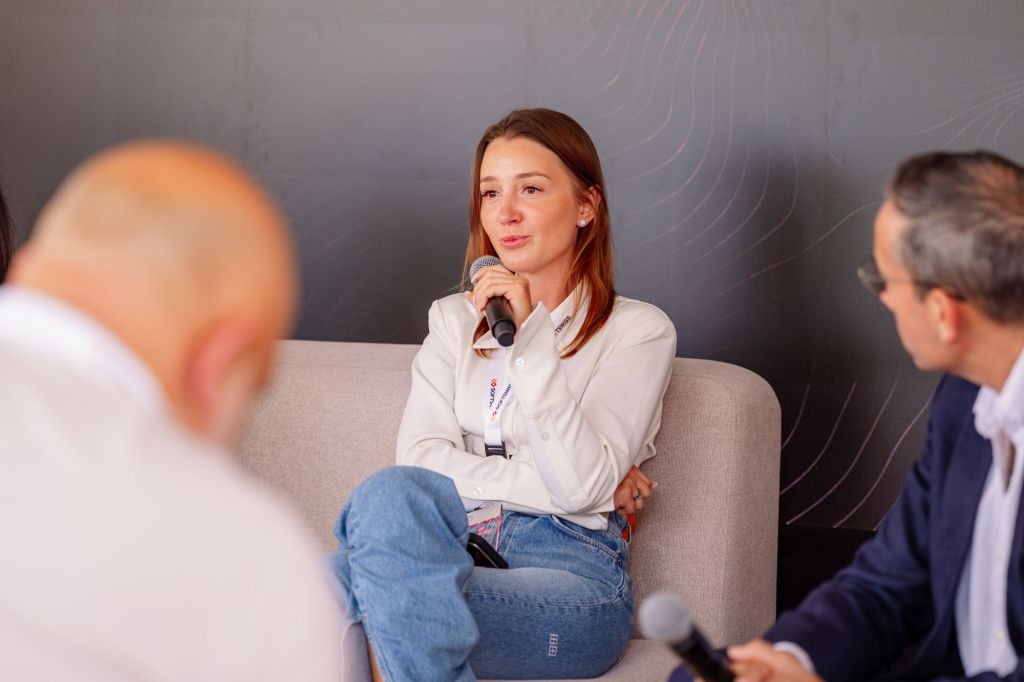
Kristina Medvedeva, Head of B2B Marketing at Google, said AI is making localisation and experimentation considerably faster “AI is helping you to make sure that you can move faster, experiment and see what is working and what is not, and don’t do significant upfront investments while you are not sure whether the market is working or not,” she said. But faster decisions are not necessarily AI decisions. Resiga argues that AI can accelerate the route to a decision without making the decision itself. “You have more information to make a decision faster,” she said. “But AI is not making the decision. It’s important to understand that all the information we’re collecting still requires human judgement.” Her description is almost a formula for the AI-enabled business: “AI just shortens this journey from the question to the decision.” That same principle is reshaping compliance. Rather than treating regulation as an additional layer added after a product is built, Resiga argues that it needs to be embedded from the start. “Each product now in this regulated digital industry should be compliant from scratch,” she said. That matters in an industry where every market can have different rules.
AI is also changing how consumers discover brands. Medvedeva says people are increasingly using conversational AI to explore their options before turning to traditional search. “They started with LLM or chatbot, then they go to search,” she said. For businesses, that creates a new question: how do you become visible when the first recommendation a potential customer receives may come from an AI system? It also raises a more difficult one: where does personalisation end and manipulation begin? Sanyal argues that consumer protection needs to be built into AI systems alongside personalisation. “For me, what stands out with our customers that are doing this right, is that they treat this as a trust and engineering decision,” he said. Romanovskiy makes a similar case for guardrails. Having seen the benefits of personalisation across platforms such as YouTube, Instagram and TikTok, he argues that companies should learn from their problems rather than wait for their own. “We should not wait for something to happen, we should immediately build guardrails in what we do, we need to monitor, observe and protect players from these kinds of issues.”
The underlying message from the 2027 iGaming Trends Report is that AI’s next phase is less about whether businesses will adopt it than about how they reorganise around it. The technology can make companies faster, leaner and more adaptable. But it cannot decide what they should value, where human judgement belongs, or how much responsibility should remain with people. For Romanovskiy, the shift is already visible. The question now is what those new roles will look like.
As AI moves from experiment to everyday business, SOFTSWISS is seeing first-hand how it is reshaping teams, roles and the value of human judgement.
The most revealing thing about AI in the workplace may be what happens to the humans using it. As businesses move from experimenting with AI to relying on it, the shape of work is changing too: teams are getting leaner, roles are shifting and companies are rethinking what they need people to do. In iGaming, where technology, regulation and cybersecurity meet, those changes are already becoming visible.
The first phase was easy to understand. Employees were given chatbots. They asked them to write emails, summarise documents, generate images, analyse data and help with code. Companies ran pilots, launched co-pilots and experimented with increasingly capable models. The next phase is considerably more consequential: what happens when businesses start redesigning themselves around those systems?

Patricia Cullen • Features Writer
Entrepreneur Staff