A bank account in your next market is not a treasury
Global expansion fails when companies treat treasury as an afterthought.

Shutterstock
Opinions expressed by Entrepreneur contributors are their own.
You're reading Entrepreneur United Kingdom, an international franchise of Entrepreneur Media.
Every founder who has expanded abroad knows the ritual. You pick the market, you fly out, you incorporate, and somewhere in the checklist between the lawyers and the first hire sits a line that says “open a local bank account.” It gets ticked, and it feels like the money side of expansion is done.
It is not done. It has barely started. A local account answers one narrow question: where will money arrive in this market? It says nothing about the questions that will actually consume your time and your margin over the next three years. How does money get from that account to headquarters, and at what cost? Who converts your currencies, and at what spread? How much cash has to sit idle in that country for operations to run? And who, exactly, is accountable when a payment goes missing between four banks in three time zones? A functioning international treasury is the set of answers to those questions. Most companies never design one. They accumulate one, account by account, market by market, and then wonder why moving their own money has become a second job.
Fragmentation is a cost centre that never invoices you
The accumulated version has a predictable shape: a domestic bank at home, a different bank in each market, an FX broker somewhere in the middle, and a payments provider or two at the edges. Each relationship was the sensible choice on the day it was signed, and each provider does its own job perfectly well. Together they form a machine with no operator: the failure is not in any single part. It is that nobody designed the whole thing.
The direct costs hide in the seams. Every provider prices its own layer, conversion happens where it suits the intermediary rather than where it suits you, and no single statement ever shows what the whole journey cost. The scale of what flows through those seams is vast: international payment flows reached roughly $179 trillion in 2024, and McKinsey estimates that lower-value payments, the kind growing companies make, account for about 10% of that value but close to a third of the industry’s entire revenue pool. The smallest payments carry the fattest margins. If you are a mid-sized company moving money across borders, you are not a rounding error in this system. You are its profit centre.
The indirect costs are worse because they compound. Finance teams at expanding companies spend days each month reconciling statements from providers that do not talk to each other, chasing payments that cleared one system but not the next, and maintaining spreadsheets that are, in effect, a handmade ledger of the company’s own money. That is management time spent operating infrastructure instead of operating the business.
Pre-funding is a tax on your growth rate
Then there is the constraint that catches founders by surprise: pre-funding. Because international settlement is slow and uncertain, the practical answer in most markets is to park money in advance. A payout balance in Singapore, a buffer in Mexico City, a float in Dubai. Each buffer exists because nobody in the chain can tell you, with certainty, when a payment sent today will arrive.
Individually these balances look like prudence. Added up, they are dead capital, and they scale with your ambition: every new market demands its own float before it has earned a pound of revenue. For a funded scale-up, pre-funding quietly converts growth capital into idle balances. The faster you expand, the more of your balance sheet stops working.
Do not expect the system to fix this for you. The G20 set formal targets to make cross-border payments faster, cheaper, and more transparent by 2027; in its October 2025 review, the FSB reported that costs remain sticky and the targets are unlikely to be met on time. The banking network underneath is thinning rather than improving: BIS data shows active correspondent banking relationships fell by about a fifth in the seven years to 2018, and the retreat has continued since. Fewer connections mean longer chains, and longer chains mean more of the delay and opacity that made the buffers necessary in the first place.
Design the treasury before you enter the market
The way out is not another account. It is treating money movement as infrastructure you design once, deliberately, before the next market, rather than plumbing you patch afterwards. Three questions do most of the work.
First: where will money sit, and in whose name? If client or operating funds sit pooled behind a provider’s own licence, your claim on your own money depends on that provider’s ledger and its solvency. Insist on accounts held in your name. It is the difference between owning your cash and being owed it.
Second: how will money move, and with what certainty? Speed is the metric everyone quotes and the wrong one to optimise. A payment that arrives fast most of the time is worth less than one that arrives when promised every time, because it is the uncertainty, not the average, that forces you to hold buffers. Settlement certainty is what lets pre-funding shrink.
Third: how many counterparties stand between you and settlement? Every intermediary in the chain is a cost, a delay, and a decision-maker who can cut you off. The modern answer is consolidation: a small number of correspondent institutions now exist to run the whole surface, holding funds in named accounts and clearing directly into local payment systems across markets, so that expansion becomes a configuration change rather than a new banking relationship. Whether you use one provider or several, the principle stands: count the hops, and ask each provider to draw you the full chain from your account to final settlement. The ones with short chains will happily draw it. The ones with long chains will send you a brochure.
None of this is glamorous. It will not launch your product or close your customers. But the companies that treat money movement as designed infrastructure enter their third and fourth markets at configuration speed, with cash that works as hard abroad as it does at home. The ones that tick the bank-account box find out, eighteen months later, that they have built a bank’s problems into a startup’s balance sheet.
Every founder who has expanded abroad knows the ritual. You pick the market, you fly out, you incorporate, and somewhere in the checklist between the lawyers and the first hire sits a line that says “open a local bank account.” It gets ticked, and it feels like the money side of expansion is done.
It is not done. It has barely started. A local account answers one narrow question: where will money arrive in this market? It says nothing about the questions that will actually consume your time and your margin over the next three years. How does money get from that account to headquarters, and at what cost? Who converts your currencies, and at what spread? How much cash has to sit idle in that country for operations to run? And who, exactly, is accountable when a payment goes missing between four banks in three time zones? A functioning international treasury is the set of answers to those questions. Most companies never design one. They accumulate one, account by account, market by market, and then wonder why moving their own money has become a second job.
Fragmentation is a cost centre that never invoices you
The accumulated version has a predictable shape: a domestic bank at home, a different bank in each market, an FX broker somewhere in the middle, and a payments provider or two at the edges. Each relationship was the sensible choice on the day it was signed, and each provider does its own job perfectly well. Together they form a machine with no operator: the failure is not in any single part. It is that nobody designed the whole thing.

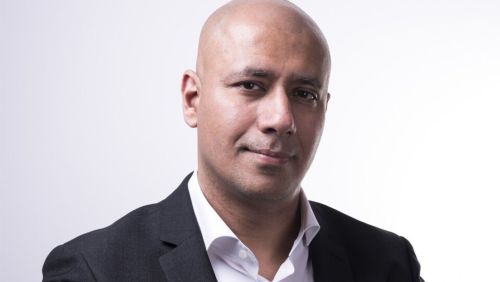
George Davis • Founder and CEO of Lorum
George Davis is the founder and CEO of Lorum, the correspondent institution for banks and... Read more