Healthtech at a Crossroads
Tim Rea explains what investors seek in successful HealthTech companies today.
BGF
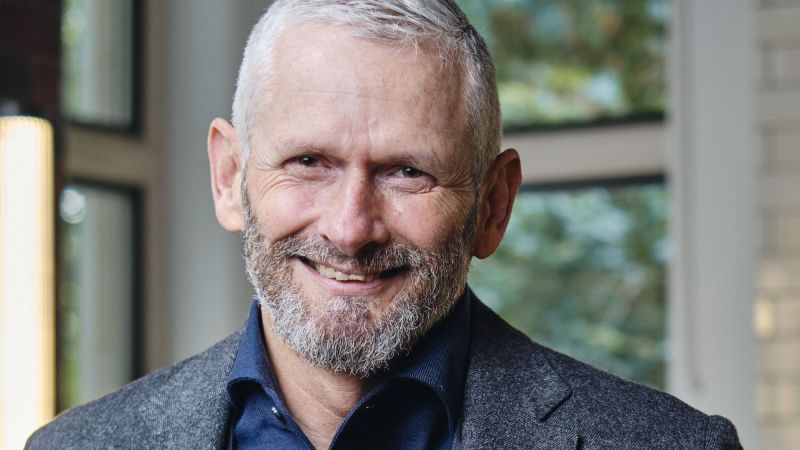
Tim Rea, co-head of Early Stage at BGF
Opinions expressed by Entrepreneur contributors are their own.
You're reading Entrepreneur United Kingdom, an international franchise of Entrepreneur Media.
Health-tech has never lacked ambition. Every year brings promises of revolutionary diagnostics, AI-powered healthcare, breakthrough medical devices and technologies capable of transforming patient outcomes. Yet while innovation continues at pace, investors are no longer chasing possibilities alone. They want evidence, commercial discipline and founders who understand that scientific brilliance is only one part of building a successful healthcare business. That marks a significant shift from the exuberance of 2020 and 2021, when digital health attracted unprecedented levels of investment and many businesses found raising capital easier than proving long-term viability. Today’s market is more cautious, but far from pessimistic. Investment is still flowing into health-tech – just with much higher expectations. For Tim Rea, co-head of Early Stage at BGF, the most active growth capital investor in the UK & Ireland, that evolution reflects a market that has matured rather than contracted.

“HealthTech is a broad category, spanning everything from digital products and diagnostics to medical devices and technologies supporting drug development. At BGF, we invest across both health technology and services, which gives us a unique perspective on where innovation is creating real commercial value. “We’re seeing strong momentum in technologies supporting drug development, where the UK has a world-class research base, outstanding scientific talent and an increasingly mature funding ecosystem. Businesses that improve the efficiency of drug discovery remain highly attractive. Our recent investments in Trimtech, a company developing novel small molecule therapies that target protein aggregates associated with neurodegenerative diseases, and T-Therapeutics, a University of Cambridge spin-out developing T-cell receptor treatments for cancer and autoimmune disease, are evidence of this.”
Britain’s life sciences sector has long punched above its weight internationally, and investors continue to see opportunities where scientific excellence meets commercial execution. Universities remain prolific generators of intellectual property, while spin-outs are attracting increasing attention from venture investors looking for globally scalable businesses. Rea believes medical technology is also entering a renewed period of growth. “There is also renewed activity in medical devices and diagnostics, stimulated by innovation coming from the academic ecosystem – including initiatives from the likes of King’s College – as well as commercial success stories such OrganOx, one of BGF’s most successful investments. There is no shortage of scientific innovation, but investment will flow to businesses that translate technical breakthroughs into clinically relevant products with a clear commercial pathway.” The distinction is important. Scientific innovation alone has rarely been enough to build enduring companies. Today’s investors are looking for founders who understand regulation, reimbursement, procurement and the long road from laboratory discovery to widespread clinical adoption.
That commercial awareness is something Rea believes many founders still underestimate when approaching investors. “The biggest misconception is often that investors are simply waiting for the next great pitch. In reality, most are reviewing dozens of new opportunities every week while supporting existing portfolio companies. Founders need to make it as easy as possible to understand why their business matters. “More fundamentally, it’s important for founders to understand that a successful fund isn’t built on every investment delivering a modest return. Individual investments need the potential to deliver exceptional returns, so investors are looking for long-term value rather than just incremental growth. “The best founders approach fundraising by understanding the investor’s perspective. Just as when selling a product, it’s important to understand the problem the other person is trying to solve. If you understand what investors need to achieve, your conversations become far more productive.”
That advice reflects a broader change across venture capital. Investors have become increasingly selective, focusing less on compelling narratives and more on whether businesses have mapped a realistic path towards becoming sustainable companies. The ability to communicate that journey clearly has become just as important as the underlying technology. The point at which many businesses lose investor confidence, Rea argues, often comes well before the technology itself has failed. “Confidence is often lost when founders haven’t thought far enough ahead. It’s common to see businesses raising capital based on the assumption they’ll be acquired after the next milestone, rather than building a company capable of creating long-term value. Some companies might get lucky with an early exit, but it’s not something that should be planned for.
For Medtech companies in particular, demonstrating a credible route to sustainable unit economics and commercial scalability is essential. Experienced investors typically begin by understanding what a successful business ultimately needs to become, before assessing the steps and timeframe required to get there. Where that pathway has not been carefully considered, questions may arise around whether the company can achieve its long-term ambitions. “The strongest companies also recognise the importance of building experienced leadership around them. Founders don’t need all the answers themselves, but they do need to bring in people who have successfully navigated the next stage of growth before.” That emphasis on leadership represents another shift in investor priorities. While founders remain central to a company’s success, investors increasingly look for teams capable of navigating regulatory hurdles, international expansion and complex healthcare procurement systems. Experience is becoming as valuable as invention.
The cooling of investment markets since the pandemic has only reinforced those expectations. “The investment landscape has become significantly more selective. Investors are looking for much stronger validation before committing capital, which inevitably makes fundraising more challenging for earlier-stage businesses. This creates a difficult dynamic. Investors want stronger proof points before investing, but many companies need funding to generate them. Digital health has undergone an even more significant change. While the sector saw considerable momentum and optimism in 2020 and 2021, investors are now taking a more measured approach. The potential for digital technologies to improve healthcare delivery and patient outcomes remains clear, but businesses must demonstrate how that value can be captured sustainably. “Software businesses often face relatively low barriers to entry, which creates a risk that larger incumbents replicate successful products rather than acquire them. As a result, investors are placing much greater emphasis on defensibility, commercial differentiation and long-term competitive advantage,” he adds.
For digital health companies in particular, the days of being rewarded simply for digitising existing processes appear to be over. Investors now want evidence that software creates lasting competitive advantage rather than temporary novelty. Nowhere is that discipline more visible than in how companies approach pilot programmes. For many health-tech founders, securing an NHS pilot has traditionally been viewed as the breakthrough moment. In reality, pilots often become an expensive holding pattern, generating positive feedback but little commercial momentum. Rea describes the phenomenon bluntly. “Many health-tech businesses become trapped in what I call ‘the eternal pilot.’ In these scenarios, initial customer engagement is positive, but the company hasn’t defined exactly what evidence the pilot needs to generate to justify broader adoption. The businesses that scale successfully enter every pilot with a clear commercial strategy. They understand what success looks like, which data they need to collect and how they’ll use that evidence to support wider customer adoption. Ideally, by the end of the pilot, the customer should feel that can’t imagine operating without the product.
Companies also need to think carefully about market strategy. There are lots of great problems to be solved in the NHS, which provides valuable opportunities for clinical validation and product development, but it’s rarely sufficient on its own as a route to scaling globally. The most ambitious companies are typically building for international markets from the outset while using NHS partnerships to strengthen their proposition.” It is advice that reflects one of the UK’s recurring health-tech challenges. The NHS remains one of the world’s most valuable environments for validating innovation, yet its procurement structures can make national scaling slow. Increasingly, successful founders are using the NHS as a proving ground while designing businesses capable of serving global healthcare markets from day one. Despite tighter investment conditions, Rea remains optimistic about where the sector is heading. Drug development technologies continue to attract significant attention, driven by advances emerging from British universities and research institutions. At the same time, investors are beginning to look beyond treating disease towards understanding the biological mechanisms that cause it.
“One of the most exciting areas is the application of technology to drug development. We’re seeing a steady flow of genuinely impressive innovation from UK research institutions and early-stage companies, and that momentum shows no sign of slowing. Looking further ahead, I think we’ll see greater focus on ageing as a biological process that can be understood and treated, rather than just managing associated diseases. Advances in this area could reshape approaches to a range of age-related conditions over the coming decade. Neurostimulation is another area with significant potential, where innovative medical devices are being developed to treat everything from autoimmune diseases to depression. I expect continued progress as the underlying science matures.”
The health-tech investment story, then, is no longer one of speculative enthusiasm or easy capital. It is becoming a market defined by evidence, commercial clarity and resilience. Scientific breakthroughs remain essential, but they are only the beginning. Increasingly, the companies attracting investment are those able to demonstrate not only that their technology works, but that it can survive the realities of modern healthcare systems, build sustainable businesses and ultimately improve patient outcomes at scale.
Health-tech has never lacked ambition. Every year brings promises of revolutionary diagnostics, AI-powered healthcare, breakthrough medical devices and technologies capable of transforming patient outcomes. Yet while innovation continues at pace, investors are no longer chasing possibilities alone. They want evidence, commercial discipline and founders who understand that scientific brilliance is only one part of building a successful healthcare business. That marks a significant shift from the exuberance of 2020 and 2021, when digital health attracted unprecedented levels of investment and many businesses found raising capital easier than proving long-term viability. Today’s market is more cautious, but far from pessimistic. Investment is still flowing into health-tech – just with much higher expectations. For Tim Rea, co-head of Early Stage at BGF, the most active growth capital investor in the UK & Ireland, that evolution reflects a market that has matured rather than contracted.
“HealthTech is a broad category, spanning everything from digital products and diagnostics to medical devices and technologies supporting drug development. At BGF, we invest across both health technology and services, which gives us a unique perspective on where innovation is creating real commercial value. “We’re seeing strong momentum in technologies supporting drug development, where the UK has a world-class research base, outstanding scientific talent and an increasingly mature funding ecosystem. Businesses that improve the efficiency of drug discovery remain highly attractive. Our recent investments in Trimtech, a company developing novel small molecule therapies that target protein aggregates associated with neurodegenerative diseases, and T-Therapeutics, a University of Cambridge spin-out developing T-cell receptor treatments for cancer and autoimmune disease, are evidence of this.”
Britain’s life sciences sector has long punched above its weight internationally, and investors continue to see opportunities where scientific excellence meets commercial execution. Universities remain prolific generators of intellectual property, while spin-outs are attracting increasing attention from venture investors looking for globally scalable businesses. Rea believes medical technology is also entering a renewed period of growth. “There is also renewed activity in medical devices and diagnostics, stimulated by innovation coming from the academic ecosystem – including initiatives from the likes of King’s College – as well as commercial success stories such OrganOx, one of BGF’s most successful investments. There is no shortage of scientific innovation, but investment will flow to businesses that translate technical breakthroughs into clinically relevant products with a clear commercial pathway.” The distinction is important. Scientific innovation alone has rarely been enough to build enduring companies. Today’s investors are looking for founders who understand regulation, reimbursement, procurement and the long road from laboratory discovery to widespread clinical adoption.

Patricia Cullen • Features Writer
Entrepreneur Staff