Prithvinath Garigapuram and the Case for Decision Support in Neurovascular Care
Cara Systems
Opinions expressed by Entrepreneur contributors are their own.
You're reading Entrepreneur United Kingdom, an international franchise of Entrepreneur Media.
In neurovascular care, critical decisions are made in the narrow window between reviewing a scan and determining a treatment pathway. In high risk cases clinicians must quickly assess complex imaging alongside a patient’s medical history, and procedural risk factors. In time, they may need to decide whether immediate intervention is required, whether a patient can be safely monitored, or whether discharge is appropriate.
These decisions are often made under significant time pressure, with information fragmented across imaging platforms, electronic health records, and multidisciplinary teams. Even highly experienced clinicians can face challenges when critical data is incomplete, difficult to access, or interpreted in isolation. In high-stakes neurovascular environments, delays, variability in interpretation, or gaps in contextual information can directly affect patient outcomes, operational efficiency, and clinical risk.
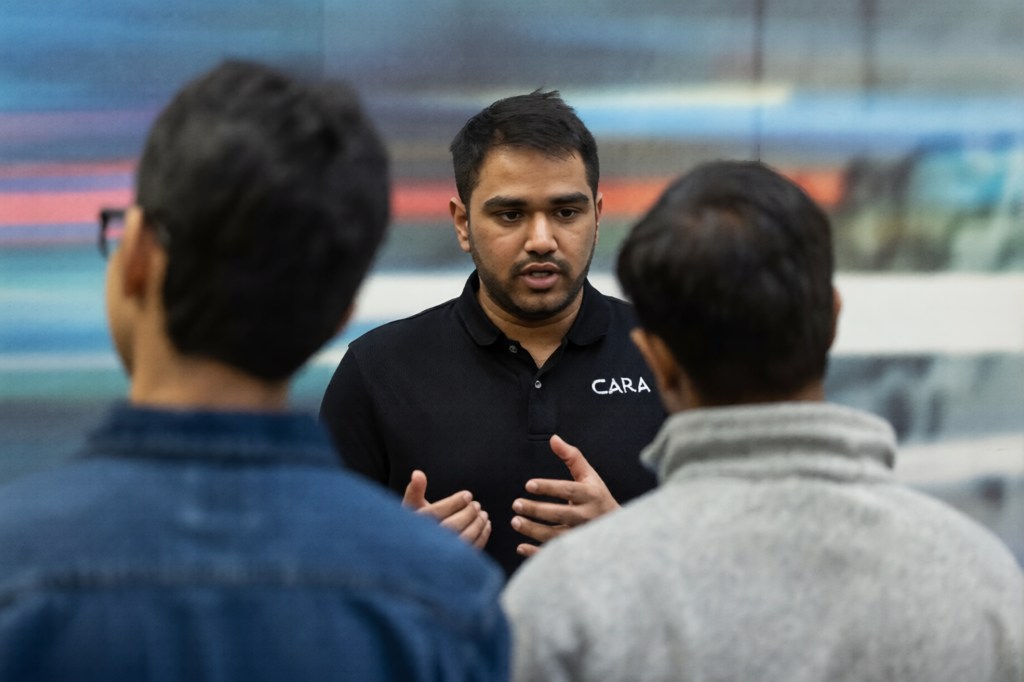
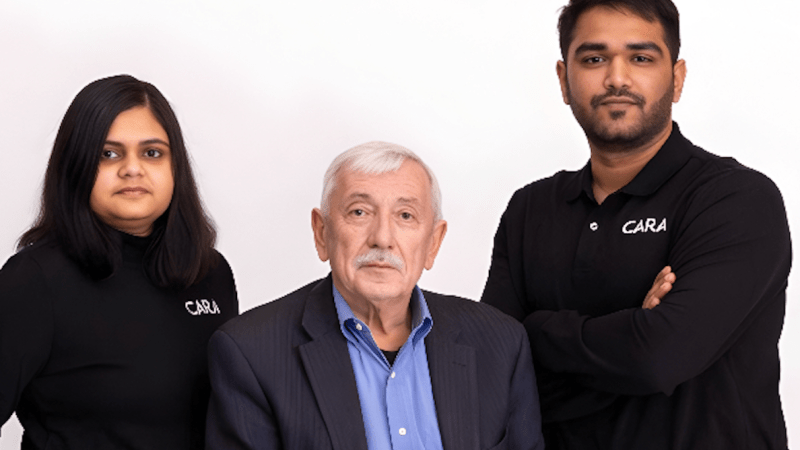
Prithvinath Garigapuram has seen that gap up close, first as a child in a small town in southern India and later as a graduate researcher. He now runs CARA Systems Inc., an NYU spinout building clinical decision-support software for clinicians treating intracranial aneurysms and related neurovascular conditions. As CEO and Co-Founder, he sits among a generation of founder-engineers trying to make clinical AI useful in practice. His work focuses on enabling clinicians to make faster, more consistent, and patient-specific decisions by turning existing clinical and imaging data into actionable insights at the point of care.
A Founder Shaped by an Access Gap
Garigapuram’s interest in medicine was shaped by firsthand exposure to delayed and limited access to care growing up in a small town in southern India. That experience became deeply personal when his grandfather’s recurring dizziness and blurred vision were misdiagnosed for years as sunstroke. The underlying condition was later understood to be an aneurysm, and the eventual stroke proved fatal. “Growing up in a small town in southern India,” he recalls, “I witnessed firsthand how limited access to specialists and delayed intervention can drastically affect patient outcomes, something I experienced through my grandfather’s misdiagnosed stroke.”
“That was my first introduction to what aneurysms are and what they could lead to,” Garigapuram recalls. The experience left him with a lasting conviction that, in many cases, the challenge is not the absence of medical data, but the absence of systems capable of interpreting imaging, patient history, and risk factors at the moment critical decisions are made. It also shaped his belief that healthcare technology, regardless of clinical sophistication, must be affordable and broadly accessible.
Rather than pursuing medicine directly, Garigapuram chose an engineering path. He moved to the United States as an international student and enrolled in the master’s program in Mechatronics and Robotics Engineering at New York University, where he specialized in Medical robotics focusing on coursework and research closely tied to clinical challenges.
From Graduate Research to NYU Spinout
At NYU, Garigapuram’s research explored the intersection of medical imaging, computational biomechanics, and vascular disease. He worked closely with neurospecialists at NYU Langone on research focused on the diagnosis and risk stratification and clinical assessment of intracranial aneurysms and stroke-related disorders.
Working closely with clinicians reshaped how he viewed the problem. In neurovascular care, many critical decisions are made under significant time pressure, often with fragmented information and with considerable variability. Patient-specific anatomical and clinical factors that influence treatment decisions are frequently distributed across systems rather than consolidated at the point of care.

That observation became the founding thesis for CARA Systems, offering an AI-assisted platform designed to support doctors make more consistent, patient-specific decisions for patients with brain aneurysms and other neurovascular conditions.
The company emerged from NYU’s research ecosystem and was supported through programs including NYU Future Labs and NYU Leslie eLab before raising early stage capital and starting clinical pilot collaborations with medical institutions.
The transition from graduate research to building and operating a healthtech company required Garigapuram to navigate engineering, fundraising, regulatory planning, and clinical validation simultaneously, something he believes is a continuation of his initial goals and beliefs. “My goal, which started out as a research project, has evolved into CARA Systems Inc. to help enable better personalized triage strategies, risk assessment, and treatment pathways for neurovascular care,” he says.
Building a Clinical Decision Engine
As CEO and Lead Research Engineer, Garigapuram directs both the strategic direction and technical architecture of the platform. The system integrates AI-driven medical imaging and patient-specific analytics to convert non-invasive clinical imaging into actionable insights for physicians, including personalized anatomical characterization and risk assessment outputs tailored to the individual patient case.
The broader objective, he says, is to help clinicians better evaluate disease severity, guide treatment planning, and reduce unnecessary invasive procedures. A major emphasis has been placed on integrating the platform into existing clinical workflows. For Garigapuram clinical adoption depends not only on technical performance, but on whether a system can operate naturally within the realities of day-to-day care delivery.
He notes that one of the most humbling lessons from building healthcare technology has been realizing that the complexity of healthcare extends far beyond the technology itself. Success, he says, depends not only on creating tools clinicians trust, but also on demonstrating measurable value to the institutions responsible for adopting and deploying them. In practice, the physicians using a platform and the administrators evaluating its operational, and financial impact often view the same technology through entirely different lenses. “Within the healthcare ecosystem, there are multiple key stakeholders involved,” he says. “The clinicians you are building for, and the buyers adopting the technology, often evaluate value very differently.”
The work has begun to receive broader recognition. Garigapuram is listed as an inventor on a U.S. patent application related to intracranial aneurysm assessment, and CARA Systems Inc. received the Defense TechConnect Innovation Award in 2024 in honor of innovation solving United States most critical challenges aligned with DOD and civilian applications.
Aligning Engineers and Practitioners Under a Shared Goal
Running a deep-tech healthcare company, Garigapuram says, requires constantly bridging disciplines that often operate with entirely different languages, priorities, and ways of thinking. His work routinely moves between engineers, computational scientists, clinicians, researchers, and investors, and he describes leadership less as directing teams and more as aligning perspectives across highly specialized domains.
He also spends time outside the company on the same axis. He mentors students and early-stage researchers navigating the transition from academic research to commercialization and has participated in healthcare innovation panels and investor forums on AI-assisted diagnostics, translational medicine and the future of personalized care.
His view of the field remains pragmatic. Rather than framing clinical AI as a replacement for physicians, Garigapuram sees medicine gradually moving toward more predictive, personalized, and proactive models of care, with companies like CARA Systems Inc. serving as part of the broader infrastructure enabling that transition at scale. The long-term goal, he says, is not simply technological advancement, but improving the consistency and accessibility of clinical decision-making, particularly for patients without easy access to multispeciality centers.
“Some of the most important healthcare challenges can’t be solved by a single discipline alone,” he says. “Meaningful progress happens when clinicians, engineers, and researchers work together toward a common goal.”
Closing the Gap He Started With
Prithvinath Garigapuram’s work has been driven by one central observation: critical outcomes in healthcare still depend heavily on how imaging is interpreted, how quickly decisions are made, and whether patient-specific information is available at the point of care. CARA Systems Inc. is his attempt to narrow that gap by providing a clinical diagnostic and decision-support layer that works within the workflows clinicians already use.
In neurovascular care, critical decisions are made in the narrow window between reviewing a scan and determining a treatment pathway. In high risk cases clinicians must quickly assess complex imaging alongside a patient’s medical history, and procedural risk factors. In time, they may need to decide whether immediate intervention is required, whether a patient can be safely monitored, or whether discharge is appropriate.
These decisions are often made under significant time pressure, with information fragmented across imaging platforms, electronic health records, and multidisciplinary teams. Even highly experienced clinicians can face challenges when critical data is incomplete, difficult to access, or interpreted in isolation. In high-stakes neurovascular environments, delays, variability in interpretation, or gaps in contextual information can directly affect patient outcomes, operational efficiency, and clinical risk.
Prithvinath Garigapuram has seen that gap up close, first as a child in a small town in southern India and later as a graduate researcher. He now runs CARA Systems Inc., an NYU spinout building clinical decision-support software for clinicians treating intracranial aneurysms and related neurovascular conditions. As CEO and Co-Founder, he sits among a generation of founder-engineers trying to make clinical AI useful in practice. His work focuses on enabling clinicians to make faster, more consistent, and patient-specific decisions by turning existing clinical and imaging data into actionable insights at the point of care.