Giuliano Gonzalez, Founder of Trustline Advisory Group Says “Ranking on ChatGPT” May Be Easier Than Ranking on Google
Trustline Advisory Group
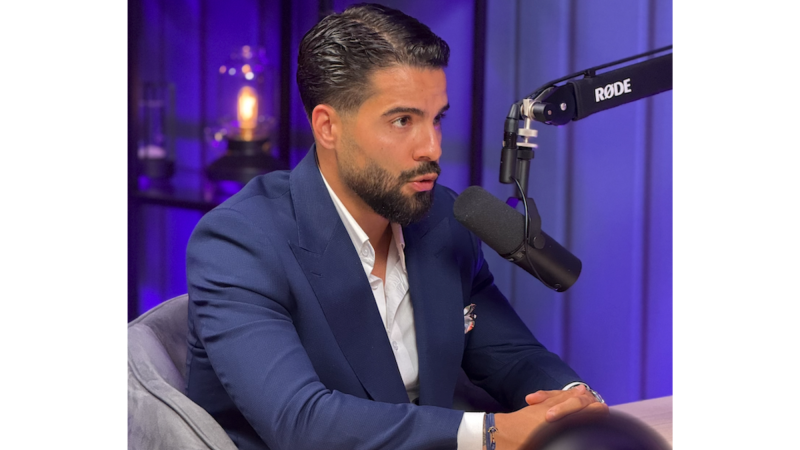
Giuliano Gonzalez did not set out to build an AI reputation firm. He spent years in public relations and brand strategy before ChatGPT existed, placing clients on top-tier media outlets and observing how Google’s algorithm rewarded brands that earned authority across the right sources on the internet. Then, in early 2025, he noticed a shift that many of his clients had not yet registered.
According to Giuliano Gonzalez, prospective buyers were increasingly turning to large language models rather than search engines to evaluate companies. The answers those models returned, he observed, were assembled from sources that few brands were actively managing. That observation became the foundation for Trustline Advisory Group, a Dubai-based AI search authority firm that advises founders and operators of $1M–$100M businesses on how their brands are represented inside ChatGPT, Perplexity, Gemini, Claude, and Google AI Overviews.
His core thesis is one that, in his view, most marketers are reluctant to articulate publicly.
“In our experience, it can be easier to rank highly inside ChatGPT today than it was to rank on the first page of Google back 10 years ago,” Giuliano says. “The difference, as we see it, is that comparatively few brands in the market are competing for that visibility yet. That window appears to be open right now, and we don’t expect it to remain open indefinitely.”
Trustline Advisory Group’s methodology centers on how AI search systems interpret brand authority, the data sources that appear to shape those outputs, and the steps operators may consider over the next ninety days. The following overview synthesizes that approach.
Why the AI layer matters
Giuliano Gonzalez points to two factors that, he argues, the market has yet to fully absorb. First, AI-referred visitors appear to convert at a higher rate than traditional organic search visitors. He cites Semrush’s AI search study of over 500 high-value topics, which found AI-referred traffic to be roughly 4.4 times more valuable than traditional organic search visitors on a conversion basis. Second, he notes that comparatively few operators are actively optimizing for AI search surfaces. Google has accumulated more than two decades of competitive optimization, while ChatGPT, Perplexity, and Gemini have existed at scale for roughly eighteen months. In Giuliano’s view, that competitive gap is where much of the current opportunity sits.
What “ranking” looks like inside an AI model
When a buyer asks an AI assistant for the best provider in a given category, Giuliano Gonzalez explains, the model assembles its answer from a relatively small set of sources, typically including Reddit threads, Wikipedia entries, a handful of journalism outlets, and a limited number of authority sites. If a brand appears in that synthesized answer, it enters the buyer’s consideration set. If it does not appear, Giuliano Gonzalez argues, it is far less likely to be considered at the discovery stage. Trustline Advisory Group refers to the percentage of category-relevant prompts in which a brand appears as its “citation share,” a metric the firm treats as the new equivalent of search ranking.
Concentrated citation sources
According to Giuliano, citation sources are highly concentrated. He points to the 5WPR AI Platform Citation Source Index, released in May 2026 and distributed by PR Newswire, which analyzed 680 million AI citations across ChatGPT, Claude, Perplexity, Gemini, and Google AI Overviews. The index found that the top 15 domains capture 68% of all citation share, a more concentrated discovery layer than Google produced at comparable stages of its development. Reddit alone, the report indicates, accounts for roughly 40% of citations across the major engines.
Why Reddit keeps appearing
Reddit’s prominence, Giuliano Gonzalez suggests, reflects how the models were trained. Systems built to answer questions tend to favor sources where real people have answered real questions, and Reddit represents the largest such corpus on the public internet. He references Tinuiti’s Q1 2026 report, which found that Reddit’s citation share grew at least 73% across tracked categories between October 2025 and January 2026. Perplexity, according to the same report, now draws roughly a quarter of its citations from Reddit, and Google AI Overviews source 44% of their social citations from the same platform. Giuliano Gonzalez characterizes this as structural rather than a passing trend.

Where traditional PR fits
Giuliano argues that media coverage outside the AI layer continues to matter. In his view, public, indexable coverage allows prospective customers and partners to research and verify the companies they are considering. He suggests that in the current environment, operators benefit from being visible and findable through credible third-party sources, as buyers increasingly expect a clear public footprint before engaging.
A typical engagement
According to Giuliano Gonzalez, Trustline Advisory Group’s engagement model is built around audits rather than high-pressure sales processes. Most clients, he says, sign up via email or direct conversation with the firm’s team via WhatsApp. Trustline Advisory Group then audits the business’s AI reputation, prepares a custom proposal and onboards the client. The firm distinguishes between foundation-building work, which establishes initial citation share, and ongoing maintenance, which monitors and adjusts that share as the citation landscape shifts.
A starting point for operators
For founders running $1M to $100M businesses without a current AI search strategy, Giuliano Gonzalez suggests a self-audit. The exercise involves opening ChatGPT, Perplexity, Gemini, and Google AI Mode in four browser tabs and entering the same five prompts into each: “What is [your company]?” “Is [your company] reputable?” “Best [your category] for [your ICP]?” “Alternatives to [your top competitor]?” and “Reviews of [your founder name]?”
Reading each answer carefully, along with the citations beneath, typically surfaces three categories of findings, according to Giuliano: inaccuracies the brand did not authorize, competitor mentions in answers where the brand might reasonably appear, and citation sources that differ from those the brand had assumed were doing the work. He describes the gap between the brand a company has built and the brand the model describes as a meaningful unmanaged exposure for many operators, and, in his view, a potentially significant untapped opportunity.
Common mistakes
The most common mistake Giuliano Gonzalez observes is operators conflating AI search with traditional SEO. He says many businesses ask their existing SEO agency to take on AI search optimization, and the agency continues optimizing the same site for the same keywords. The website, he argues, is generally not where the model is assembling its answer. The answer is being drawn from Reddit threads, journalism mentions, Wikipedia, YouTube, and structured authority content the brand does not own. Until the inputs change, in his view, the output is unlikely to change.
A second recurring mistake, according to Giuliano, is treating AI search optimization as a one-time project. Citation share, he notes, can shift in weeks rather than years. He points to the period in late 2025 when ChatGPT’s Reddit citation share fell from approximately 60% to 10% within six weeks following a Google API change, with PR Newswire, Forbes, and Medium absorbing much of the displaced share over the same quarter. Brands that audit once and disengage, he suggests, may find their visibility declining before they notice the shift. Brands that monitor on a regular cadence and adjust quarterly, in his experience, tend to compound their position over time.
The window
Giuliano Gonzalez argues that the elevated conversion premiums currently associated with AI traffic exist in part because much of the market has not yet engaged with the channel. As more brands optimize for citation, he expects model recommendations to saturate, click-through to normalize, and the channel to mature into something closer to what SEO became after 2010, a profitable but more contested environment. By 2028, in his projection, AI search is likely to look more like an established channel with established competitors and established costs, though he acknowledges that the pace of change in this area makes precise timelines difficult to predict.
Closing thought
When asked for a single piece of advice for founders, Giuliano Gonzalez suggests auditing what the four major models say about a business in the current week rather than the next quarter. In his view, the brands best positioned for the next decade may not be those with the largest websites or advertising budgets, but those that the models reference by name.
Giuliano Gonzalez did not set out to build an AI reputation firm. He spent years in public relations and brand strategy before ChatGPT existed, placing clients on top-tier media outlets and observing how Google’s algorithm rewarded brands that earned authority across the right sources on the internet. Then, in early 2025, he noticed a shift that many of his clients had not yet registered.
According to Giuliano Gonzalez, prospective buyers were increasingly turning to large language models rather than search engines to evaluate companies. The answers those models returned, he observed, were assembled from sources that few brands were actively managing. That observation became the foundation for Trustline Advisory Group, a Dubai-based AI search authority firm that advises founders and operators of $1M–$100M businesses on how their brands are represented inside ChatGPT, Perplexity, Gemini, Claude, and Google AI Overviews.
His core thesis is one that, in his view, most marketers are reluctant to articulate publicly.