Luxury Is Bored – One Woman Is Breaking the Rules That Matter
edited by Entrepreneur UK
|
May 19, 2026
Lorraine Le
Luxury has never been more accessible. And yet, it has rarely felt more distant.
The present moment is characterized by expanded access to information, people, and places once considered out of reach. Alongside expanded access, there is also a subtler pressure to present, perform, and maintain a composed outward image.
In luxury spaces especially, success often carries an unspoken expectation — that vulnerability is something to be managed, not acknowledged. What gets lost is something far more basic: the permission to be human.
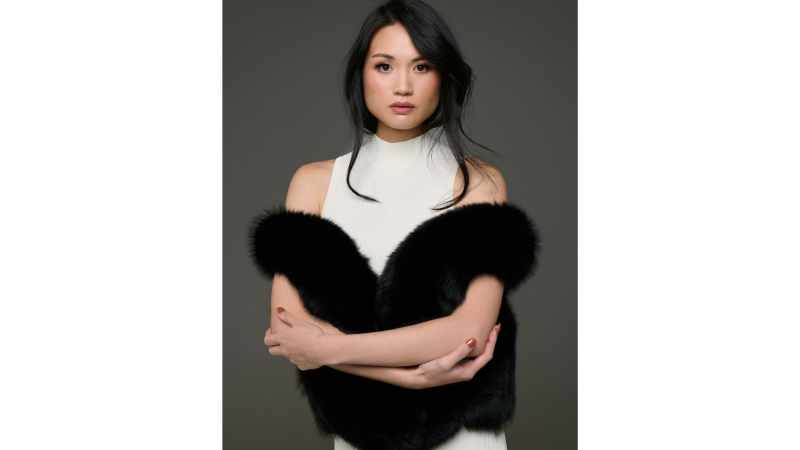
“I spent years helping create beautiful experiences,” Lorraine Le says. “And I loved it. But there came a point where I realised I wasn’t really feeling anything anymore — and I began to notice that much of what I was seeing across the luxury sector was beautiful and visually stunning, yet somehow emotionally indistinguishable. I don’t think the challenge in luxury is making things more beautiful. I think it’s making people feel something again through what’s being created.”
In environments created to impress, lasting impressions don’t always follow. In Le’s approach, the emphasis shifts toward feeling, with an intention to introduce a more human presence within spaces that tend to prioritize composure. There’s something about it you don’t expect, something that subtly invites you to look at your own experiences through a new lens.
You begin to realise she doesn’t belong neatly to any single world. Her work exists somewhere in between — connecting beauty, luxury, and influence with the struggles people carry, regardless of status or visibility. Rather than moving away from luxury, Le’s approach brings in elements it has often left unspoken — such as the acknowledgment of struggle, vulnerability, and more hidden parts of experience.
This is happening at a time when almost everything is optimised — experiences included. Meals are curated for cameras, conversations compressed into soundbites, vulnerability packaged just enough to feel safe. Against that backdrop, Le’s work feels less like an innovation and more like a refusal.
That refusal carries particular weight in the Middle East, where luxury, tradition, and public image often intersect with heightened expectation. In cities like Abu Dhabi and Dubai — global centres of ambition, wealth, and discretion — Le’s invitation-only Chef’s Tables and discreet salons have
taken on a distinct resonance. Conversations around vulnerability, grief, or personal struggle are rarely given space in high-status settings. The fact that these discussions unfold quietly, around a table, within some of the region’s most refined environments is precisely what gives the work its power.
Le understands this world from the inside. For nearly two decades, her career has moved through hospitality, private aviation, and invitation-only spaces spanning Asia, Australia, the Middle East, Europe, and the United States. She wasn’t critiquing luxury from the outside — she was helping shape it.
Le has long worked with luxury brands and founders, shaping how companies communicate, show up, and connect with their clients on a deeper level. Much of that work happens quietly — advising on experience, positioning, and long-term vision rather than surface aesthetics. She’s deliberate about where she lends her time.
“I’ve never been interested in exclusivity for its own sake,” she says. “What matters to me is conviction — whether a founder or business is willing to challenge norms and build something that genuinely improves how people live.”
In conversations around who is pushing the boundaries in this space, Tim Gurner’s name often surfaces. Within her executive role at the Gurner Group, Le speaks of a unique vision that has positioned Tim Gurner as one of Australia’s most influential figures in luxury property today.
“What I find compelling about Tim’s work is that he’s creating his own category,” Le says. “That vision isn’t aspirational — it’s driven by a lifestyle he actually lives. Rather than separating branded residences, wellness, and luxury apartments, he’s integrating them into a single way of living. I believe the world will come to see that what he’s building represents the future of luxury living — where wellness sits at the centre of how people define home and quality of life.”
For Le, this alignment reflects a broader shift underway in global luxury — one that is less concerned with signalling status and more attuned to how environments support real lives. Wellness is no longer an amenity. Experience is no longer a layer. They’re becoming foundational.
Her work spans varied arenas, yet the underlying principle is consistent. She is drawn not to the surface of success, but to the structures that underpin it — the cultural and emotional foundations that shape behaviour over time. The sector may differ; the lens remains disciplined.
Still, her most intimate work remains at the table.
“There’s something about sharing food that lowers people’s defences,” she says. “The table becomes a place where we can connect without pretending.”
Early versions of Le’s Chef’s Tables were noted for offering something outside the typical format. A quieter sense of vulnerability runs through the experience, felt more as a human quality than a signal of uncertainty. Themes of growth, trauma, and grief unfold gently and without overt emphasis.
There was no agenda. No expectation to speak. No performance to reward. Conversation ebbed and flowed, allowing silence to exist without discomfort.
What tends to linger about Le’s work is that money doesn’t grant entry — intention and authenticity do. In a world where access is so often transactional, that distinction feels quietly radical.
Her philosophy, Break It Till You Make It, isn’t about destruction. It’s about honesty.
“For a long time, I was afraid of anything breaking in my life,” she says. “Now I see it differently. Breaking doesn’t always mean loss. Sometimes it’s simply the moment you stop pretending.”
The power of her work lies not in what it presents, but in what it permits.
And perhaps that is what feels rare now — not the luxury itself, but the willingness to let something real exist within it.
Luxury has never been more accessible. And yet, it has rarely felt more distant.
The present moment is characterized by expanded access to information, people, and places once considered out of reach. Alongside expanded access, there is also a subtler pressure to present, perform, and maintain a composed outward image.
In luxury spaces especially, success often carries an unspoken expectation — that vulnerability is something to be managed, not acknowledged. What gets lost is something far more basic: the permission to be human.