Urban X
The new players betting on cities, art and big money
Urban X
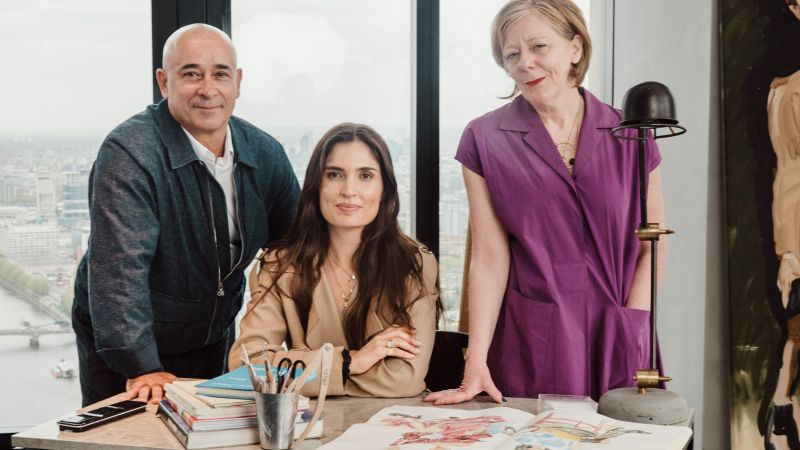
Patrick Foret (Former Director, Art Basel and Art Basel Cities), serial entrepreneur Marine Tanguy (Forbes 30 under 30 and Sunday Times Power List) and Sherry Dobbin (Founder, Midnight Moment /Times Square Arts)
Opinions expressed by Entrepreneur contributors are their own.
You're reading Entrepreneur United Kingdom, an international franchise of Entrepreneur Media.
For years, the art world has sustained itself on a strange contradiction. Politicians praise culture as essential to economic growth while treating it as expendable whenever budgets tighten. Every city wants the energy, prestige and tourism that culture brings; far fewer want to pay for the conditions that allow it to exist. That contradiction is now becoming impossible to ignore. Across the UK, Europe and the US, museums are under pressure, public funding is shrinking and younger audiences are drifting away from traditional institutions. The old financial model – a mixture of subsidy, philanthropy and sponsorship – looks increasingly brittle. Even major institutions with global reputations are asking the same question: what comes next?
Urban X, a newly launched cultural agency founded by Marine Tanguy, Sherry Dobbin and Patrick Foret, believes it has an answer. The company arrives with serious credentials. Between them, the founders have worked across public art, city-scale cultural projects and the global contemporary art market at its highest levels. Their combined track record includes more than 350 public art projects, over $300m raised for arts programmes and major involvement in international cultural infrastructure projects. But what makes Urban X interesting is less the résumé than the timing. The agency is launching into a cultural sector that increasingly feels caught between two eras. On one side sits the traditional model: publicly funded institutions, philanthropic boards, biennials, museums and galleries operating within systems built decades ago. On the other sits a much more aggressive global economy in which cities compete for attention the same way brands do. Culture has become part of that competition.
You can see it everywhere. Gulf states are investing billions into museums and creative districts. Seoul has transformed cultural exports into geopolitical influence. Even cities facing financial pressure continue to market themselves through creativity, nightlife, design and the promise of cultural energy. The irony is that while culture has become more economically valuable, many of the people producing it are living with greater instability than ever. Artists leave major cities because they can no longer afford studio space. Smaller institutions survive project to project. Public art programmes increasingly rely on private backing. In the UK, local authority arts spending has been hollowed out over the past decade, while commercial rents continue to rise in many urban centres once associated with creative experimentation. The result is a sector that generates enormous symbolic value while struggling to sustain itself financially.
Urban X is attempting to position itself inside that gap. Its basic argument is that culture should no longer be treated as an optional extra attached to urban development, but as part of the infrastructure of a modern city – something capable of attracting investment, talent and international visibility. In practice, that means connecting city governments, institutions, brands and private capital around large-scale cultural strategies rather than isolated sponsorship deals or temporary initiatives. The language can sound corporate at times. Terms like ‘cultural architecture’ and ‘creative ecosystems’ hover close to consultancy jargon. But beneath that is a harder economic reality: the arts sector is already deeply entangled with property, tourism, branding and politics. Urban X is simply more explicit about it than most. There is an obvious tension here. The closer culture moves towards capital, the more anxious parts of the art world become about losing independence. Critics of culture-led regeneration have long argued that artists are often used to make neighbourhoods desirable before being displaced by rising costs themselves. Public art can easily become a cosmetic layer for real estate speculation.
Urban X will inevitably face those questions. Yet there is another uncomfortable truth: many existing funding structures are no longer working. Public subsidy alone cannot sustain the scale of cultural ambition cities now demand, while philanthropic funding tends to flow towards a relatively small group of established institutions. Something else is emerging in its place. The founders of Urban X belong to a generation that has spent years operating between cultural institutions and commercial systems rather than seeing them as opposing worlds. Tanguy built her reputation bringing contemporary art into public and corporate environments beyond traditional galleries. Dobbin turned Times Square’s giant advertising screens into a nightly public art programme. Foret helped expand Art Basel into something larger than an art fair – a global cultural and economic platform with direct influence on cities themselves. That background matters because the boundaries separating culture, business and urban development are becoming less clear everywhere.
Luxury brands now commission exhibitions and fund foundations. Developers hire curators. Tech companies sponsor biennials. Governments increasingly talk about ‘creative economies’ in the language once reserved for finance or infrastructure. Whether the art world likes it or not, culture has become part of economic strategy. The question is who benefits from that shift. For all the rhetoric around innovation and creativity, much of the cultural economy still runs on precarious labour and unstable financing. Artists are expected to provide energy, identity and experimentation to cities while often existing outside the wealth those cities generate.
Urban X is betting that a more structured relationship between culture and capital could change that. Skeptics will argue it risks accelerating the opposite: a world in which culture becomes inseparable from branding and investment logic. Both arguments may prove true at once. What is clear is that the old model is fraying. The idea that culture can survive primarily through shrinking public subsidy and occasional corporate sponsorship looks increasingly unrealistic. Cities still want culture because culture creates attention, movement and prestige. But they are now searching for new ways to finance it.Urban X may be one of the clearest signs yet of where that search is heading.
For years, the art world has sustained itself on a strange contradiction. Politicians praise culture as essential to economic growth while treating it as expendable whenever budgets tighten. Every city wants the energy, prestige and tourism that culture brings; far fewer want to pay for the conditions that allow it to exist. That contradiction is now becoming impossible to ignore. Across the UK, Europe and the US, museums are under pressure, public funding is shrinking and younger audiences are drifting away from traditional institutions. The old financial model – a mixture of subsidy, philanthropy and sponsorship – looks increasingly brittle. Even major institutions with global reputations are asking the same question: what comes next?
Urban X, a newly launched cultural agency founded by Marine Tanguy, Sherry Dobbin and Patrick Foret, believes it has an answer. The company arrives with serious credentials. Between them, the founders have worked across public art, city-scale cultural projects and the global contemporary art market at its highest levels. Their combined track record includes more than 350 public art projects, over $300m raised for arts programmes and major involvement in international cultural infrastructure projects. But what makes Urban X interesting is less the résumé than the timing. The agency is launching into a cultural sector that increasingly feels caught between two eras. On one side sits the traditional model: publicly funded institutions, philanthropic boards, biennials, museums and galleries operating within systems built decades ago. On the other sits a much more aggressive global economy in which cities compete for attention the same way brands do. Culture has become part of that competition.
You can see it everywhere. Gulf states are investing billions into museums and creative districts. Seoul has transformed cultural exports into geopolitical influence. Even cities facing financial pressure continue to market themselves through creativity, nightlife, design and the promise of cultural energy. The irony is that while culture has become more economically valuable, many of the people producing it are living with greater instability than ever. Artists leave major cities because they can no longer afford studio space. Smaller institutions survive project to project. Public art programmes increasingly rely on private backing. In the UK, local authority arts spending has been hollowed out over the past decade, while commercial rents continue to rise in many urban centres once associated with creative experimentation. The result is a sector that generates enormous symbolic value while struggling to sustain itself financially.

Patricia Cullen • Features Writer
Entrepreneur Staff