Even in these difficult geopolitical times, trading internationally is still your business’ best bet
International trade remains essential for resilient, ambitious UK business growth today.
The Chartered Institute of Export & International Trade
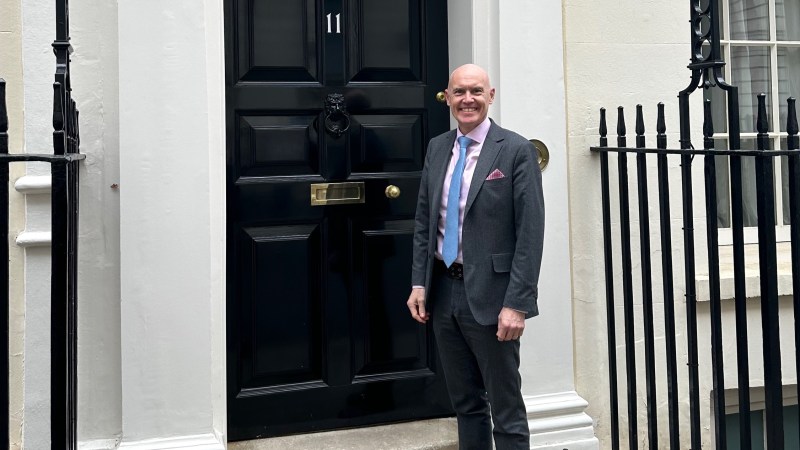
Marco Forgione, Director General, The Chartered Institute of Export & International Trade
Opinions expressed by Entrepreneur contributors are their own.
You're reading Entrepreneur United Kingdom, an international franchise of Entrepreneur Media.
The geopolitical turmoil roiling supply chains might seem like a daunting prospect if you’re considering selling internationally. In fact, there’s never been a better time to sell your goods abroad. We know that businesses that trade their goods internationally are more successful, more resilient and employ more people. In these difficult economic times, selling abroad is not only a key part of growing your business; it’s also part-and-parcel of ensuring your business can survive and thrive in periods of geopolitical uncertainty. New markets mean new consumers. Consumers who might be willing to pay top-dollar for your products, while those in your domestic market look to cut back on spending. In my time as director general at the Chartered Institute of Export & International Trade, I have seen that Brand Britain remains a powerful asset for exporters. Consumers in Europe, the Americas and Asia are still willing to pay a premium for UK-made goods and services. Businesses that choose to export to new and growing markets are best placed to take advantage of a growing middle class that wants to spend more money on premium, British products. There are millions of buyers across the globe, waiting for the opportunity to purchase your products.
Getting ‘export ready’
As business leaders, you should be looking to get your company as ‘export ready’ as possible if you want to expand into international markets. This requires a considered plan and investment of both time and money. An ‘export-ready’ company is one that has the right people, systems and skills in place to support your business in foreign markets. While this requires some resources, it is easier than you might think and will deliver a significant return on investment in the long run. For those with an entrepreneurial spirit, it is well worth considering. Amid all the noise, focus on two exporting foundations:
- Building a corps of well-trained and trusted staff
- Knowing your market
There are, of course, other considerations, but years of listening to British trade success stories have taught me that these two aspects are essential when it comes to growing a company’s exporting capacity.
Staff
As business leaders, you understand the importance of reliable, capable staff to your company. With international trade, the value of a good team goes from ‘important’ to ‘crucial’. Export controls and sanctions, customs processes, freight and delivery, new regulations, compliance issues, export finance… these are difficult topics for any business to navigate. A confident and knowledgeable team, able to spot problems before they arise and protect your bottom line, is fundamental to getting your company export ready. This team should know how your supply chain works, understand immediate regulatory compliance challenges and be prepared for changes just over the horizon. They should also be empowered to make decisions quickly, with the confidence to know they are taking the right course of action. Empowering your existing staff with the right knowledge is a good first step. In-house expertise can be shaped in a way that suits your business. Formal qualifications, training courses and webinars are good options for any business leader looking to upskill their staff. AI, while a useful tool, will never replace the expertise that a human being can bring to a business, and it remains cost-effective to train your in-house talent. The ideal business model will blend a well-trained staff and the latest technology. Global trade and customs is still professionalising. Many operators are still using knowledge scraped together on the job, rather than learning the basics from day one. Sometimes even experienced operators would do better with a fundamental grounding in the day-to-day concepts, rather than relying on knowledge learned several decades ago. As a result, entering with a fully trained and accredited staff can be a competitive advantage, even over rivals that have been operating internationally for years.
Getting to know your market
The second aspect to becoming export ready is learning about the markets you want to trade with. Whether that’s EU members, the US or developing markets in continents like Africa or Asia, the basics still apply. Having a clear idea of the buyers, sellers and supply chains in your market is basic business practice. When selling internationally, this is even more important. If you, for example, want to sell food and drink products into Middle Eastern markets, understanding the marketing potential of your goods – as well as your best avenues for moving those goods and the customs procedures that can make life easier – is important to becoming export ready. I’ve heard from our members that consumers in the Gulf region are particularly keen to buy British-branded meat and drinks products, while Asian consumers are starting to develop a taste for Scottish whisky and Welsh lamb. UK fashion, culture and technology are valued the world over, while service providers benefit from the stability of the UK business environment. Understanding why these products are appreciated, and how you can take advantage of this powerful desire for ‘Brand Britain’, will help you to successfully position your goods in international markets. Overseas partners can support you to understand more about your new markets. These partners can be customs brokers, freight forwarders or intermediaries that you might already be familiar with, or marketing agencies, supply chain operators and selling platforms. Some markets are essentially impossible to operate in without a trusted local partner, as certain business cultures frown upon working with foreign sellers without a local actor who is willing to vouch for them. Selling goods abroad is not just about the product, it’s also about understanding the business culture and how to navigate it. For this purpose, trade shows are a lifeline for all kinds of businesses. While the Department for Business and Trade (DBT) has sadly withdrawn funding for UK businesses to go to overseas trade shows and conferences, there are still cost-effective ways of exploring your potential markets and meeting new partners. Don’t see these trips as an expense, see them as an investment.
Online selling
It would be remiss of me to not mention e-commerce as an export avenue. While many of you know that brick-and-mortar shops have their value, selling your goods online can be cost-effective. Taking a ‘digital first’ approach to exporting can pay dividends and I would encourage you to take this into account when planning your strategy, Platforms like Amazon, Etsy and Shopify are renowned internationally. However, some markets rely on e-commerce that are used widely by the population but aren’t well known beyond. Mercado Libre is one of the leading platforms for South America, while most of New Zealand uses TradeMe. Bol.com is the leading ecommerce platform for the Netherlands and Belgium, while India’s Myntra is a good option for fashion businesses. Each of these is different but offers unique advantages for the right business. In some cultures consumers prefer to buy only from their chosen marketplaces rather than individual websites. We’ve seen that some growing markets in Africa are digital-first and mobile-first, so the right app is crucial to expanding into these markets and reaching their growing number of young consumers. Understanding which of these routes suits your business best is an undervalued quality, in my view, and goes back to the idea of knowing your market inside and out. This should be factored into your initial research and feature in discussions with prospective partners. A good partner will know what product sells well and on which platform, rather than taking a blanket approach.
Mistakes
Despite the many, many benefits to trading internationally, there are costs to making mistakes. Businesses often come to us after something has gone wrong, so we’ve seen a variety of issues arise in our 90 years of empowering global trade. One of the most common issues we’ve seen is falling foul of customs regulations. Each country, even within the EU, has different rules and practices. Each country also takes a separate approach to enforcement, with some taking a more robust approach than others. We’ve always advocated to make processes easier for traders and various governments are now starting to take this message seriously. The EU’s simplification agenda and the UK government’s free trade negotiations are proof of this. However, falling foul of these regulations is still a real concern for many businesses, and the risks include fines, reputational damage and delays across your supply chain. With a whirlwind of information, updates and new events, it can be off-putting for many businesses looking to expand into new markets. There are tools out there to help your staff deal with this. I’ve already highlighted the need to find the right training programme for your business. It should create a staff that is well equipped to deal with problems arising in your supply chain. A continuous stream of new software solutions are also coming onto the market. These offer cost-effective ways of monitoring your business’ supply chain and mitigating risk. To take one example, tools like MyCustomsInfo can empower your business to identify overpayments and underpayments in customs duty payments. The right tool should be able to analyse your historical data, flag issues as they arise and help your staff to streamline your business processes.
Horizon scanning
Export-ready businesses should also have a clear idea of what is coming up next in international trade. While the last few years have given us unforeseen challenges, like Brexit, the Red Sea Crisis and the ongoing war in the Middle East, we can still prepare for some upcoming supply chain disruption. I can think of countless examples of successful entrepreneurs or founders who have built on their successes by preparing better than their competitors. From speaking to the Chartered Institute’s advisory services experts, I can tell you that regulations like the EU and UK’s separate Carbon Border Adjustment Mechanisms (CBAM), and ever-growing sanctions and export controls regimes, are some of the most important developments you should be keeping an eye on. Additionally, UK taxes on plastic packaging, the EU’s Digital Product Passport regulation and the EU Deforestation Regulation are other rules and regimes that need to be fully understood. Each one presents an opportunity for businesses to prepare and get ahead of the competition. Part of this comes back to having a well-trained staff that can spot these problems and understand your target market.
CBAM
When it comes to CBAM, this legislation is set to continue reshaping supply lines for many years to come. In order to export your goods to Europe, or import them into the UK, understanding how CBAM works is important. CBAM is effectively a border tax on carbon emissions during production. Businesses that produce or import carbon-intensive goods, like steel, aluminium and cement, need to understand and track their emissions. The EU and UK versions are different, and could become more distinct from one another as time goes by. Although both Westminster and Brussels look to be playing well together at the moment, regulatory divergence is still a risk. The EU’s version is still in its early stages, with the first costs for businesses due next year, when carbon certificates are due to be surrendered. The UK has yet to announce its version, but more details are expected soon. Although the initial legislation only looks at six product categories, this list could grow in the future. Already, glass and ceramics are being discussed as the next set of goods to be included in CBAM.
Enforcement
Something worth being aware of is that the UK government has strengthened its enforcement of customs regulations. This should inform your business strategy. HMRC announced earlier this year that it will be hiring 5,500 new compliance officers. We’re also hearing directly from businesses that the government is carrying out more checks on customs processes, with more remote, ‘desk audits’ taking place, as well as an increase in on-site visits. Our members and customs experts have both reported an increase in audits, with a heightened focus on providing evidence to illustrate customs procedures are being followed correctly.
Being prepared
International trade is an investment. Putting the money into the right staff and systems will pay off with better compliance and reduced risk. While we advocate for the government to make trade smoother on a daily basis, we also encourage the business community to put the proper resources into ensuring strong compliance. Being export ready as a company leader means making sure your entire team is prepared for new regulations. Entrepreneurs work best when they are thinking of creative ways to protect and expand their businesses. Changes like CBAM and new export controls reflect a shifting environment for international trade, away from ‘free trade’ to a more controlled, cautious approach to global supply chains. For the foreseeable, governments are more likely to take a hands-on approach, as powerful geopolitical trade blocks look to protect their value chains and rivalries continue to develop between them.The has signed free trade agreements with trusted partners like India, Australia and New Zealand, plus the Comprehensive and Progressive Agreement for Trans-Pacific Partnership (CPTPP) bloc of nations. Some of these are slowly coming online as we speak, while other agreements are being negotiated in the background. If you’re considering which market to invest in, explore the deals the UK has negotiated or is negotiating currently. Tariff-free access to emerging markets is a key priority for many traders and being an early adopter in a newly liberalised marketplace carries its own rewards.
Advice
My advice to the entrepreneurs reading this is twofold. Firstly, examine what you already have in place. Talk to your key staff. Find out what skills you already have, what skills you can develop in-house and what you need to bring in. Understanding your business’ strengths and weaknesses is just as important as researching your market. Secondly, look at the trade shows running in your target markets and start identifying opportunities to attend. Finding partners and building a presence in your chosen markets is as vital as training your staff, and requires less investment. If you can identify, say, a freight forwarder who specialises in Eastern Europe that you can trust with compliance issues, that’s less money you need to spend training your staff. The network of people you create will be invaluable. International trade is a people business as much as it is about the product, and trusted trade is a vital part of the future of the global economy.
Difficult but necessary
This all leads to the obvious point that the last few years have been difficult for businesses. As head of a leading trade body, I regularly speak to policymakers and officials who highlight the ongoing difficulties within our supply chains. As the global trading order fragments, the world looks less secure and more volatile than ever. I appreciate this can be an unsettling time for business and investors. But, as director general of the Chartered Institute, I’ve seen exporters still thrive in these times. You may initially feel daunted at the prospect of becoming ‘export ready’, but the rewards speak for themselves. Once your business is prepared to expand internationally, with the right staff and knowledge about your target market, you can start reaping those benefits. I will never tire of telling people about the value of ‘Brand Britain’. A growing middle class exists across the world, continents full of people who are looking to purchase high-value and well-made goods that the UK provides in abundance. While satisfying these markets requires both serious thought and investment, both in your staff and business strategy, the rewards are well worth the initial price.
The geopolitical turmoil roiling supply chains might seem like a daunting prospect if you’re considering selling internationally. In fact, there’s never been a better time to sell your goods abroad. We know that businesses that trade their goods internationally are more successful, more resilient and employ more people. In these difficult economic times, selling abroad is not only a key part of growing your business; it’s also part-and-parcel of ensuring your business can survive and thrive in periods of geopolitical uncertainty. New markets mean new consumers. Consumers who might be willing to pay top-dollar for your products, while those in your domestic market look to cut back on spending. In my time as director general at the Chartered Institute of Export & International Trade, I have seen that Brand Britain remains a powerful asset for exporters. Consumers in Europe, the Americas and Asia are still willing to pay a premium for UK-made goods and services. Businesses that choose to export to new and growing markets are best placed to take advantage of a growing middle class that wants to spend more money on premium, British products. There are millions of buyers across the globe, waiting for the opportunity to purchase your products.
Getting ‘export ready’
As business leaders, you should be looking to get your company as ‘export ready’ as possible if you want to expand into international markets. This requires a considered plan and investment of both time and money. An ‘export-ready’ company is one that has the right people, systems and skills in place to support your business in foreign markets. While this requires some resources, it is easier than you might think and will deliver a significant return on investment in the long run. For those with an entrepreneurial spirit, it is well worth considering. Amid all the noise, focus on two exporting foundations:
- Building a corps of well-trained and trusted staff
- Knowing your market
There are, of course, other considerations, but years of listening to British trade success stories have taught me that these two aspects are essential when it comes to growing a company’s exporting capacity.

Marco Forgione is Director General at The Chartered Institute of Export & International Trade