GLOBAL BY INVENTION
Gravity Industries Jet Suit reshapes defence rescue and mobility categories
Gravity Industries
Richard Browning, founder, Gravity Industries
Opinions expressed by Entrepreneur contributors are their own.
You're reading Entrepreneur United Kingdom, an international franchise of Entrepreneur Media.
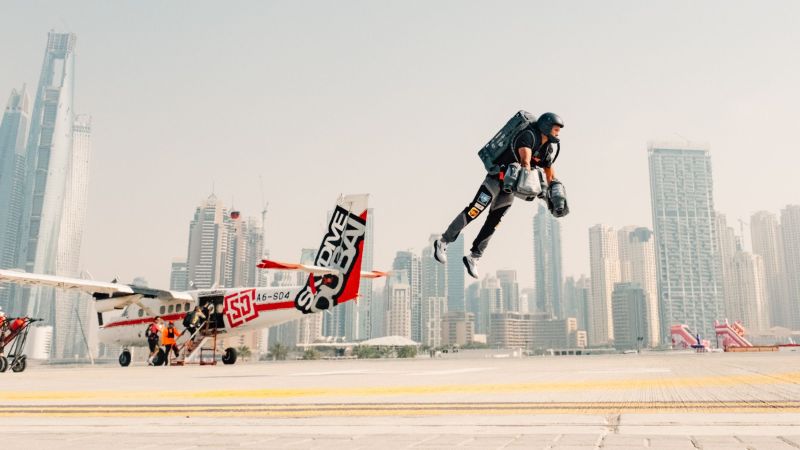
Across maritime waters, desert terrain and defence exercises in more than 50 countries, one question follows Gravity Industries’ Jet Suit – a wearable propulsion system that allows a person to fly: where does it belong? It no longer sits between invention and demonstration. It is being tested, assessed and increasingly deployed across defence, rescue and commercial environments. But before any of that, it has to be understood. For its founder, Richard Browning, that has always been the harder task.
THE CATEGORY PROBLEM
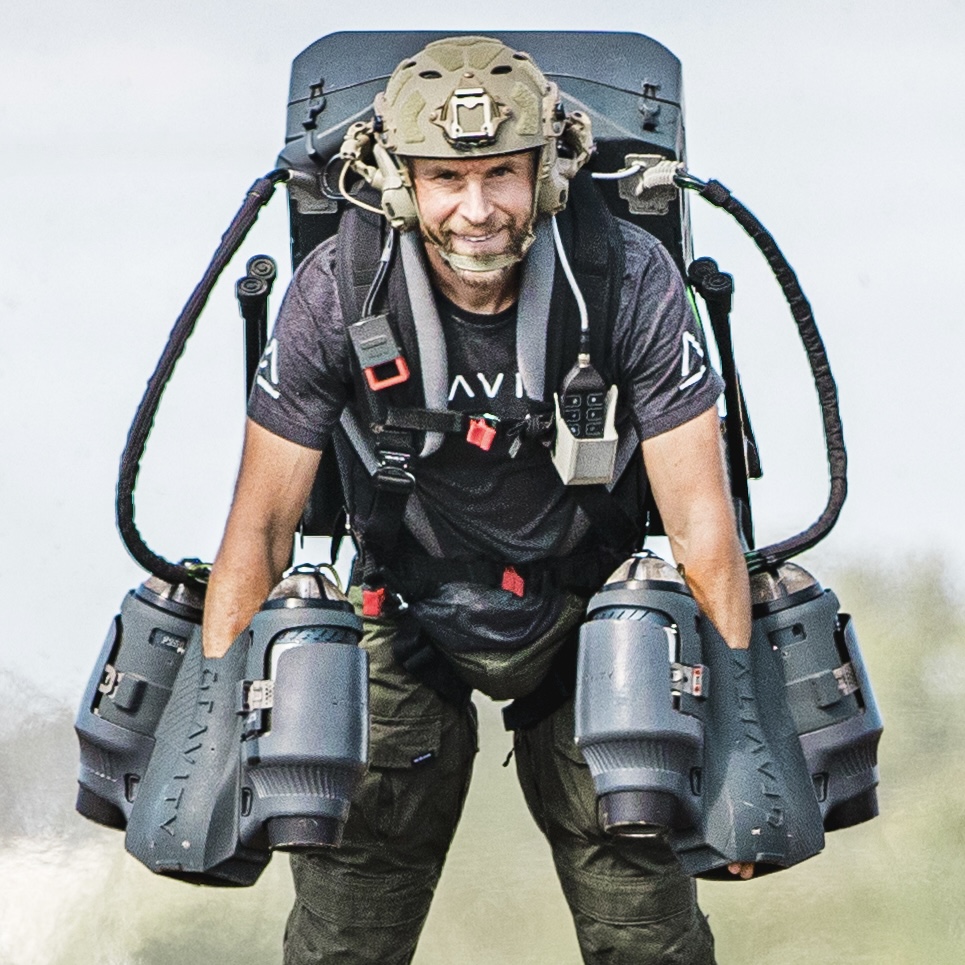
The challenge begins not with scale, but with recognition. “Scaling a business itself is a fascinating charge. In many cases, you have an entrepreneur who is defying convention and more often than not faces ongoing skepticism, to bring something new to the world that was previously thought impossible,” says founder Richard Browning. Very quickly, the inventor must become a communicator and leader, able to carry an idea beyond its origin to a wider audience. That task is constantly evolving, and becomes harder still when the product does not fit existing public or regulatory categories. “In Gravity’s case, we have had to work very hard to create a definition of what our company is and how it fits into the aviation world. And as far as defence is concerned, it is an entirely new platform that fits somewhere between an all-terrain vehicle and a personal helicopter.” The problem is not rejection. It is classification.
THE BUY-IN GAP
In established industries, improvement is incremental. In new categories, even comprehension has to be built from scratch. “If we take the defence market as an example, the biggest hurdle to seeing the Jet Suit become part of most allied militaries capability is exactly the challenge that it does not fit into an existing category. If we were delivering a slightly better pair of boots or a slightly better rifle, then it’s relatively easy. But when you are delivering a capability that wasn’t even part of the strategic review, or even thought possible, then you start from scratch when it comes to the buy-in.” The friction is not technical. It is conceptual.
FROM DEMONSTRATION TO DEPLOYMENT
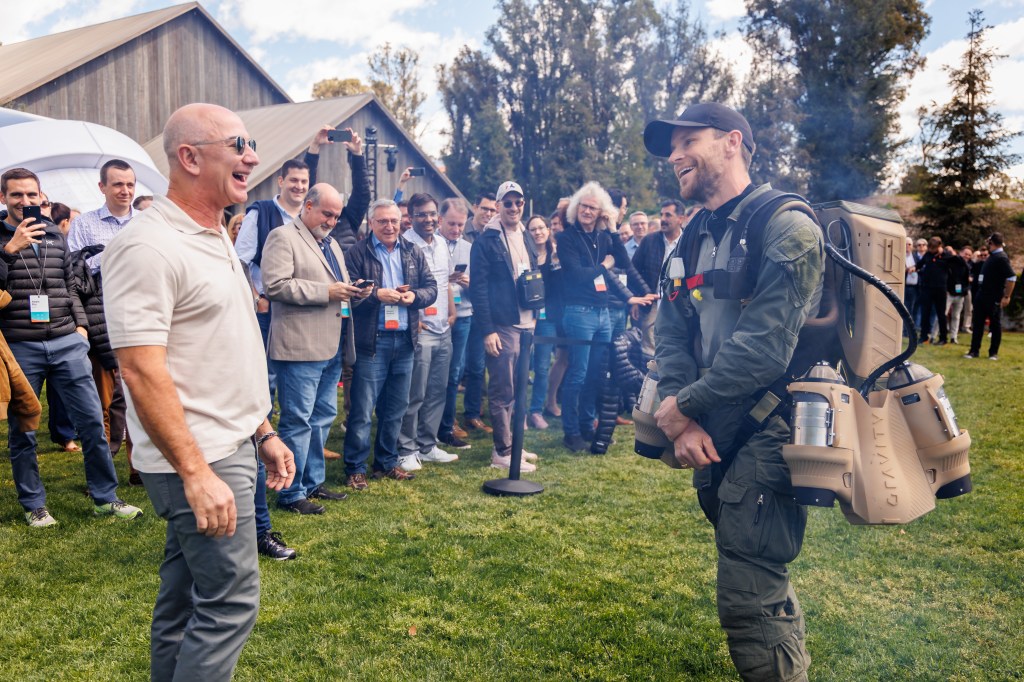
Gravity Industries launched in 2017 with immediate attention. But attention is not infrastructure. “We launched in 2017 and commercial interest has been there from the beginning. As the world’s first patented Jet Suit, the product will always naturally have that ‘wow’ factor, but in showcasing our flights across the world, we’ve also caught the attention of organisations who may not have even dreamed an invention like ours could help until they saw it in action. For example, our over-water and mult-terrain training sessions have demonstrated the Jet Suit’s capabilities and robustness. This has in turn caught the attention of organisations – both military and charity – operating in environments which are traditionally slow or difficult to reach, including mountain rescue, ship boarding and coastal operations. Only last month, we have undertaken trials with maritime organisations including the Royal Navy and NATO’s Maritime Interdiction Operations Training Centre.” What began as demonstration has shifted into operational testing. “We are seeing a clear step-change in how Gravity and our technology is perceived. We’ve moved from a predominantly entertainment-led operation to the professional deployment of our technology across areas such as ship boarding, coast guard operations, medic response and frontline units. The conversation has moved well beyond curiosity into serious evaluation of where our Jet Suits can provide genuine operational advantages and we’ve secured a number of highly significant, albeit confidential, defence contracts.” Over the past year, their priority has been to ensure the technology is robust, reliable, and ready for deployment in professional environments. They will continue testing and training across varied terrains in the months ahead, including maritime, alpine, and desert conditions.
GLOBAL MOMENTUM
The shift is no longer isolated. “We’ve recently reported a strong year of growth underpinned by rising global defence interest which reflect our transition from experimental innovation and commercial entertainment flights to professional deployment. We have delivered operational exercises and demonstrations in more than 52 countries worldwide, and we are attracting growing interest from Special Forces and emergency response organisations requiring specialist mobility and rapid-deployment to support missions where time, terrain and access are critical factors. Over the next 12 months, we have plans to continue our international expansion, particularly in the United States, while also establishing our dedicated Medic Response Charity to support emergency response capabilities,” says Browning. The next phase is expansion across domains, not just geographies. What does global growth look like for Gravity Industries over the next five years? “Over the next five years, we are on target to scale the military division of a company enabling allied forces to operate over any terrain with an unprecedented degree of freedom, speed and surprise. We also expect to expand our medic response charity arm focusing on the critical care first-responder role, where a trained operator in our Jet Suit can reach an individual in harm’s way and provide care while waiting for backup response, which may require helicopter or lifeboat support. In our commercial division, we are also looking to expand our Global Race Series, which launched in Dubai,” he says. Gravity Industries hope it inspires millions and shows what humans and machines can achieve together in sports entertainment. What began as what once seemed an impossible dream has become something far larger – the sky is not the limit.
COMMERCIALISING THE UNKNOWN
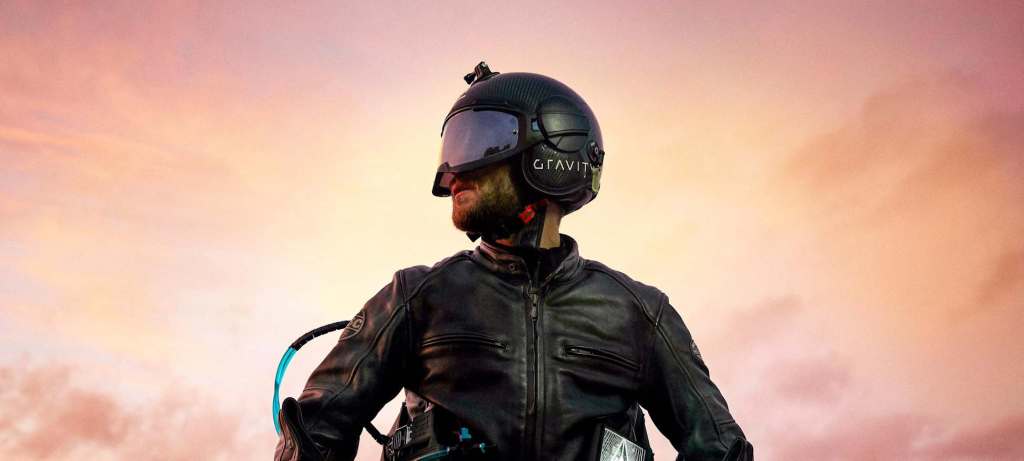
The transition from curiosity to adoption is rarely linear. How do you approach commercialising something the world hasn’t seen before? “We are seeing a clear step-change in how Gravity Industries and our technology is perceived. We’ve moved from a predominantly entertainment-led operation to the professional deployment of our technology across areas such as ship boarding, coast guard operations, medic response and frontline units.” The conversation has moved forward into serious assessment of where our Jet Suits can deliver real operational advantage, and they have secured a number of significant, though confidential, defence contracts. “Over the past 12 months, our focus has been on ensuring the technology is robust, reliable and deployable within these professional operating environments, and we will continue to train and test across a wide range of terrains in the coming months, including maritime, alpine and desert conditions.” The product has not changed. The context around it has.
WHAT GROWTH ACTUALLY REQUIRES
Behind the systems, contracts and expansion sits a more fundamental view of entrepreneurship. What have you learned about growth that traditional founders might not expect? “As a company which has built the world’s first Jet Suit, we have taken one of humanity’s oldest dreams of flying and turned it into an eight-figure globally recognised phenomenon. This hasn’t been easy, but it resulted from consistently taking risks and learning from inevitable, recoverable failures.” This mindset, the backbone of innovation and entrepreneurship, is often lost in the start-up world, where the daily demands of running a business can begin to take precedence. “Founders must remember that consistently and carefully taking risks is the key to growth and unlocking the ‘entrepreneurial spirit’ that is so often lost,” he adds. Gravity Industries does not simply build technology into markets that exist. It builds capability into spaces that have not yet been named. Its challenge is no longer proving what the Jet Suit can do. It is defining what comes next.
Across maritime waters, desert terrain and defence exercises in more than 50 countries, one question follows Gravity Industries’ Jet Suit – a wearable propulsion system that allows a person to fly: where does it belong? It no longer sits between invention and demonstration. It is being tested, assessed and increasingly deployed across defence, rescue and commercial environments. But before any of that, it has to be understood. For its founder, Richard Browning, that has always been the harder task.
THE CATEGORY PROBLEM
The challenge begins not with scale, but with recognition. “Scaling a business itself is a fascinating charge. In many cases, you have an entrepreneur who is defying convention and more often than not faces ongoing skepticism, to bring something new to the world that was previously thought impossible,” says founder Richard Browning. Very quickly, the inventor must become a communicator and leader, able to carry an idea beyond its origin to a wider audience. That task is constantly evolving, and becomes harder still when the product does not fit existing public or regulatory categories. “In Gravity’s case, we have had to work very hard to create a definition of what our company is and how it fits into the aviation world. And as far as defence is concerned, it is an entirely new platform that fits somewhere between an all-terrain vehicle and a personal helicopter.” The problem is not rejection. It is classification.
THE BUY-IN GAP
In established industries, improvement is incremental. In new categories, even comprehension has to be built from scratch. “If we take the defence market as an example, the biggest hurdle to seeing the Jet Suit become part of most allied militaries capability is exactly the challenge that it does not fit into an existing category. If we were delivering a slightly better pair of boots or a slightly better rifle, then it’s relatively easy. But when you are delivering a capability that wasn’t even part of the strategic review, or even thought possible, then you start from scratch when it comes to the buy-in.” The friction is not technical. It is conceptual.

Patricia Cullen • Features Writer
Entrepreneur Staff