Can smarter scheduling fix broken workplaces?
From NHS shifts to scaling smarter scheduling across industries
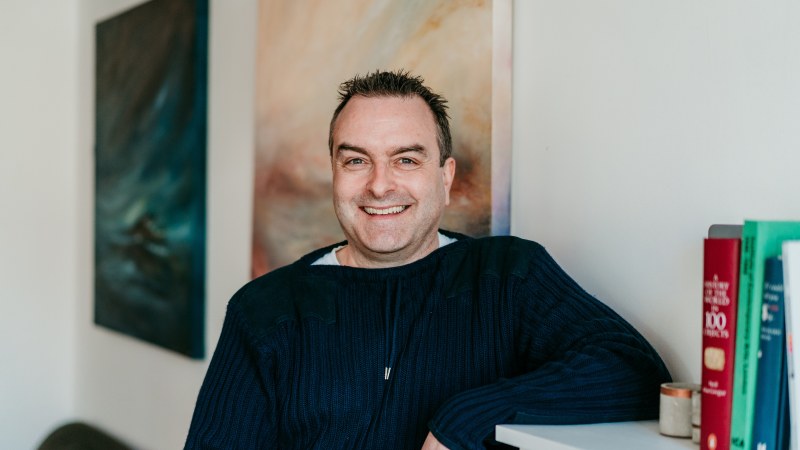
Rotageek
Chris McCullough - co-founder at Rotageek
Opinions expressed by Entrepreneur contributors are their own.
You're reading Entrepreneur United Kingdom, an international franchise of Entrepreneur Media.
From A&E doctor to tech founder of Rotageek, Chris McCullough set out to fix one of the most overlooked problems in modern work: scheduling. What began inside NHS hospitals has since scaled into a platform used by major retail and hospitality brands across the UK and beyond.
What inspired you to start your business?
The idea for Rotageek was sparked during the years I spent working as an A&E doctor. I saw that our scheduling systems were broken; they were slow, inflexible and poorly suited for the complex shift patterns of busy NHS departments. I knew technology could help solve this. So in 2009, I partnered with a fellow doctor and a tech specialist who shared the same mission to transform workforce scheduling.
What was your biggest challenge and how did you overcome it?
Figuring out where the business could truly scale. Starting in healthcare made sense because that was my world. But whilst we had strong early traction in this market, healthcare budgets can be tight and procurement cycles are slow. We realised that, if we stayed siloed in healthcare, we wouldn’t scale at the rate we wanted. The breakthrough came when we recognised that retail and hospitality companies faced very similar scheduling challenges, but had a much greater commercial appetite to address them. Unlocking and expanding into those markets changed the game. Today, Rotageek has grown to support scores of major brands, including Lush, The White Company, Warner Bros. Studios, William Hill, and The Entertainer, and has helped hundreds of thousands of employees.
How did you secure your initial funding?
We bootstrapped initially. Then, we had a small injection of funding from the Wyra accelerator (Telefónica’s startup programme) and some angel investors. This helped us push Rotageek to the next level, really prove our company model and execute with confidence to support our customers. For example, we worked with O2 across 270 of their retail stores, saving them £2.5 million in the process. Fast forward to today, Rotageek is now part of the ELMO Group, the parent company of the UK’s leading SME HR platform, Breathe HR. The acquisition is allowing us to offer even greater support and solutions to our retail, hospitality and healthcare customers.
How do you handle failure or setbacks?
I used to take failures hard. Now, I see them as learning opportunities. When something goes wrong, I ask myself three questions: what went wrong, what does it tell me, and what can I do differently? I started doing this when I was working in A&E, and it really changed how I was able to deal with setbacks in the moment and keep moving forward. The ability to do so was crucial in the emergency rooms, and it’s been equally valuable in my day-to-day as a founder.
What advice would you give to someone starting their own business?
Firstly, raise less money than you think you need, because constraints force creativity. Secondly, get a co-founder you can ‘argue’ with. As a founder, you’ll naturally be deeply immersed in your mission and ideas. But this can mean that you lose perspective at times, so you need someone who can ‘break your bubble’, challenge your thinking and flag when something isn’t working. That’s how you ensure that what you’re building is the best it can be. Two heads are often better than one, but only if both people aren’t afraid to say what they think.
Share your tips for achieving success
Get to know your customer properly. You need to go beyond surface-level research and resist letting your own assumptions guide you: speak to your customers directly and listen to their frustrations. This depth of understanding is what allows you to build products that get to the heart of what they truly need and deliver value that genuinely makes a difference. On a practical level, prioritise ruthlessly. Protect space for your most important work before anyone’s agenda takes over, and focus your energy on things that truly move the needle.
Looking ahead, what’s next for Rotageek?
We’re working with our customers to expand and enhance our scheduling solutions, in line with their evolving needs. The climate is tough for retailers and hospitality firms right now, and staffing as effectively and efficiently as possible is crucial to help insulate against its effects. Already, we’re helping our customers, including the likes of Pret A Manger, Caffe Nero, Lush and The Entertainer, save millions. Those who use the platform also see 80% reduction in the amount of time managers spend on admin and see their revenue increase by 10%. By enhancing our forecasting and reporting features, in particular, we’re making it even easier for our customers to predict their future staffing needs, spot inefficiencies, and optimise their rosters. It’s really exciting!
From A&E doctor to tech founder of Rotageek, Chris McCullough set out to fix one of the most overlooked problems in modern work: scheduling. What began inside NHS hospitals has since scaled into a platform used by major retail and hospitality brands across the UK and beyond.
What inspired you to start your business?
The idea for Rotageek was sparked during the years I spent working as an A&E doctor. I saw that our scheduling systems were broken; they were slow, inflexible and poorly suited for the complex shift patterns of busy NHS departments. I knew technology could help solve this. So in 2009, I partnered with a fellow doctor and a tech specialist who shared the same mission to transform workforce scheduling.
What was your biggest challenge and how did you overcome it?
Figuring out where the business could truly scale. Starting in healthcare made sense because that was my world. But whilst we had strong early traction in this market, healthcare budgets can be tight and procurement cycles are slow. We realised that, if we stayed siloed in healthcare, we wouldn’t scale at the rate we wanted. The breakthrough came when we recognised that retail and hospitality companies faced very similar scheduling challenges, but had a much greater commercial appetite to address them. Unlocking and expanding into those markets changed the game. Today, Rotageek has grown to support scores of major brands, including Lush, The White Company, Warner Bros. Studios, William Hill, and The Entertainer, and has helped hundreds of thousands of employees.

Patricia Cullen • Features Writer
Entrepreneur Staff