How Ahmed Aldossary Is Reshaping the Private Equity Scene in The Kingdom of Saudi Arabia and The GCC

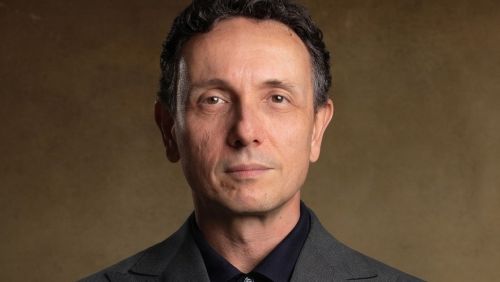
Ahmed Aldossary
Private equity has long been dominated by conservative capital recycling, repetitive real estate acquisitions, and low-risk portfolios that prioritize predictability over innovation. Yet even as the broader industry has seen massive exit activity, with private equity firms announcing exits totaling US$470 billion in Q3 of 2025, much of that scale still revolves around conventional buy-outs and legacy assets, not frontier opportunities that redefine markets.
Ahmed Aldossary, founder of GCS Consulting, is rejecting the old private equity playbook. Rather than parking capital in slow-moving, low-upside assets, he is building a platform, called The Gulf’s Den (Areen Al Khaleej), centered on Saudi market access, high-growth infrastructure, and opportunities most global firms never touch. His aim is not to tweak the model, but to change how capital works across Saudi Arabia and the GCC.
Aldossary says, “This is about creating structures that allow investments to remain productive, transparent, and anchored to the region where the value is being created.”
Aldossary argues that one of the biggest blind spots in private equity is the tendency to chase fashionable sectors while ignoring businesses that power the real economy. According to him, large funds often overlook companies that appear too ordinary, too operational, or simply not exciting enough to headline a pitch deck.
“It’s usually the businesses nobody is paying attention to that end up producing the biggest outcomes,” Aldossary says. “The most attractive companies are often the ones large investment funds overlook. Then a few years later, those same businesses reappear in the headlines after delivering a massive exit or turnaround that nobody saw coming.”
From his perspective, the opportunity often lies in operational improvement rather than discovery. Many of these companies already serve essential functions within an economy but struggle because of weak management, limited capital access, or outdated structures.
When experienced operators step in with the right governance, financing, and strategic direction, businesses that once appeared stagnant can quickly transform into highly profitable assets. In that sense, private equity becomes less about chasing the next trend and more about recognizing value that others have simply failed to develop.
The Gulf’s Den (Areen Al Khaleej) has been designed to be deliberately diversified. The investment focus spans data infrastructure for artificial intelligence, healthcare technologies that strengthen biosecurity readiness, consumer retail brands, and experience-driven hospitality developments. Aldossary notes that diversification is treated as a way to balance operational exposure across sectors that reflect long-term economic priorities in Saudi Arabia.
One pillar of the strategy is building data centers to support AI model training. “Regional demand for digital infrastructure is rising as enterprises and governments expand advanced analytics and machine learning,” Aldossary says. UN Trade and Development data shows that data centers made up over 20% of global greenfield investment in 2025. He sees Saudi Arabia’s energy capacity and available land as key advantages for developing this infrastructure domestically.
Aldossary highlights healthcare as a strategic investment area, particularly companies focused on biosecurity and preventative technologies. “Healthcare infrastructure is no longer limited to hospitals and clinics,” he explains. “It now includes technologies that help countries anticipate and respond to emerging biological risks.” He sees this sector as linking public safety with long-term economic resilience.
He also points to retail and hospitality opportunities. Saudi Arabia’s growing domestic consumption, with GCC household spending projected to rise about 3.4% annually versus 1.7% in advanced economies, creates room for locally manufactured brands. In hospitality, he favors smaller, experience-driven properties built around sustainability and cultural connection rather than high-volume developments.
The Gulf’s Den is distinct from Aldossary’s advisory work at GCS. Consulting structures deals. Private equity commits capital, backs execution, and stays invested through multiple cycles. The values may align, but the mandate is far more direct and long-term.
Localization is central to this strategy. Aldossary wants capital to build capacity inside Saudi Arabia by strengthening manufacturing, workforce participation, and operational expertise, not simply generating returns and leaving. He argues this also matches a broader shift in investor priorities toward tangible assets, operational value creation, and measurable local impact.
Looking ahead, Aldossary frames the firm’s launch as part of a broader recalibration of capital deployment in the GCC. “Private equity should not be passive. It should be bold, strategic, and aligned with national priorities,” he says. “When capital is deployed with intention, scale, and long-term vision, it stops being just investment capital and becomes infrastructure for the future.”
Private equity has long been dominated by conservative capital recycling, repetitive real estate acquisitions, and low-risk portfolios that prioritize predictability over innovation. Yet even as the broader industry has seen massive exit activity, with private equity firms announcing exits totaling US$470 billion in Q3 of 2025, much of that scale still revolves around conventional buy-outs and legacy assets, not frontier opportunities that redefine markets.
Ahmed Aldossary, founder of GCS Consulting, is rejecting the old private equity playbook. Rather than parking capital in slow-moving, low-upside assets, he is building a platform, called The Gulf’s Den (Areen Al Khaleej), centered on Saudi market access, high-growth infrastructure, and opportunities most global firms never touch. His aim is not to tweak the model, but to change how capital works across Saudi Arabia and the GCC.
Aldossary says, “This is about creating structures that allow investments to remain productive, transparent, and anchored to the region where the value is being created.”