Inside Supy’s AI-powered restaurant revolution
Supy transforms restaurant operations using AI to reduce costs significantly

Supy
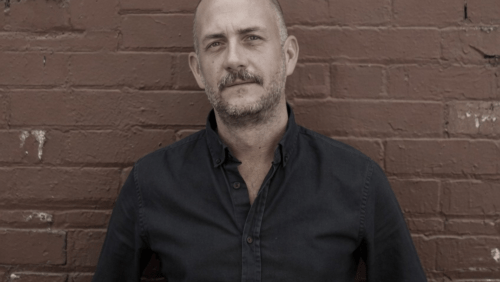
Supy CEO Dani El-Zein
Opinions expressed by Entrepreneur contributors are their own.
You're reading Entrepreneur United Kingdom, an international franchise of Entrepreneur Media.
How a UAE-born platform is helping restaurants cut costs, unlock back-of-house data, and scale globally through real-time intelligence. Entrepreneur UK talks to CEO Dani El-Zein to find out more…
Supy was built in the UAE and is now scaling rapidly in the UK – what problem were you originally trying to solve when you started the company?
I had a restaurant for seven years. And I felt the pain every single day – the spreadsheets, the manual stock counts, not knowing what we were actually spending until the month-end P&L arrived and it was already too late to do anything about it. The tools available were either massive ERPs designed for manufacturing – too complex, too expensive, built for a finance team not a kitchen – or they were too basic, and you’d end up back on Excel anyway. Nothing in between. Nothing built for how restaurants actually work. I built something for my own team first, and when other operators started asking where they could get it, I realised the gap wasn’t just in the UAE. It was everywhere. We always intended Supy to be a global business – Dubai was just where we started.
What gave you the conviction that “back-of-house” operations were the biggest untapped opportunity in the restaurant industry?
Food and labour together account for up to 60% of total operating costs. Food alone sits at 25-35% of revenue. That’s not a line item, that’s your entire margin. Yet go into the kitchen, the storeroom, the purchasing office, and you’d find the same processes that existed twenty years ago. Front of house had been transformed with QR codes, delivery platforms and digital reservations but back of house was essentially untouched. Back of house is where restaurants actually win or lose. Every percentage point of food cost you recover goes straight to the bottom line. That’s a very different conversation to acquiring one more customer. We saw a massive, underserved problem hiding in plain sight and we went after it.
There are many tech solutions targeting restaurants today – what makes Supy fundamentally different from other platforms in the market?
Two things: depth and support. We built Supy in Dubai competing against Oracle and Microsoft – so the product has enterprise-level sophistication, but runs on a mobile app a kitchen porter can use on day one. And our support team are mostly former cost controllers – they speak the language of the kitchen, which means clients get live fast and see value fast.
You focus heavily on back-of-house intelligence – why do you believe this is where profitability is truly won or lost?
Front-of-house apps get customers through the door. But if your food cost is running 3% above target across 50 branches, you’re losing money every single day and you don’t know it. And when you find out – usually at month-end – you’ve already lost four weeks of margin you can’t recover. That 3% is the difference between a profitable restaurant and one that isn’t. We give operators the visibility to catch it before it costs them.
Can you walk us through how Supy’s AI actually helps a restaurant make better decisions on a day-to-day basis?
Take a coffee chain we work with where a single espresso shot is 9 grams. Their grinder was miscalibrated by just 1 gram and they were selling thousands of cups, which ended up costing $200 per outlet, per day. Supy detected the anomaly automatically, flagged it to the branch manager, and highlighted the cost impact. The fix took 10 minutes. And that’s the kind of thing that would never show up on a P&L – you only find it when you’re looking at the right level of granularity, in real time.
Supy has seen strong traction in the UK with clients like Corrigan Collection and Sketch – what specifically enabled you to break into such a competitive market?
A lot of UK operators are running on legacy systems that were built 15 or 20 years ago. The software works, but it can be expensive, complex to maintain, and often not designed for how modern multi-site operations actually run. We came in with something just as powerful but more user-friendly and much faster to implement. We also had strong partners like Lightspeed, Vita Mojo, and Williams Stanley & Co who really helped open doors. Corrigan Collection and Sketch are serious operators – that kind of trust takes time to earn and we’re grateful for it.
What differences have you observed between the UK and UAE restaurant ecosystems when it comes to adopting technology?
The UAE is a greenfield market in many ways. Large restaurant groups are enterprise level from day one, multi-brand, multi-country, and often already running an ERP. The conversation there is about what sits alongside that infrastructure and handles what those systems were never built for. The UK is a rip and replace market. Operators are brilliant and experienced but leaner, labour costs are high, and every person carries more. The efficiency case for technology is actually stronger. But most have been on the same system for years, so the challenge is not convincing them technology works. It is convincing them the switch is worth it. That is a harder sell, and we have had to earn it.
Was there a specific turning point or milestone that accelerated your growth in the UK?The real turning point was making the decision to properly commit – I spent two months here, we hired our UK country manager, and we built a proper local presence rather than trying to serve the market remotely. Having strong partners helped enormously too. Once that infrastructure was in place, things started moving quickly.
Restaurants generate enormous amounts of data, yet many still struggle with visibility – why is this gap still so prevalent in 2026?
Because the data is all sitting in different places. POS here, purchasing over there, inventory on a spreadsheet, recipes in someone’s head. Nobody connected it all. Most legacy software will tell you what happened last month – by which point the money’s already gone and there’s nothing you can do about it. What operators actually need is to know what’s happening right now, at ingredient level, across every outlet. That’s the gap Supy fills, as we combine both POS and Inventory data into the same reports and dashboards.
With rising costs, taxes, and operational pressures globally, what are the biggest challenges restaurant operators are facing today?
Food inflation hasn’t gone away. Labour costs are up. Energy is up. Taxes are up. And in hospitality, you can’t just pass all of that through price – there’s a ceiling. The operators in the best shape right now are the ones with absolute visibility into where their cost is going – not in a monthly P&L, but daily, at ingredient level. If you’re running 30 branches and your actual food cost is running 2% above target without you knowing, that’s a lot of money just disappearing quietly. The operators who know their numbers aren’t just better off – they’re the ones still standing.
How is AI reshaping the way restaurants operate beyond just cost-cutting?
Cost cutting is the entry point, but it is not where this ends. AI is giving operators the ability to run every site the way a great operator would instinctively run one. Anomaly detection that flags food cost variances before they become losses. Suggestive ordering that learns your sales patterns, so you are never over or under stocked. Menu engineering that tells you what to push and what to cut. Slow moving inventory that triggers a discount before it ends up in the bin. The moat is the data. Back of house generates the richest operational data in the entire restaurant and it has been sitting there largely untapped. Whoever owns that data layer owns the intelligence layer. That is where we are building.
Supy claims to reduce restaurant costs by an average of 20% – what are the main areas where these savings come from?
Most operators we speak to do not actually know their real food cost. They have a theoretical one sitting in a recipe card and an actual one that tells a very different story at the end of the month. That gap is where the 20% lives. Once you have visibility, the levers become obvious. Wastage that was never being recorded. Portion variance that nobody was catching. Ordering decisions made on gut feel rather than actual consumption data. Supplier invoices that did not match what was received. These are not exotic problems; they are happening in almost every kitchen we walk into. The savings are not from one big fix. They are from closing a hundred small gaps that individually look manageable but collectively are destroying the margin.
How significant is the impact of automating processes like invoice handling and stock counting in real terms for operators?
Enormous. For a serious multi-site operator you are talking thousands of hours of manual work eliminated every year. But the time saving is almost secondary. Invoice automation, or what we call AI invoice receiving means every supplier price discrepancy gets caught before it is approved. Suppliers behave differently when they know every line is being checked. Stock counting
automation means your food cost number is real, not an approximation built on human error and rushed counts. If that number is wrong everything downstream is wrong, your ordering, your variance reports, your entire P&L.
Can you share a case study or example where Supy dramatically changed a restaurant’s performance?
One pizza chain we work with was slicing their mushrooms into 2 pieces instead of the standard 4. You would never see it on the pizza, the customer had no idea, the chef had no idea. But that single portioning variance was costing them $50,000 a year across their sites. No one had caught it because no one had the data to catch it. It had probably been happening for years. That is what a variance report actually does in practice. It is not a spreadsheet exercise. It is the difference between a business that is leaking money silently and one that knows exactly where every penny is going.
What are the biggest barriers restaurants face when adopting new technology, and how does Supy overcome them?
Fear of change. The industry has been burnt before by legacy software that takes six months to implement and never fully works. Our answer was to build an implementation team mostly made up of former cost controllers – people who’ve lived the problem. We’ve won multiple G2 awards for best implementation, best support, and best onboarding. That’s not accidental. It’s where we put our energy because we knew that’s where trust gets built.
What role does the UAE play today in Supy’s global strategy?
It’s our home market and it shaped everything about how we build. The UAE has 119 Michelin Guide restaurants across 35 different cuisines in one city – it’s the world’s most demanding hospitality market. Building there first meant building something that could handle anything. When we go to London, Melbourne, or Hong Kong, the product is already ready for whatever complexity we find
As a founder, what has been the most challenging part of scaling Supy internationally?
Trust is earned differently in every market. The product travels well – the real complexity is people, processes, and making sure the culture that got us here doesn’t dilute as we grow. When your tech goes down on a Saturday at 6am, I need a team that shows up with no questions asked. It’s hard to hire that intensity, and to make sure your values and mission are being inherited in every market – you have to build it into the company from day one.
Given the current situation in the region, what is your main piece of advice to all the other founders?
Keep building. As a Lebanese founder, I’ve had a complicated relationship with the word “conflict” my whole life – and it never gets easier to watch. My heart goes out to everyone affected. But I’ve also seen that the businesses and founders who make it through are always the ones who stayed focused on what they could actually control. Don’t wait for stability before you start building. Use the uncertainty to get sharper on what matters – your product, your customers, your people.
How do you stay resilient in times of conflict?
I try to separate what I can influence from what I can’t. The situation in the region weighs on me a lot, and something like this never becomes normal. But as a founder, if I let paralysis take hold, the business suffers, the team suffers, the clients suffer. So I find that the best thing I can do is show up harder. For the team, for our clients, for the mission. That’s what keeps me grounded.
What’s next for Supy – are there new products, markets, or innovations we should expect?The big launch this year is our AI Insights Hub, and our AI Sales Forecasting – moving Supy from a system of record to a system of intelligence. Real-time anomaly detection, predictive ordering, and the beginnings of agentic AI that doesn’t just flag problems but acts on them. We’re also launching in Germany as well as doubling down in the UK, Australia, and Southeast Asia and keeping our eye out on some other new markets too.
How a UAE-born platform is helping restaurants cut costs, unlock back-of-house data, and scale globally through real-time intelligence. Entrepreneur UK talks to CEO Dani El-Zein to find out more…
Supy was built in the UAE and is now scaling rapidly in the UK – what problem were you originally trying to solve when you started the company?
I had a restaurant for seven years. And I felt the pain every single day – the spreadsheets, the manual stock counts, not knowing what we were actually spending until the month-end P&L arrived and it was already too late to do anything about it. The tools available were either massive ERPs designed for manufacturing – too complex, too expensive, built for a finance team not a kitchen – or they were too basic, and you’d end up back on Excel anyway. Nothing in between. Nothing built for how restaurants actually work. I built something for my own team first, and when other operators started asking where they could get it, I realised the gap wasn’t just in the UAE. It was everywhere. We always intended Supy to be a global business – Dubai was just where we started.
What gave you the conviction that “back-of-house” operations were the biggest untapped opportunity in the restaurant industry?
Food and labour together account for up to 60% of total operating costs. Food alone sits at 25-35% of revenue. That’s not a line item, that’s your entire margin. Yet go into the kitchen, the storeroom, the purchasing office, and you’d find the same processes that existed twenty years ago. Front of house had been transformed with QR codes, delivery platforms and digital reservations but back of house was essentially untouched. Back of house is where restaurants actually win or lose. Every percentage point of food cost you recover goes straight to the bottom line. That’s a very different conversation to acquiring one more customer. We saw a massive, underserved problem hiding in plain sight and we went after it.