How to Lead a Workforce That Is Part Human, Part Technology
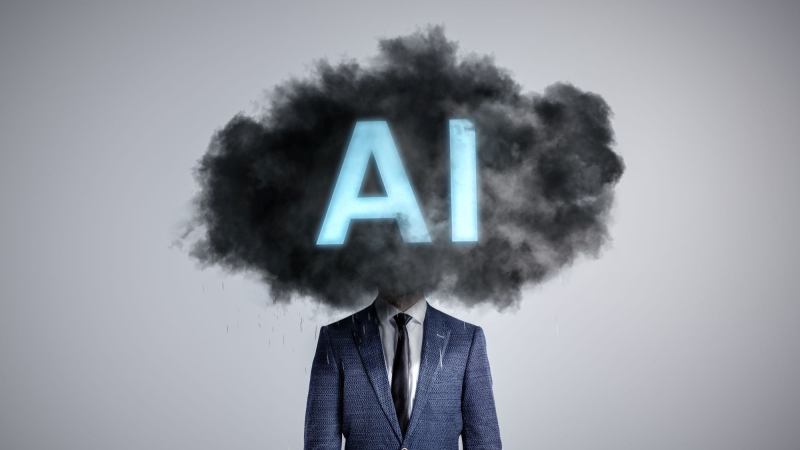
Leaders must unite humans and AI into one workforce.
Shutterstock
Opinions expressed by Entrepreneur contributors are their own.
You're reading Entrepreneur United Kingdom, an international franchise of Entrepreneur Media.
Forward thinking businesses are already agile and high-performing through building a blended workforce, consisting of a core of employees, fractional c-suite leaders, project freelancers and gig economy workers. But there’s more. This workforce doesn’t just consist of people but a system of humans, algorithms and digital proxies. Digital twins (AI copilots, agents, replicas of expertise) are now part of the system – they aren’t just tools, but co-workers.
A blended workforce that is part human, part technology brings agility and relevance to keep up with the world’s constant change. Humans must bring judgement, innovation, ethics, and relationships. Digital twins can do simulation, repetition, optimisation. Together, outcomes are co-created. This evolution of the workplace to incorporate digital twins alongside their human counterparts requires a change in how people are led. If leaders are to reap the benefits of this blended workforce, they must enable them to work as one. What does this look like in practice?
What does a workforce of digital twins look like?
It is predicted that 2026 will see the rise of the “agentic workforce”, with digital AI agents becoming integral “members” of the workforce and reshaping the roles and tasks of human talent. For example, a founder may have a digital twin that helps to run competition analysis, bring different perspectives when challenged and document decision logic. Or a CFO – whether employed or fractional – may have a digital twin who, under their prompting and instruction, will run scenarios, stress test outcomes, identify risks and answer questions tirelessly. In say, 5 years, every leader will have a digital twin, and so the competitive advantage will not lie in who has one. Rather, those who can lead humans best in this technology-rich world will have the edge. This makes collaboration with AI, both for leaders themselves and their teams, a necessity.
What does this mean for leadership?
As leaders, we need to start thinking about designing and building capabilities of humans and machines together, developing decision systems, building human-AI partnerships and measuring outputs and judgement.
This involves breaking work down into the skills, capabilities and decisions that actually need to be done and then asking who or what is best placed to do each part. Some tasks are automated, some are augmented by AI, and some require a more human element.
Redesigning work into tasks that only humans can do (judgement, ethics, relationships, and innovation), tasks that only digital twins can do (simulations, draftings and analysis) and tasks they can do together and jointly, means that leaders can distribute work across people and systems in a much more deliberate way. This goes hand-in-hand with a skills-first mindset: what skills do we need right now, and where do we find them? This will help us get to the point where humans trust AI but not blindly. Humans must have oversight and bring judgement, asking things like “what’s missing?”, “how can this be better?”, “does this work in other contexts?”
But there is a real risk that humans become fearful for their jobs and question “will I be replaced?”. In fact, AI anxiety is already a growing prevalence in the workforce, with Mercer’s Global Talent Trends 2026 report finding that 40% of workers worldwide worry that they will lose their job to AI – up from only 28% in 2024. This fear can cause resistance to change and stall the efficacy of relationships between the human and tech workforce.
Leaders must address this and set the direction for the business as augmentation with AI, not replacement by AI. Offer training to use AI and work with it, but also how to optimise it and bring skills that it doesn’t have. How humans and AI work together must be led by the CEO, role-modelled, and encouraged but with reassurance for the human workforce that they are still needed. Quelling this anxiety towards AI to be open to working alongside it, rather than being threatened by it, requires the human workforce to have a deep sense of psychological ownership towards their work and roles. But what is psychological ownership, and how can leaders help their human teams to develop it?
Developing psychological ownership to harmonise human and AI coworking
Having a sense of psychological ownership at work means that individuals feel their roles are ‘theirs’ and that they play an active part in achieving outcomes. When psychological ownership is present, individuals feel accountable and are more likely to be invested, engaged and driven in their roles.
There are three routes to psychological ownership that leaders can develop in their human workforce, as a foundation for integrating technologies like AI as co-workers:
- Efficacy
Efficacy is about understanding each other’s needs in order to achieve desired business results. As a leader, what are your needs – and the organisation’s needs – when it comes to utilising AI? What are the needs of staff when it comes to putting this into practice? Knowing about each other’s needs ultimately increases intimacy and in turn psychological ownership towards the task at hand.
To strengthen efficacy, establish a two-way discussion on working methods, communication styles, and general working practices with your human workforce. Encourage individuals to talk openly and create an AI work plan together so that everyone is clear about the nature of work and the expected output.
- Self-identity
Individuals also need to feel like their role reflects who they are as a person in order for psychological ownership to be present. They must identify themselves in their work by expressing their skills, values, and purpose.
Take the time to have open conversations with your human workforce and understand how they identify with their roles. What are your shared values and expectations when it comes to integrating AI? Encourage individuals to express how they see their partnership with AI working and how this can better align with their identity.
- Having a place
The third foundation of psychological ownership is an individual’s sense of belonging. This is particularly important with the rise of AI as co-workers, as the human workforce must maintain the feeling of having a place at work.
A sense of belonging comes from being a team where efforts are pooled to execute tasks efficiently together. The human workforce needs a peer community for support, guidance, and training. Expertise should be shared and promoted within teams for professional development and to ensure everyone has access to the skills and knowledge they need at the right time. To achieve this, get together regularly in learning environments like team meetings and conferences to enable discussion of hard and soft skills needed to work alongside AI.
Synergising human and technological talent for success
Technologies like AI are irrevocably transforming the workforces we see today, and with it, the way people need to be led. Upskilling individuals to increase their competence when using advanced technologies in the workplace is a must. But to fully integrate digital co-workers alongside human talent, synergising the different skills humans and technology can bring for success, leaders must ensure a strong foundation of psychological ownership. By developing efficacy, self-identity and a sense of belonging, leaders can instil a strong belief of individual impact in the human workforce, motivating them to embrace digital twins with openness, collaboration and confidence.
Forward thinking businesses are already agile and high-performing through building a blended workforce, consisting of a core of employees, fractional c-suite leaders, project freelancers and gig economy workers. But there’s more. This workforce doesn’t just consist of people but a system of humans, algorithms and digital proxies. Digital twins (AI copilots, agents, replicas of expertise) are now part of the system – they aren’t just tools, but co-workers.
A blended workforce that is part human, part technology brings agility and relevance to keep up with the world’s constant change. Humans must bring judgement, innovation, ethics, and relationships. Digital twins can do simulation, repetition, optimisation. Together, outcomes are co-created. This evolution of the workplace to incorporate digital twins alongside their human counterparts requires a change in how people are led. If leaders are to reap the benefits of this blended workforce, they must enable them to work as one. What does this look like in practice?
What does a workforce of digital twins look like?
It is predicted that 2026 will see the rise of the “agentic workforce”, with digital AI agents becoming integral “members” of the workforce and reshaping the roles and tasks of human talent. For example, a founder may have a digital twin that helps to run competition analysis, bring different perspectives when challenged and document decision logic. Or a CFO – whether employed or fractional – may have a digital twin who, under their prompting and instruction, will run scenarios, stress test outcomes, identify risks and answer questions tirelessly. In say, 5 years, every leader will have a digital twin, and so the competitive advantage will not lie in who has one. Rather, those who can lead humans best in this technology-rich world will have the edge. This makes collaboration with AI, both for leaders themselves and their teams, a necessity.