The woman who made refillable deodorant mainstream
How refillable deodorant reshaped Britain’s throwaway culture
Morrama
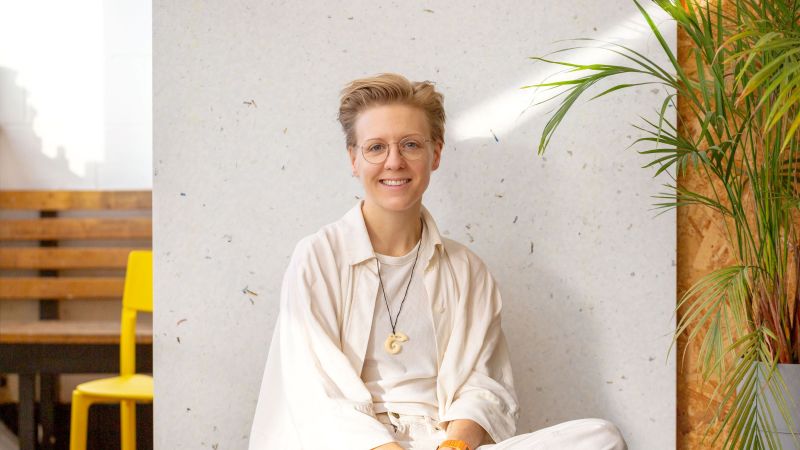
Jo Barnard, founder, Morrama
Opinions expressed by Entrepreneur contributors are their own.
You're reading Entrepreneur United Kingdom, an international franchise of Entrepreneur Media.
n 2019, before “refill” became a marketing mainstay, a small start-up approached a London design studio with a proposition: could deodorant be reimagined without the throwaway plastic casing?
Five years later, that brand – Wild – is the UK’s leading refillable deodorant company, recently acquired by Unilever for a reported £100m. The studio was Morrama, and at its helm is Jo Barnard, a designer who believes sustainability begins not with sacrifice, but with desire.
“Wild has been hugely influential because our designs have changed a category,” Barnard says. When the brand first came knocking, the brief was stark: create the world’s first refillable deodorant with plastic-free refills. It meant rethinking not just the casing, but the supply chain, the refill mechanism, and the way people felt about an object they would handle every day.
Nine months of workshops, prototypes and debate followed. In spring 2020, the deodorant launched. It didn’t look like a compromise. It looked like something you might want to leave out on the bathroom shelf.
That detail mattered. “Sustainability comes from making long-lasting, desirable products that remain desirable,” Barnard says. If something feels built to last, it is less likely to be thrown away. If it feels personal, it is kept.
The commercial success is obvious. Less obvious, but more significant to Barnard, is the behavioural shift. “Moving millions of people from throwaway to refill, and making that the norm in a single-use market, is game-changing,” she says. “That’s what we’re proud of.”
Morrama, a certified B-Corp, has built its reputation on this premise: design better things, and the environmental gains will follow. Last year, the agency won Sustainable Design of the Year for its work with Kibu, while Barnard received the Bentley Lighthouse Award, recognising contributions to social and environmental sustainability. The business has since expanded into international markets, riding a wave of demand for products that promise both conscience and commercial viability.
But Barnard is wary of the industry’s tendency towards surface-level change. “I hope we see more boldness,” she says of the next decade. “Too many companies pay lip service to design – a colour swap, a branding tweak. The mundane is boring, and boring is wasteful.”
Her argument is that joy is not a frivolous extra but a strategic necessity. A product that delights is used; a product that feels dutiful is quietly abandoned. Good design, in this telling, is not about optics but about systems – how something is made, refilled, repaired and, eventually, retired.
Crucially, Morrama shares much of its process publicly, part of what Barnard calls an effort to bring others “on the journey”. Transparency, she argues, is less about virtue-signalling and more about raising the bar.
The deodorant aisle is not where most people expect to find a design revolution. Yet it is precisely in these everyday spaces that habits are formed and broken. A refillable case picked up once becomes routine; routine becomes expectation.
For Barnard, that is the quiet power of design: not to shout about change, but to embed it – until the old, wasteful way feels not just outdated, but unthinkable.
n 2019, before “refill” became a marketing mainstay, a small start-up approached a London design studio with a proposition: could deodorant be reimagined without the throwaway plastic casing?
Five years later, that brand – Wild – is the UK’s leading refillable deodorant company, recently acquired by Unilever for a reported £100m. The studio was Morrama, and at its helm is Jo Barnard, a designer who believes sustainability begins not with sacrifice, but with desire.
“Wild has been hugely influential because our designs have changed a category,” Barnard says. When the brand first came knocking, the brief was stark: create the world’s first refillable deodorant with plastic-free refills. It meant rethinking not just the casing, but the supply chain, the refill mechanism, and the way people felt about an object they would handle every day.

Patricia Cullen • Features Writer
Entrepreneur Staff