Through a New Lens
XPANCEO is reinventing human technology through invisible AI-powered smart lenses.
XPANCEO
Opinions expressed by Entrepreneur contributors are their own.
You're reading Entrepreneur United Kingdom, an international franchise of Entrepreneur Media.
XPANCEO’s bold vision for the future
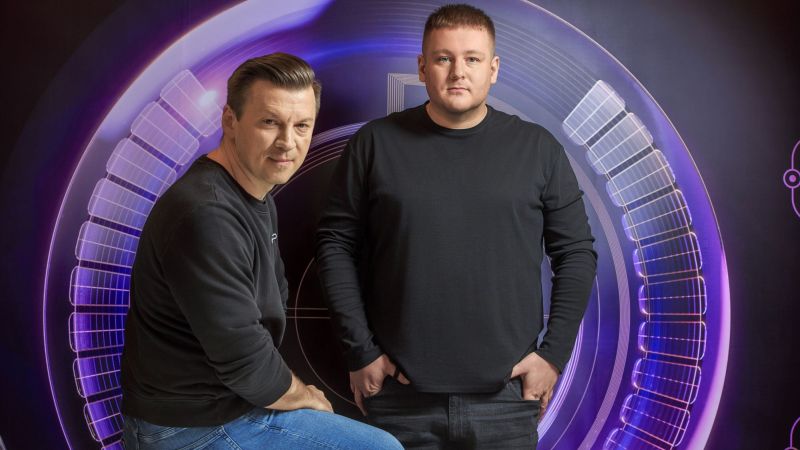
As technology advances at an unprecedented rate, few companies are on the verge of reshaping daily life as radically as XPANCEO. Founded in 2021 by entrepreneur Roman Axelrod and scientist Dr. Valentyn Volkov, this Dubai-based deep-tech firm is breaking new ground in human-technology interaction. XPANCEO is developing a smart contact lens for AI-powered XR computing — delivering visuals directly to the retina, without screens, frames, or headsets. With capabilities like XR vision, real-time health monitoring, colour correction, and next-gen biometric verification, this invisible lens could redefine content consumption, social media, industrial applications, sports, and healthcare.

The genesis of XPANCEO
The concept behind XPANCEO was born from an unexpected moment of reflection. Axelrod, in the final stages of selling his previous company, found himself at a crossroads. “I finally had the space to think about the mission of my life, and I formulated it as exploring the unknown,” he said, “like the moment in a computer game when you step into an unexplored grey area on the map and realise that there are no hints, no instructions, and no guarantees. You either move forward and open something new, or you stay where you are.” Axelrod decided on the former.
This period of introspection led to a realisation: human potential could be expanded by connecting people with an intuitive, ever-present cognitive layer – deeply embedded in daily life – that acts as a personal assistant always at hand. “AI wasn’t much back then, but I was sure, intuitive, omnipresent assistance would come. The question was: where should it live?” Axelrod’s worldview is deeply influenced by transhumanism. He sees the fusion of humans and technology as inevitable – it’s the next evolutionary step for both civilization and computing. The outcome, greater than the sum of its parts, will be a new kind of human – capable of truly controlling AI and using it for good. The form it takes, however, remains a choice.
“Expansion is what drives me”, says Axelrod. “Expansion of human capabilities, perception, intelligence, and presence in the universe. This idea became so central that my wife came up with the portmanteau “XPANCEO.” I felt such a strong connection to it that it became my Instagram handle. And the funniest thing. When we decided to start the project, we needed a name for a pitch deck. We tried to come up with something new, but nothing felt right or truthful. Eventually, we decided to simply use my username.”
Axelrod believes technology should enhance, not hinder, the human experience. “The current generation of gadgets does not fit that future,” he says. “Phones, laptops and tablets pull our attention away from reality, harm our health, and deteriorate the quality of everyday life. More importantly, they are fundamentally unsuitable for humanity’s long‑term goals. You cannot explore Mars, build complex off‑planet systems, live longer, healthier lives, or coexist with advanced intelligence while relying on devices designed for scrolling and tapping,” he adds. This led him to see the human eye as the perfect interface for a new habitat for intelligence. A moment of inspiration – a Pinterest image of a woman astronaut with unusually vivid eyes – convinced him that vision was the most authentic and intuitive place to start.
It was at this juncture that XPANCEO was born. However, creating a smart contact lens – a device capable of embedding technology into the human body – was not just an act of innovation; it was a technical challenge that required unprecedented breakthroughs in materials science, biotechnology, and AI systems. For this, Axelrod needed to find a partner who could turn the vision into reality.
The Scientific Challenge
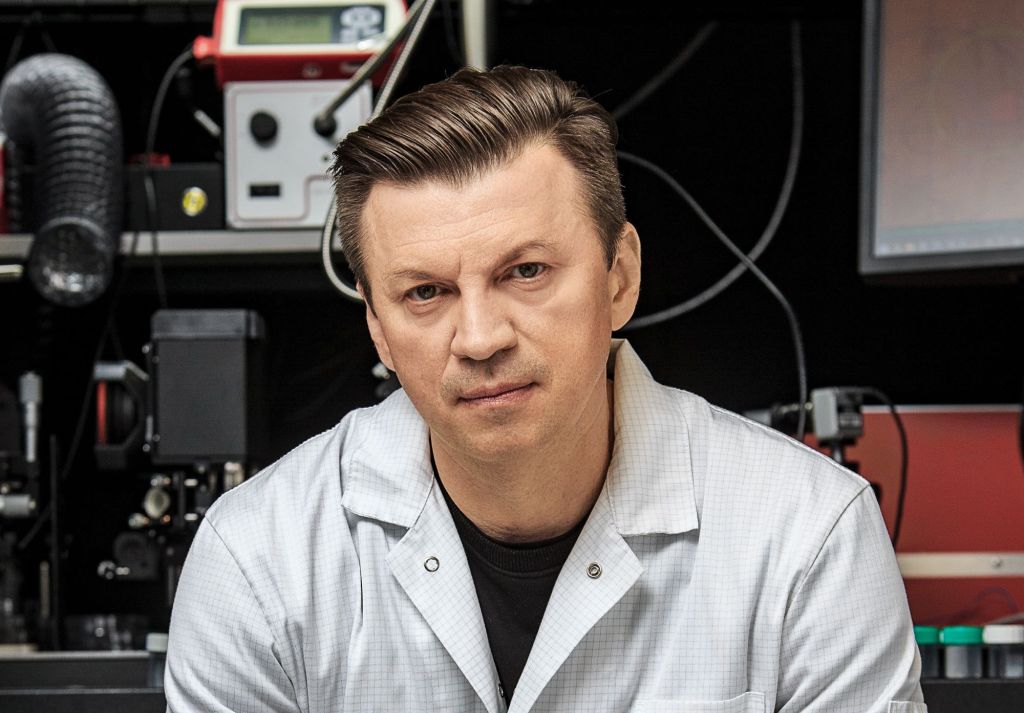
Enter Dr. Valentyn Volkov, a physicist with extensive experience in advanced materials science and nano-optics. Volkov had spent more than 20 years working in some of the most prestigious research laboratories in Europe, leading high-level scientific teams focused on novel materials. Initially, Volkov was reluctant to leave academia and join a start-up. However, after several discussions with Axelrod, Volkov recognised the enormity of the challenge and the potential impact the smart contact lens could have on society.
“When Axelrod first approached me with the idea, I didn’t say yes immediately. But at some point my impression shifted from he might be crazy to he definitely has an unusual idea,” Volkov says. The more they discussed it, the more the partners realised that this wasn’t just about creating a product – it was about advancing fundamental science and tackling problems no one had even imagined. The collaboration between Axelrod and Volkov set the stage for XPANCEO to begin its journey of deep-tech development. The first task was to build the first prototype of the smart contact lens – no small feat, given the numerous scientific and engineering hurdles involved. Traditional electronics and displays couldn’t fit into such a tiny, flexible form factor, so the team had to look beyond existing solutions.
“Our journey began by breaking the problem down to its fundamental principles,” says Volkov. “Instead of following existing solutions, we engineered the lens from scratch, grounded in core physics and materials science. The first challenge was to develop flexible electronics that could be both thin and transparent. At the same time we needed to rethink how optics, biosensing, and data processing could be embedded into something as small and delicate as a contact lens.”
Over the years, XPANCEO developed cutting-edge technologies, including quasi-2D materials for transparent conductors, micro-optical projection systems, and biosensing technologies capable of tracking health data through the wearer’s tears. The result is 26 prototypes that demonstrate visual AR interface, wireless data and power transfer, several approaches for detection of vital biomarkers such as glucose, for diabetes patients and others requiring continuous blood sugar monitoring, IOP (Intra-Ocular Pressure) for glaucoma treatment and prevention, and vision enhancement such as color correction for those with color blindness. This research does not come cheap. “We had to prove to the world that what we’re building is not only possible but will inevitably change the world,” the partners emphasise. “Not just as a concept, but as something investors could believe in, something that could be funded and built at scale. And it worked. First, we raised $40m, then 250m at a $1.35bn valuation.” Volkov says the funding doesn’t alter the company’s roadmap but instead reinforces it, noting that key prototypes for most planned features are already in place. “What the funding does is remove friction. We managed to expand our team with Nobel‑class scientists and engineers, bringing new state‑of‑the‑art equipment, growing our capabilities,” he says. Their lab team has already doubled. The funding will allow them to conduct the necessary human and medical trials. “This is all on the timeline we’d mapped out from the beginning,” he adds
XPANCEO’s rapid rise in the deep-tech landscape has been underscored by successful funding rounds. “Our recent funding is the largest Series A round in the MENA region across all industries, and worldwide in AR/VR/XR and wearables. But most importantly, it shows tangible progress” highlights Axelrod. “We’ve been recognised by Nature Index as one of the top three start-ups globally in physics, built 26 functional prototypes, and filed 19 patent-pending applications. This level of demonstrated progress sends a clear signal to investors. When they see a team that’s not just ambitious but actually delivering at this pace, capital follows.”
This valuation places XPANCEO among the ranks of highly coveted unicorns, companies that have attracted significant investor confidence despite the long development timelines and technical risks that characterise deep-tech ventures. But for Axelrod and Volkov, the funding isn’t just a validation of their vision – it’s a tool that removes friction from their development roadmap. The investment has allowed them to expand their R&D teams, accelerate development, and scale their laboratory capabilities, moving closer to their ultimate goal. “By the end of 2026, we aim to integrate everything we’re working on into a single prototype, showcasing the range of main features: image projection, health monitoring, and wireless power. That was always the plan,” the founders say.
A Paradigm Shift in Human-Technology Interaction
The implications of XPANCEO’s smart contact lens extend far beyond the realm of personal convenience. While other companies are working to bring AR to market through smart glasses or headsets, XPANCEO is pushing the envelope by developing a technology that is fundamentally invisible, ambient, and non-invasive. “XPANCEO changes the way people relate to technology at a very fundamental level,” Axelrod explains. In the 20th century, computers were standalone devices, containing all their processing power and connecting externally only for specific tasks. By the 21st century, computing evolved into a cloud-based ecosystem, accessed via phones, laptops, and wearables. However, we still interact with this intelligence through screens, keyboards, and headsets, which disrupt our connection to the real world. “Today, technology constantly asks for our attention. We look down at screens, switch between devices, and mentally separate the digital world from the real one. Over time, this creates friction, distraction, and cognitive overload. Our goal is to remove that friction.”
At the heart of XPANCEO’s philosophy is a shift in the human-technology interactions. The company believes that true human-AI symbiosis can only be achieved when technology is seamlessly integrated into the human body and our daily experiences. While the ultimate goal is to bring this technology to consumer markets, XPANCEO has been strategic in first testing the lens in high-stakes B2B environments, such as aerospace, healthcare, and industrial sectors. These demanding fields provide an ideal proving ground for the lens’s capabilities.
Market Applications
The real-world applications for the smart contact lens are wide-ranging. By being placed directly on the eye, it ensures a wider, unobstructed experience – ideal for piloting vehicles, high-speed movement, sport performance, space, and aviation. In healthcare, the lens could become next-generation personal lab and hospital located directly on the cornea, shifting from episodic doctor visits to continuous monitoring of glucose, intraocular pressure, and other biomarkers in tear fluid, while dispensing medications in precise doses and delivering AR-guided medical instructions in real time. But the optical system can be used not only in lenses, but also in the implant for vision restoration that XPANCEO has developed together with Intra‑Ker, which uses similar technology of image projection that are used in our contact lenses.
“Our prototype addresses corneal blindness by bypassing damaged or opaque corneas entirely,” Valentyn says. “Our implant uses the same microdisplay technology we’re exploring for the smart contact lenses, but this time embedded in place of the damaged cornea, delivering visual information directly to the retina. We’ve already tested a proof of concept in a donor human eye, and it successfully delivered sharp visual content to the retina.”
Space is the ultimate test for any technology. If it works there, it can work anywhere. In aerospace, the smart contact lens could revolutionise the way astronauts interact with their environment. Today, astronauts rely on bulky systems to access mission-critical data. XPANCEO’s technology would provide a hands-free, AR interface, allowing astronauts to access real-time data without compromising their focus on the task at hand. “We’ve developed a projection system prototype integrated into a real spacesuit, aligned with our collaboration with the Mohammed Bin Rashid Space Centre in the UAE,” the founders explain. “These developments push the limits of human interfaces in the most demanding environments imaginable.”
The potential for other environments – from elite sports to industrial applications – also looms large. In these fields, the ability to provide real-time, unobtrusive data to users who cannot afford distractions is invaluable. For instance, a surgeon could wear the smart lens during an operation to access critical data without taking their hands off the tools, while a pilot could benefit from enhanced navigation assistance during high-speed flights in low-visibility conditions.
Future focus
With its clear vision and cutting-edge technology, XPANCEO is on the cusp of a major paradigm shift. Looking to the future, Axelrod says they are focused on refining the smart contact lenses for use in a variety of real-life scenarios, building on the B2B collaborations they’ve already been testing across different sectors. “Success in those applications will prove that society is ready for smart contact lenses to be used in real life,” he adds. The world may still be several years away from fully embracing smart contact lenses as the primary interface for AI-powered XR, but XPANCEO’s commitment to pushing the boundaries of human-machine integration positions it as a pioneer in the next wave of computing.
XPANCEO’s bold vision for the future
As technology advances at an unprecedented rate, few companies are on the verge of reshaping daily life as radically as XPANCEO. Founded in 2021 by entrepreneur Roman Axelrod and scientist Dr. Valentyn Volkov, this Dubai-based deep-tech firm is breaking new ground in human-technology interaction. XPANCEO is developing a smart contact lens for AI-powered XR computing — delivering visuals directly to the retina, without screens, frames, or headsets. With capabilities like XR vision, real-time health monitoring, colour correction, and next-gen biometric verification, this invisible lens could redefine content consumption, social media, industrial applications, sports, and healthcare.
The genesis of XPANCEO
The concept behind XPANCEO was born from an unexpected moment of reflection. Axelrod, in the final stages of selling his previous company, found himself at a crossroads. “I finally had the space to think about the mission of my life, and I formulated it as exploring the unknown,” he said, “like the moment in a computer game when you step into an unexplored grey area on the map and realise that there are no hints, no instructions, and no guarantees. You either move forward and open something new, or you stay where you are.” Axelrod decided on the former.

Patricia Cullen • Features Writer
Entrepreneur Staff