How Yasin Kheradmand Built a Cross-Disciplinary Path to AI-Led Growth, Data-Driven Marketing, and Scalable Digital Systems
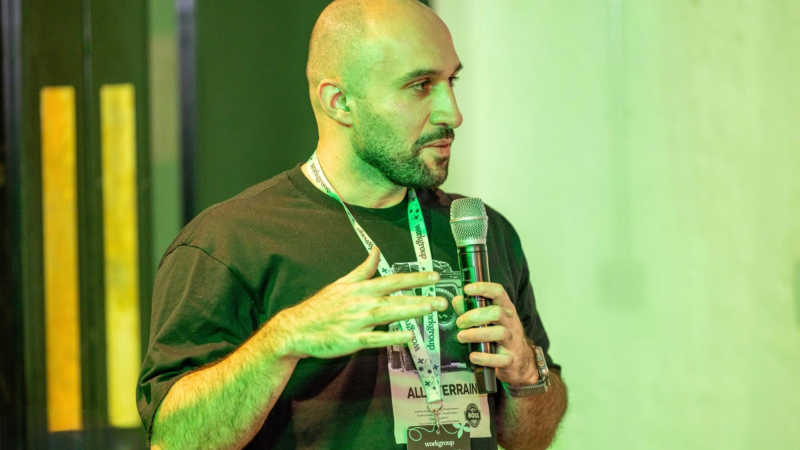
Yasin Kheradmand
Digital growth today is shaped by leaders who can move fluently across cultures, disciplines, and evolving technologies. Yasin Kheradmand represents that emerging global mindset, someone whose work bridges data science, creative strategy, and AI-enabled growth systems. Having lived across countries, worked with teams worldwide, and operated inside multiple tech environments, he brings a broader lens to digital strategy. “Understanding human psychology helps you understand user needs,” he says. “That is at the heart of growth.”
Kheradmand‘s path into technology began long before he entered the industry. As a teenager, he translated and published a biography into his native language, a project that sparked a fascination with how complex ideas could be made accessible. That early curiosity eventually led him to study engineering before shifting into business and later completing a master’s degree in business analytics. He immigrated to the United Kingdom in his 20s, building a career shaped by both technical training and a deep interest in communication. “I have always been drawn to the space where technology meets the humanities,” he says. “That intersection is where innovation becomes practical.”
Throughout his career, Kheradmand has treated data not just as a reporting tool but as a creative partner, something capable of guiding early decisions rather than simply validating them after the fact. “Data lets you let go of guesswork,” he explains. “It becomes part of the creative process instead of something you check at the end.” His approach grew stronger as he worked across tech environments and collaborated with experienced engineers and product teams. Rather than relying on assumptions about what audiences might want, he focused on building feedback loops that allowed real behavior to inform product choices, marketing, and user experience.
That philosophy ultimately shaped his work in AI-led and predictive systems, where he aimed to grow products by feeding meaningful signals into established ad-network algorithms. “Instead of telling algorithms what to do,” he says, “you help them understand what a high-value user looks like. Once you do that, they become very effective partners.” Kheradmand emphasizes that much of the value comes not from trying to outsmart those systems but from enabling them. His teams have built internal predictive tools, assigned early indicators of user value, and worked with machine-learning engineers to translate those insights into practical decisions.
A similar approach appears in how he thinks about creative production. Startups often face limits in time, cost, and visual resources, yet need brand-consistent content at scale. At his current company, Kheradmand helped develop internal tools that use image-generation models trained on brand-safe guidelines, allowing the team to produce consistent, compliant creative assets quickly. This system supports competitive campaigns without requiring large production budgets. “AI is not just about producing a lot of content,” he notes. “It’s about enabling creative humans to stay focused on strategy rather than logistics.”
The same principle guides his work on brand communication. According to Kheradmand, as teams grow, message consistency becomes difficult to maintain, especially when many people contribute to campaigns, customer support, or user communications. To address this, he led the development of an internal tool that rewrites messaging into an on-brand tone, ensuring coherent communication across departments. “It gives teams confidence,” he says. “Everyone can speak in a unified way without second-guessing themselves.”
Outside of day-to-day operations, Kheradmand increasingly shares these frameworks with others. He is advising early-stage startups internationally, preparing a peer-reviewed paper on data-led marketing, and serving as a guest lecturer at a well-known university in London on the use of big data in business decision-making. He sees teaching as a responsibility to the next generation of digital leaders. “If someone is building something new, they shouldn’t have to start from scratch,” he says. “Sharing knowledge is part of building better products and healthier ecosystems.”
Digital growth today is shaped by leaders who can move fluently across cultures, disciplines, and evolving technologies. Yasin Kheradmand represents that emerging global mindset, someone whose work bridges data science, creative strategy, and AI-enabled growth systems. Having lived across countries, worked with teams worldwide, and operated inside multiple tech environments, he brings a broader lens to digital strategy. “Understanding human psychology helps you understand user needs,” he says. “That is at the heart of growth.”
Kheradmand‘s path into technology began long before he entered the industry. As a teenager, he translated and published a biography into his native language, a project that sparked a fascination with how complex ideas could be made accessible. That early curiosity eventually led him to study engineering before shifting into business and later completing a master’s degree in business analytics. He immigrated to the United Kingdom in his 20s, building a career shaped by both technical training and a deep interest in communication. “I have always been drawn to the space where technology meets the humanities,” he says. “That intersection is where innovation becomes practical.”
Throughout his career, Kheradmand has treated data not just as a reporting tool but as a creative partner, something capable of guiding early decisions rather than simply validating them after the fact. “Data lets you let go of guesswork,” he explains. “It becomes part of the creative process instead of something you check at the end.” His approach grew stronger as he worked across tech environments and collaborated with experienced engineers and product teams. Rather than relying on assumptions about what audiences might want, he focused on building feedback loops that allowed real behavior to inform product choices, marketing, and user experience.