Remote, Not Removed
From a Welsh football club to an American wrestling powerhouse, Rob Edwards is reshaping sports ownership with a disruptive, people-first strategy.
MSM
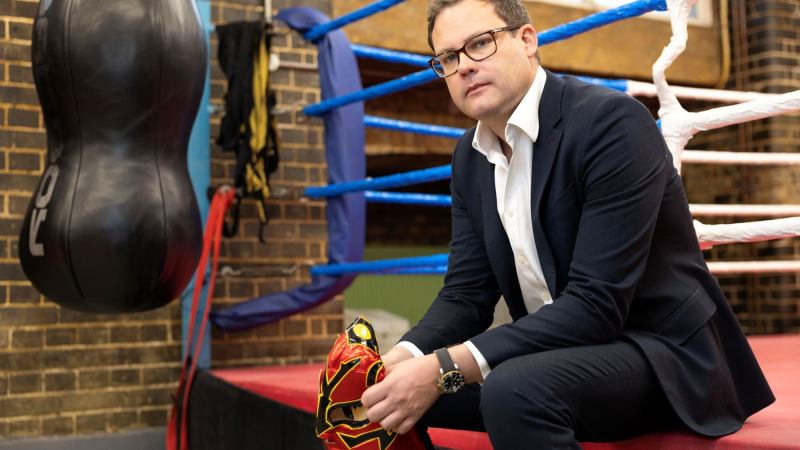
Londoner Rob Edwards is the founder of Morley Sports Management
Opinions expressed by Entrepreneur contributors are their own.
You're reading Entrepreneur United Kingdom, an international franchise of Entrepreneur Media.
Londoner Rob Edwards is the founder of Morley Sports Management (MSM), a multi-sport ownership and consultancy group with an unconventional playbook. A former finance professional turned entrepreneur, Edwards first made headlines during lockdown when he bought a struggling Welsh football club off the back of a speculative email. Five years later, Haverfordwest County AFC has qualified for Europe twice and built one of the strongest youth programmes in the country.
Now, Edward’s next project is even more newsworthy: revitalising Ohio Valley Wrestling (OVW) – the cult US wrestling promotion that launched the careers of John Cena, Batista, and Brock Lesnar. Under his leadership, OVW is undergoing a grassroots revival built on a fan-first strategy, community value, and global ambition. From Pembrokeshire to Kentucky, Rob is quietly rewriting the rules of modern sports ownership. But this is just the beginning.
What was your biggest challenge and how did you overcome it?
Taking over a football club during a global pandemic. I live six hours away. I couldn’t get there, and I’d never had any experience of running a football club. It was going in blind, but I knew instinctively it had potential. I knew I was never going to relocate, so from day one I had to invest in people. If people don’t buy into the values, they don’t stick around very long. But if they do, you can build something with a clear vision. We’ve built the best off-field team I could have hoped for – people who are passionate and dedicated and who’ve completely bought into our dream. It’s the same now with OVW in Kentucky. It’s a long way away again, a lot of passionate people, but it lacked clear direction. The job is to empower people, put them in the right places, and give them credit for what they achieve.
How did you secure your initial funding?
There’s been minimal outside investment. Most came off the back of my previous business and my career in finance. The barrier to entry for Welsh football isn’t huge, it’s very accessible – financially and structurally. It gave us the opportunity to step in and try to build something different from the ground up. Because of our experience with Haverfordwest County AFC in Wales, we saw a similar opportunity with OVW in Kentucky. It’s an under-appreciated asset in the industry in modern times, but there’s massive potential.
Related: Why brands need to stop talking about community — and start building one | Entrepreneur
How do you handle failure or setbacks?
You need to stay calm and logical. Not everything goes your way – and when it doesn’t, the worst thing you can do is get flustered. I tend not to get too up or too down. I’ve always kept that middle ground. If you walked past me after a major success or a big loss, you probably wouldn’t notice a difference. That’s always been my demeanour. It’s about focusing on the bigger picture. If something’s going wrong, stay objective and work out how far you’ve gone off path. Then you need to be measured and methodical about how you fix it.
What advice would you give to someone starting their own business?
Have self-confidence and be open-minded. When I took over the football club, I had no background in it, but I trusted my instincts. I used experience, common sense, and values that mattered to me. That’s been the foundation. We’re trying to build businesses founded on community and social impact. With those fundamentals in place, commercial success will come. You’ve got to believe in what you stand for. If you stay true to your values inside and outside of business, you can build something meaningful.
How do you stay motivated during tough times?
I need stimulation. I’ve never been able to sit still. I wake up when the sun comes up and my brain kicks in – I’m raring to go. I’m impulsive. If I get an idea in my head, I’m all in. What keeps me going is being disruptive, pushing things forward, coming up with new ideas and concepts. With both the football club and OVW, we’re constantly evolving – and on top of that we’ve got consultancy work and partnerships with sporting brands. That forward momentum is what wakes me up in the morning. There’s always a new problem to solve.
What are your top tips for success?
Be confident in your ability – if you’re leading a business and people don’t buy into you, it won’t work. People buy in to people. Investment in people is 100% at the heart of our model. We’re not always on the ground, so we need to trust the teams to run with the vision. But we also lead from the front – if you want people to dive into the trenches, you need to be the one starting the charge. I’m quite demanding, but only because I hold myself to that same standard.
Londoner Rob Edwards is the founder of Morley Sports Management (MSM), a multi-sport ownership and consultancy group with an unconventional playbook. A former finance professional turned entrepreneur, Edwards first made headlines during lockdown when he bought a struggling Welsh football club off the back of a speculative email. Five years later, Haverfordwest County AFC has qualified for Europe twice and built one of the strongest youth programmes in the country.
Now, Edward’s next project is even more newsworthy: revitalising Ohio Valley Wrestling (OVW) – the cult US wrestling promotion that launched the careers of John Cena, Batista, and Brock Lesnar. Under his leadership, OVW is undergoing a grassroots revival built on a fan-first strategy, community value, and global ambition. From Pembrokeshire to Kentucky, Rob is quietly rewriting the rules of modern sports ownership. But this is just the beginning.
What was your biggest challenge and how did you overcome it?
Taking over a football club during a global pandemic. I live six hours away. I couldn’t get there, and I’d never had any experience of running a football club. It was going in blind, but I knew instinctively it had potential. I knew I was never going to relocate, so from day one I had to invest in people. If people don’t buy into the values, they don’t stick around very long. But if they do, you can build something with a clear vision. We’ve built the best off-field team I could have hoped for – people who are passionate and dedicated and who’ve completely bought into our dream. It’s the same now with OVW in Kentucky. It’s a long way away again, a lot of passionate people, but it lacked clear direction. The job is to empower people, put them in the right places, and give them credit for what they achieve.