Employee AI misuse emerges as major security risk
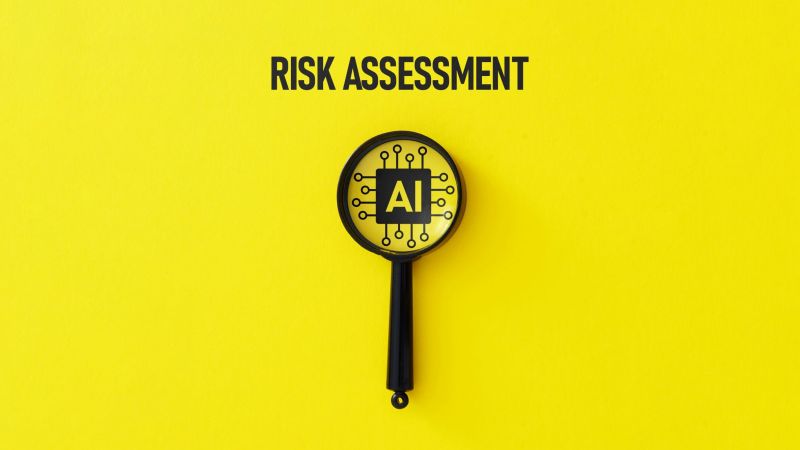
Employee misuse of AI now poses a greater security risk than phishing.
Shutterstock
You're reading Entrepreneur United Kingdom, an international franchise of Entrepreneur Media.
Artificial intelligence is creating new opportunities for businesses, but it also brings new challenges for cybersecurity and information security. As adoption continues to grow, organisations must consider how AI is being used, managed and governed to protect their people, data and systems.
According to new research from business resilience specialists, IO, the biggest AI security risk may not be the attacker outside the organisation, but the employee within it. Chapter 2: The State of AI Security from the 2026 State of Information Security report reveals that unsanctioned AI use by staff is now blamed for more incidents than phishing (24%). A quarter (25%*) of UK and US cybersecurity managers who have experienced any cyber security or information security incidents in the last 12 months say employee misuse of AI – such as giving AI access to a business system without approval or leaking confidential information via an AI tool – was the primary cause of their most significant security incident or near-miss over the past year.
The findings suggest that AI is rapidly becoming an established source of organisational risk, rather than simply a future threat. As AI becomes embedded in day-to-day business operations, organisations are increasingly having to contend with risks arising from how the technology is being adopted and used by employees.
According to the research, using generative AI without permission or guidance is now the most common security mistake made by employees, with 35% of respondents citing this ahead of clicking suspicious links (32%). Similarly, 22% of respondents say staff have built AI into important workflows without the security team knowing. This is also compounded by the fact that 22% of staff have shared confidential or sensitive data with public generative AI tools.
Yet despite half (51%) of organisations surveyed having updated their AI usage policies or guidance to set clearer parameters around how employees can use AI, formal rules are doing little to curb misuse in practice or any rules are simply being ignored.
The gap is particularly striking among larger organisations. Respondents at organisations of 250+ employees are more likely than those under 100 employees to have a formal, enforced AI policy (46% vs 36%), but are no less likely to say that staff have built AI into workflows without the security team knowing (24% vs 21%). This suggests that simply putting policies in place is not enough. Without effective oversight, visibility and enforcement, employees can continue to turn to unapproved AI tools, leaving organisations exposed to risks they may not even know exist.
Chris Newton-Smith, CEO of IO explains, “AI adoption has moved from the IT department into almost every corner of the organisation, but governance doesn’t appear to have made the same journey. The problem isn’t that employees are using AI – it’s that organisations don’t always know which tools are being used, what they’re being used for, what information is being put into them, or who is responsible for the consequences.”
Organisations are also struggling to establish who owns the risks – and who is ultimately accountable when something goes wrong, with 34% of respondents believing that the CEO is ultimately accountable for business resilience within an organisation. However, the research revealed that 27% of organisations surveyed are now ensuring that AI security and accountability is shifting from the security team to the individual. Newton-Smith continues, “This is why good governance of AI systems is so important. The answer is not to put the brakes on AI. It is to have the governance in place to use it with confidence. As technology and threats become more complex, organisations need to take a more structured approach – defining who is accountable, which tools can be used, what safeguards are required and how potential issues are identified and escalated. Employee awareness remains an important part of the picture, but it cannot operate in isolation. People are far more likely to make the right decisions when they are working within clear parameters, understand what is expected of them and have the right processes and support in place. It is about creating an environment that makes the secure choice the easiest choice. By implementing ISO 27701 (data privacy), ISO 27001 (information security) and ISO 42001 (AI management), businesses can take a cohesive approach to data security and build overall business resilience. Using the best practices outlined in these standards, organisations can implement policies that provide guidelines for acceptable AI use, ensure employees are aware of their information security and data privacy obligations, and systematically identify and mitigate AI risk,” Newton-Smith concludes.
Artificial intelligence is creating new opportunities for businesses, but it also brings new challenges for cybersecurity and information security. As adoption continues to grow, organisations must consider how AI is being used, managed and governed to protect their people, data and systems.
According to new research from business resilience specialists, IO, the biggest AI security risk may not be the attacker outside the organisation, but the employee within it. Chapter 2: The State of AI Security from the 2026 State of Information Security report reveals that unsanctioned AI use by staff is now blamed for more incidents than phishing (24%). A quarter (25%*) of UK and US cybersecurity managers who have experienced any cyber security or information security incidents in the last 12 months say employee misuse of AI – such as giving AI access to a business system without approval or leaking confidential information via an AI tool – was the primary cause of their most significant security incident or near-miss over the past year.
The findings suggest that AI is rapidly becoming an established source of organisational risk, rather than simply a future threat. As AI becomes embedded in day-to-day business operations, organisations are increasingly having to contend with risks arising from how the technology is being adopted and used by employees.

Patricia Cullen • Features Writer
Entrepreneur Staff