Beyond the Track: Taking Formula One Technology into Road Safety and Infrastructure
Jonathan Selbie applies racing technology and AI to improve road networks.
Shutterstock
Opinions expressed by Entrepreneur contributors are their own.
You're reading Entrepreneur United Kingdom, an international franchise of Entrepreneur Media.
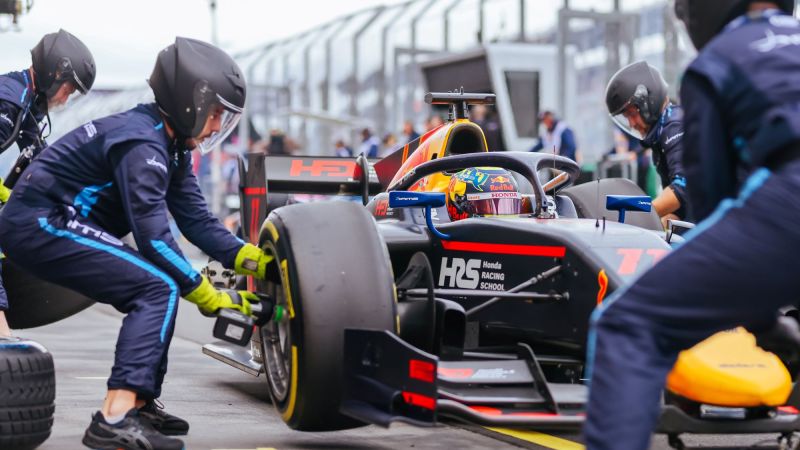
Early in my career, I was an engineer at Red Bull Racing. With my peers, we strived to find ways to make our cars the best performing, fastest vehicles on the grid come race day. From improving aerodynamics to understanding how tyre temperature affected traction, in Formula One, every aspect of performance is measured and analysed. The quality of the data directly shapes the decisions that follow. In a roundabout way, this time at the peak of motorsport led me to think about how else we could apply hyper-localised data and track performance, with a focus on improving the built environment and creating a safer, better road network for everyone.
I want to share the lessons I’ve learnt about entrepreneurship: how to look at emerging technologies differently, not just asking what they can do, but where else they can be applied to solve real-world problems. Innovation doesn’t always mean reinventing the wheel. Sometimes, it is about looking at the resources already available and finding new ways to apply them. For me, that problem was how we monitor and maintain our roads. The scale of the challenge is enormous. In England and Wales alone, the backlog of road repairs has now reached £18.62bn, with roads resurfaced on average only once every 97 years (RAC, 2026). The World Bank has also projected that an additional 1.2 billion cars will be on the road by 2050, doubling today’s total (World Bank, 2025).
Billions of people rely on road networks every day, but most authorities still have limited visibility over the infrastructure they are responsible for. Inspections are often infrequent, sometimes with years between assessments, and resource-intensive, allowing small defects to develop unnoticed into problems that are expensive to fix and become a public hazard. Coming from F1, that struck me immediately. You would never make decisions about a race car based on a snapshot of what happened six months ago. Collecting data is one part of the job, the real challenge is then working out what the data is telling you and where there is opportunity to improve. In the UK, for example, potholes are estimated to cause more than 26,000 breakdowns each year (RAC, 2025). With modern technology, why should we settle for this? With this in mind, I joined the Swedish artificial intelligence and computer vision company Univrses in 2018. My initial assumption was that monitoring an entire road network would require dedicated fleets of inspection vehicles along with in-built sensor systems. But as I took a step back, the resources were already there. Waste collection trucks, taxis and passenger cars are travelling through cities every single day. By combining technology with the resources that already exist, we could apply a new approach to an old problem.
At Univrses, that idea became our 3DAI product suite, using computer vision and AI to turn what cameras capture into actionable insights about the roads and wider highway infrastructure. As vehicles move through a road network, the cameras capture their surroundings. Algorithms process the footage as the vehicles follow their daily routes. In Helsingborg, Sweden, we work with waste management vehicles, which cover most of the city’s roads every two weeks. We’ve also collaborated with major automotive manufacturers, with our technology now deployed in production vehicles including the Polestar 3 and Volvo EX90 to help them interpret their surroundings. The camera sees the same things as a driver, but our algorithms process the footage to anticipate where potholes could emerge, deteriorating road markings, delayed roadworks, and obscured traffic signs. The results speak for themselves. In Helsingborg, a city roughly the size of Portsmouth, our technology reduced the number of potholes from around 3,000 to 900 in just six months. Checking roads in the city used to take days and could now be completed in an hour The journeys were already happening and the vehicles needed were already on the road. AI and computer vision have turned what previously existed into impactful information. Our collaboration with Pirelli and its Cyber Tyre technology follows a similar logic. Pirelli integrated sensors into tyres to capture road conditions. A camera can identify what is coming ahead, including damaged or uneven surfaces, while sensors within the tyre detect the physical structure of the road. Bringing those perspectives together gives a deeper understanding of the condition of road maintenance. We are now applying this approach in projects in Puglia, Italy, and elsewhere.
Applying technology to real-world issues is not just about finding the right combination. It is also about understanding how that solution needs to work in different markets. We work with road authorities across six European countries, including National Highways in England, Trafikverket in Sweden, and in the Netherlands the Road Monitor project (ROMO). Each collaboration comes with its own requirements. It became clear, very quickly, that we couldn’t build something in one market and replicate it in another. In the Netherlands, for example, the focus is on understanding when road markings have deteriorated to affect lane-keeping systems. In England, we have used computer vision to build an inventory of more than 110,000 streetlights. Both show how the underlying technology can be adapted to different requirements. It is crucial to listen to what local authorities need and shape the service around their priorities. That relationship is just as important as the technology itself. Safety and trust are a huge part of this too. As vehicles become increasingly capable of sensing and processing the world around them, privacy is a priority. Registration plates and faces are encrypted: technology also has to work in a way that people are comfortable with. For me, that is central when taking emerging technology from an idea and making it work in practice. Throughout my career, the opportunity has often started with understanding a problem, looking at what tools are at my disposal, and then working out how to deploy new technology effectively and safely.
We have more data and technology at our fingertips than ever before, but having access to it is only the starting point. The real challenge is understanding what it can tell us and how to turn it into something that works in the real world. Those connections are not always the most obvious. Finding them can take time and curiosity, but also a willingness to look beyond the industry that technology was originally designed for. That, in my experience, is where some of the most interesting entrepreneurial opportunities begin.
Early in my career, I was an engineer at Red Bull Racing. With my peers, we strived to find ways to make our cars the best performing, fastest vehicles on the grid come race day. From improving aerodynamics to understanding how tyre temperature affected traction, in Formula One, every aspect of performance is measured and analysed. The quality of the data directly shapes the decisions that follow. In a roundabout way, this time at the peak of motorsport led me to think about how else we could apply hyper-localised data and track performance, with a focus on improving the built environment and creating a safer, better road network for everyone.
I want to share the lessons I’ve learnt about entrepreneurship: how to look at emerging technologies differently, not just asking what they can do, but where else they can be applied to solve real-world problems. Innovation doesn’t always mean reinventing the wheel. Sometimes, it is about looking at the resources already available and finding new ways to apply them. For me, that problem was how we monitor and maintain our roads. The scale of the challenge is enormous. In England and Wales alone, the backlog of road repairs has now reached £18.62bn, with roads resurfaced on average only once every 97 years (RAC, 2026). The World Bank has also projected that an additional 1.2 billion cars will be on the road by 2050, doubling today’s total (World Bank, 2025).
Billions of people rely on road networks every day, but most authorities still have limited visibility over the infrastructure they are responsible for. Inspections are often infrequent, sometimes with years between assessments, and resource-intensive, allowing small defects to develop unnoticed into problems that are expensive to fix and become a public hazard. Coming from F1, that struck me immediately. You would never make decisions about a race car based on a snapshot of what happened six months ago. Collecting data is one part of the job, the real challenge is then working out what the data is telling you and where there is opportunity to improve. In the UK, for example, potholes are estimated to cause more than 26,000 breakdowns each year (RAC, 2025). With modern technology, why should we settle for this? With this in mind, I joined the Swedish artificial intelligence and computer vision company Univrses in 2018. My initial assumption was that monitoring an entire road network would require dedicated fleets of inspection vehicles along with in-built sensor systems. But as I took a step back, the resources were already there. Waste collection trucks, taxis and passenger cars are travelling through cities every single day. By combining technology with the resources that already exist, we could apply a new approach to an old problem.

Jonathan Selbie is a former Formula 1 engineer at Red Bull Racing, with a background... Read more