The Waiting Game
In the crowded corridors of a hospital waiting room, an idea was born that would soon reshape the way we think about healthcare appointments.
DrDoctor
Opinions expressed by Entrepreneur contributors are their own.
You're reading Entrepreneur United Kingdom, an international franchise of Entrepreneur Media.
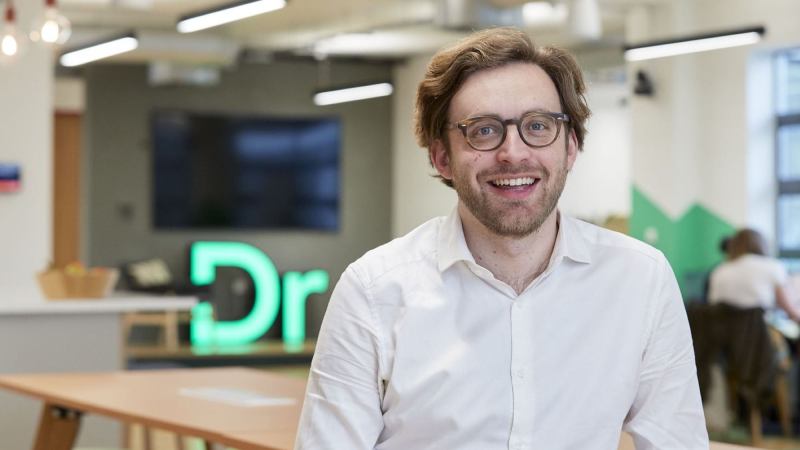
Tom Whicher, the CEO and founder of DrDoctor, a London based healthcare technology company focused on transforming outpatient services through digital tools and artificial intelligence (AI), recalls a moment of frustration that would ignite the entrepreneurial spirit behind his company. “It almost feels a little cliche! But the idea for DrDoctor came to fruition in the hospital waiting room,” Whicher says. “I arrived for my appointment holding the usual letter, the only proof I was meant to be there, yet the waiting area was overcrowded, with multiple patients booked at the same time. Some had misplaced their details, others couldn’t get through on the phone, and many simply hadn’t shown up.” It was clear to Whicher that technology could help address this inefficiency.
Leveraging his consulting background, Whicher knew the healthcare system was under strain, and this personal experience underscored the systemic inefficiencies he had long understood as a consultant at Newton Europe. The solution, he believed, was digital. With a small, dedicated team, DrDoctor was born, aiming to digitize the appointment management process and, eventually, transform healthcare with emerging technologies like AI and video conferencing.
The journey, however, was not without its hurdles. Whicher admits that convincing the NHS to adopt new technology was one of the biggest challenges. “The biggest challenge we faced was the lack of investment in new innovation within the NHS and the slow pace of adoption. I knew these would be big hurdles, but convincing stakeholders that technology was essential for digital transformation took time,” he explains. “We had to clearly demonstrate how outdated systems were hindering efficiency, patient care, and progress.”
Navigating these obstacles in the context of the UK’s economic environment presented its own set of challenges. The financial pressures faced by the NHS and broader economic uncertainty are realities that DrDoctor has learned to navigate. Whicher emphasizes resilience as a key strategy: “DrDoctor has always operated in an environment where financial pressures are constant, so we’re built to adapt. Entering 2025, our focus is on sustainable growth, staying agile, and ensuring every investment drives both our mission and commercial sustainability.”
Innovation, for DrDoctor, isn’t just about keeping pace with trends—it’s about anticipating them. “By becoming entrenched in the NHS, we can spot problems before they happen and innovate our solutions around them,” Whicher says. This proactive approach is complemented by a commitment to a culture of collaboration and creativity. “Our people are at the heart of our ability to remain competitive. We invest a great deal in finding top talent and keeping them,” he adds. This focus on people is key to DrDoctor’s success in creating solutions that meet the real needs of patients and healthcare providers.
Building a strong company culture has been integral to DrDoctor’s growth. Whicher explains that the company fosters an environment of kindness, collaboration, and shared purpose. “A thriving company is built on happy, motivated people. When we take care of our team, it reflects in the impact we have,” he says. Central to this culture is DrDoctor’s Transformation Team, specialists who work directly with NHS Trusts to implement scalable, service-enhancing improvements. “Your strength really does lie in the exceptional people,” Whicher notes, highlighting the importance of the team’s dedication to modernizing healthcare.
For aspiring entrepreneurs in today’s challenging business landscape, Whicher offers clear advice: “Stay relentlessly focused on solving a real problem. Speak to potential customers early, validate your idea, and be willing to adapt.” He also stresses the importance of surrounding oneself with the right people. “Hire for passion and adaptability as much as for skills—especially in a start-up. You need people who thrive in uncertainty and are willing to grow with the business.”
Above all, Whicher underscores the necessity of perseverance in the face of adversity. “The start-up journey is full of highs and lows, and success rarely happens overnight. Be prepared for setbacks, refine your approach, and keep your long-term vision while tackling short-term challenges,” he advises.
Through resilience, innovation, and a culture of collaboration, DrDoctor is not only redefining healthcare appointment management but also setting an example of how businesses can thrive, even amidst economic uncertainty. The question now is: with such a vision, how many more industries will DrDoctor disrupt next?
Tom Whicher, the CEO and founder of DrDoctor, a London based healthcare technology company focused on transforming outpatient services through digital tools and artificial intelligence (AI), recalls a moment of frustration that would ignite the entrepreneurial spirit behind his company. “It almost feels a little cliche! But the idea for DrDoctor came to fruition in the hospital waiting room,” Whicher says. “I arrived for my appointment holding the usual letter, the only proof I was meant to be there, yet the waiting area was overcrowded, with multiple patients booked at the same time. Some had misplaced their details, others couldn’t get through on the phone, and many simply hadn’t shown up.” It was clear to Whicher that technology could help address this inefficiency.
Leveraging his consulting background, Whicher knew the healthcare system was under strain, and this personal experience underscored the systemic inefficiencies he had long understood as a consultant at Newton Europe. The solution, he believed, was digital. With a small, dedicated team, DrDoctor was born, aiming to digitize the appointment management process and, eventually, transform healthcare with emerging technologies like AI and video conferencing.
The journey, however, was not without its hurdles. Whicher admits that convincing the NHS to adopt new technology was one of the biggest challenges. “The biggest challenge we faced was the lack of investment in new innovation within the NHS and the slow pace of adoption. I knew these would be big hurdles, but convincing stakeholders that technology was essential for digital transformation took time,” he explains. “We had to clearly demonstrate how outdated systems were hindering efficiency, patient care, and progress.”

Patricia Cullen • Features Writer
Entrepreneur Staff