The Concrete Edge
What UK start-ups are getting right
Material Evolution
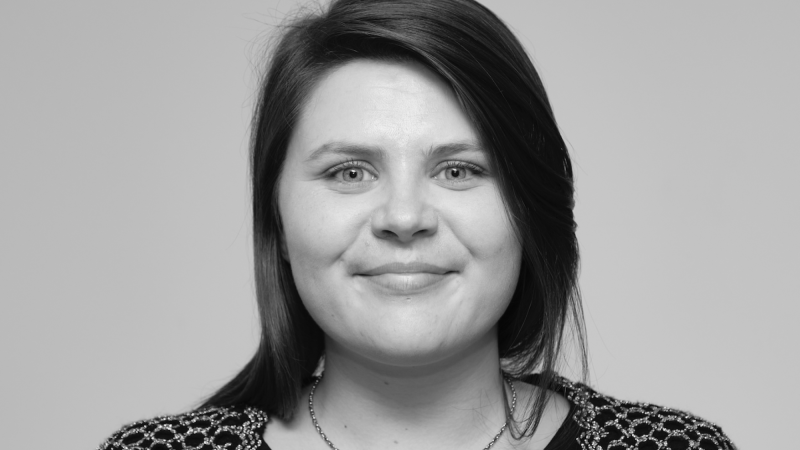
Liz Gilligan, CEO and co-founder of Material Evolution
Opinions expressed by Entrepreneur contributors are their own.
You're reading Entrepreneur United Kingdom, an international franchise of Entrepreneur Media.
Once seen as second fiddle to Silicon Valley, the UK start-up scene is quietly enjoying a moment. Ask Liz Gilligan, CEO and co-founder of Middlesbrough based Material Evolution, a company that uses AI and industrial waste to create eco-friendly cement with low CO2 emissions, what’s different in 2025, and she doesn’t hesitate: “Being UK-focused has become a real superpower.” For years, founders were peppered with one recurring question: when are you going to the US? Not anymore. “Instead, we’re being asked how we’ll expand across Europe and beyond. That mindset shift has unlocked new opportunities and put the UK in a much stronger position globally.”
It’s not just geography that’s shifted. So has the founder mindset. Gilligan, who is building a cleantech hardware company, now views focus as its own form of scale. “I’ve stopped saying yes to every event invitation… there are way too many events you could attend, and most of them don’t deliver any immediate value to the business.” The payoff has been both personal and strategic: “That simple change has freed up so much headspace and time – time that now goes into product, customers, and team. Ironically, by being less ‘out there,’ the company is moving faster.”
If there’s a theme to her reflections, it’s one of clarity. That extends to capital, too. “I used to think that raising capital was just about getting the money in, but I’ve realised that finding the right investors and building the right capital stack is absolutely critical to scaling a company.” Especially, she adds, in sectors like hardware where “VC capital… is hard, and that’s due to many factors – but the biggest one is education.”
Education, in this case, is a two-way street. “It’s not a one-way pitch; it’s a two-way process that requires both sides to lean in, learn, and build conviction together.”
Gilligan is also bullish on one founder profile that’s often overlooked: the technical CEO. “A founder who can dive deep into the product, sell to customers, and pitch with conviction to investors is a true Swiss Army knife.” Yet that versatility, she argues, is frequently undervalued in UK venture. “Many still prioritise financial or commercial backgrounds when backing founding teams. I believe this is a mistake.”
Her vision for the UK start-up ecosystem? Bold and unapologetic: “That the UK and Europe have the grants, capital, and policy frameworks needed to truly compete with the US ecosystem.” But it won’t happen with policy tweaks alone. “We need to move away from a culture of minimising downside and toward one that embraces risk and ambition.” The UK must get comfortable swinging for the fences: “We should be backing founders who are swinging for the fences, not just optimising for safe returns.”
In Gilligan’s view, the next decade belongs to those willing to think bigger – and more bravely. That, she insists, is how “the UK [becomes] the place to be for start-up ecosystems.”
Once seen as second fiddle to Silicon Valley, the UK start-up scene is quietly enjoying a moment. Ask Liz Gilligan, CEO and co-founder of Middlesbrough based Material Evolution, a company that uses AI and industrial waste to create eco-friendly cement with low CO2 emissions, what’s different in 2025, and she doesn’t hesitate: “Being UK-focused has become a real superpower.” For years, founders were peppered with one recurring question: when are you going to the US? Not anymore. “Instead, we’re being asked how we’ll expand across Europe and beyond. That mindset shift has unlocked new opportunities and put the UK in a much stronger position globally.”
It’s not just geography that’s shifted. So has the founder mindset. Gilligan, who is building a cleantech hardware company, now views focus as its own form of scale. “I’ve stopped saying yes to every event invitation… there are way too many events you could attend, and most of them don’t deliver any immediate value to the business.” The payoff has been both personal and strategic: “That simple change has freed up so much headspace and time – time that now goes into product, customers, and team. Ironically, by being less ‘out there,’ the company is moving faster.”
If there’s a theme to her reflections, it’s one of clarity. That extends to capital, too. “I used to think that raising capital was just about getting the money in, but I’ve realised that finding the right investors and building the right capital stack is absolutely critical to scaling a company.” Especially, she adds, in sectors like hardware where “VC capital… is hard, and that’s due to many factors – but the biggest one is education.”

Patricia Cullen • Features Writer
Entrepreneur Staff