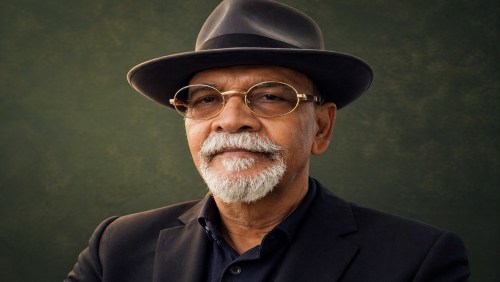
Jason Barnard on Why Controlling Brand Narrative in AI Systems Is a Strategic Imperative for Modern Entrepreneurs

Jason Barnard
The rapid integration of artificial intelligence into business workflows has triggered widespread discussion around automation, productivity, and operational efficiency. Yet, according to Jason Barnard, founder and CEO of Kalicube, a digital marketing and brand intelligence firm, another dimension of AI adoption is unfolding, one that focuses not on how companies use AI, but on how AI interprets and represents them.
Barnard has spent more than a decade studying how search engines and machine learning systems interpret both corporate and personal identity, an area he believes is becoming increasingly consequential as AI interfaces shape business discovery. His work focuses on helping organizations and business leaders align how they are understood by machines. The company specializes in Knowledge Graph optimization, entity SEO, and AI brand representation, supporting businesses in structuring their digital narratives so algorithms can accurately interpret their positioning and credibility. From his perspective, AI platforms are no longer simply research tools; they are becoming intermediaries of trust.
“Every time someone asks an AI about you or your company, it becomes your digital representative,” Barnard explains. “If you haven’t shaped what it understands about you, then you are leaving your brand narrative in the hands of systems you have never trained.”
Industry data suggests that reliance on these systems is accelerating. According to research, around 88% of companies have already adopted and are using AI in at least one business function, signaling how deeply embedded machine-driven decision support has become. Meanwhile, some generative AI tools reached over 100 million users within months of launch, illustrating how quickly AI interfaces have entered mainstream research and discovery behavior.
Barnard believes this behavioral shift has created what he explains as a visibility gap. “Organizations are investing heavily in how they use AI internally, yet far fewer are considering how they appear externally when prospects, partners, or investors query AI platforms,” he says. According to him, this disconnect stems partly from perception.
“There’s an imaginative leap that hasn’t happened yet,” Barnard notes. “If you are using AI to evaluate other companies, then other people are using AI to evaluate you. And the version those people are seeing may not be the one you expect.”
One reason for this blind spot, he explains, is opacity. He notes that compared to traditional analytics dashboards, businesses cannot easily see how AI systems summarize their expertise, reputation, or competitive standing at scale. For leaders accustomed to measurable attribution models, this lack of transparency can feel deeply unsettling. Barnard frames the issue through the lens of control, particularly for entrepreneurial audiences.
“Entrepreneurs are comfortable with risk,” he says. “But not knowing how their own company is being represented in environments they can’t see makes them incredibly uncomfortable.” Kalicube’s methodology begins with defining what Barnard calls the digital brand narrative: the story an organization wants machines to understand about its expertise, authority, and market role. He considers a company’s website as its brand home, the central source from which algorithms interpret identity.
From there, according to Barnard, the narrative must be corroborated across the brand’s entire digital ecosystem, including media references, structured citations, and consistent topical associations. He notes that machines rely on repetition and validation rather than interpretation. “AI systems look for corroboration,” he says. “If your story is clear and consistent across the web, they become more confident repeating it.”

Jason Barnard
From his perspective, this probabilistic nature of AI responses is widely discussed within search and machine learning communities. Generative systems produce inconsistent answers when prompted repeatedly. Barnard does not dispute this variability but views it differently. “These systems operate on probability, and probability can be influenced,” he explains. “When your digital footprint is organized, the likelihood of accurate representation increases significantly.”
His philosophy extends to how businesses approach optimization itself. For years, he has argued that organizations should not fight algorithms but instead have empathy for them and learn to educate them, structuring information in ways machines can easily process. “These AI tools are not adversaries,” Barnard says. “They are systems you can train. If you understand how they learn and adapt your digital footprint accordingly, you shape how they speak about you.”
He also emphasizes that influence within AI ecosystems unfolds over time. Search engines may reflect updates within weeks, structured knowledge systems may take months, and large language model training cycles may extend longer. “Control doesn’t bring instant change,” he notes. “You need patience when building a digital brand asset that compounds.”
This compounding effect is particularly relevant as AI platforms increasingly guide users through discovery and evaluation journeys without requiring traditional website navigation. Rather than resisting this evolution, Barnard advocates adaptation. “You can’t change how AI systems function,” he says. “But you can define what they learn about your brand.”
For organizations navigating AI-driven discovery environments, Barnard notes that the implication is strategic rather than technical. According to him, brand messaging, corroboration, and narrative clarity, once considered communications functions, are becoming machine-readable trust signals.
As AI interfaces continue to mediate visibility, credibility, and recommendation pathways, Barnard believes businesses that actively shape their narrative will be better positioned to influence how they are understood. “The conversation is not only about using AI in your company anymore,” he says. “It’s about ensuring those same AI tools understand who you are, what you do, and why you matter. When that happens, you have created a stunningly powerful advocate for your brand.”
The rapid integration of artificial intelligence into business workflows has triggered widespread discussion around automation, productivity, and operational efficiency. Yet, according to Jason Barnard, founder and CEO of Kalicube, a digital marketing and brand intelligence firm, another dimension of AI adoption is unfolding, one that focuses not on how companies use AI, but on how AI interprets and represents them.
Barnard has spent more than a decade studying how search engines and machine learning systems interpret both corporate and personal identity, an area he believes is becoming increasingly consequential as AI interfaces shape business discovery. His work focuses on helping organizations and business leaders align how they are understood by machines. The company specializes in Knowledge Graph optimization, entity SEO, and AI brand representation, supporting businesses in structuring their digital narratives so algorithms can accurately interpret their positioning and credibility. From his perspective, AI platforms are no longer simply research tools; they are becoming intermediaries of trust.
“Every time someone asks an AI about you or your company, it becomes your digital representative,” Barnard explains. “If you haven’t shaped what it understands about you, then you are leaving your brand narrative in the hands of systems you have never trained.”