Inside 2026 Tech
The fastest-growing database company in the UK shares its 2026 predictions
SurrealDB
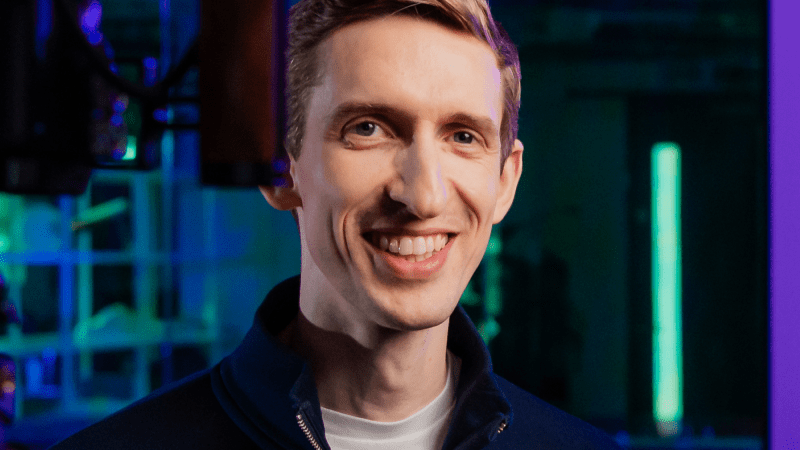
Tobie Morgan Hitchcock, co-founder and CEO of SurrealDB
Opinions expressed by Entrepreneur contributors are their own.
You're reading Entrepreneur United Kingdom, an international franchise of Entrepreneur Media.
From Family Start-up to Industry Disruptor
Tobie Morgan Hitchcock is not your typical tech CEO. As co-founder and CEO of SurrealDB, a UK-based, family-run startup, Hitchcock has overseen the meteoric rise of what is now considered the fastest-growing database in the world. SurrealDB’s unique multi-model, AI-native database has put the company at the forefront of a rapidly evolving tech landscape. Looking ahead to 2026, Hitchcock offers a bold set of predictions for the future of AI, cloud computing, and enterprise technology. Here’s what he foresees.
Prediction 1: 2026 – The Year Hyperscale AI Comes Home
Hitchcock predicts a major shift for enterprise AI: bringing hyperscale AI processing back in-house. “Teams want to gain tighter control over AI models and GPUs,” Hitchcock explains. “We’ll see a move back to the datacentre for the largest companies. It’s a cost-control issue: cloud charges for large-scale AI projects can rival revenue for AI assistant companies, so managing these workloads locally makes financial sense.” This trend is already visible in the GPU space. With companies like Nvidia investing heavily in novel GPU technologies, Hitchcock expects a surge in on-premise and co-located AI deployments in 2026, as enterprises seek both cost savings and operational control.
Prediction 2: Cloud Costs and Architecture Complexity Will Stall Adoption
Even as AI adoption accelerates, Hitchcock warns that costs and complexity remain major barriers. “Whichever way we look at AI, it’s costly,” he says. “Running complex AI projects in the cloud is expensive. Migrating back in-house is also a challenge unless organisations are certain it’s the right strategy. The uncertainty around selecting the right technical framework, combined with potential high costs, will slow adoption.” Yet, he notes, companies are eager to experiment. “Organisations want to push the boundaries of AI faster than competitors. Many will iterate quickly with cloud providers first before committing to a long-term strategy.”
Prediction 3: Reproducibility and Accuracy Will Define AI Success in Finance
For financial institutions, the stakes are even higher. Hitchcock points to accuracy and reproducibility as the next big hurdle. “Banks have plenty of AI agent PoCs and pilots, but few move to production,” he observes. “The challenge is ensuring AI agents can reason intelligently with customers, providing consistent, accurate answers. Multiple databases – duckDB, Postgres, Snowflake, InfluxDB – can create flexibility but also introduce risks to accuracy.” Hitchcock sees a solution in AI-native, multi-model databases, which allow teams to combine data from various formats – time series, relational, graph – into a single, context-aware system. “This makes AI agents more accurate and contextual, providing immediate value while the technology continues to evolve.”
For Morgan Hitchcock, 2026 promises a year of strategic recalibration for AI and enterprise technology. From bringing AI in-house to overcoming cloud complexity and improving financial AI reliability, Hitchcock believes that the companies who thrive will be those who balance experimentation with precision, control, and a forward-thinking approach to data architecture.
SurrealDB may be a family-run startup in the UK, but under Hitchcock’s guidance, it is shaping the global AI and database landscape—and the next year promises even more disruption.
From Family Start-up to Industry Disruptor
Tobie Morgan Hitchcock is not your typical tech CEO. As co-founder and CEO of SurrealDB, a UK-based, family-run startup, Hitchcock has overseen the meteoric rise of what is now considered the fastest-growing database in the world. SurrealDB’s unique multi-model, AI-native database has put the company at the forefront of a rapidly evolving tech landscape. Looking ahead to 2026, Hitchcock offers a bold set of predictions for the future of AI, cloud computing, and enterprise technology. Here’s what he foresees.
Prediction 1: 2026 – The Year Hyperscale AI Comes Home
Hitchcock predicts a major shift for enterprise AI: bringing hyperscale AI processing back in-house. “Teams want to gain tighter control over AI models and GPUs,” Hitchcock explains. “We’ll see a move back to the datacentre for the largest companies. It’s a cost-control issue: cloud charges for large-scale AI projects can rival revenue for AI assistant companies, so managing these workloads locally makes financial sense.” This trend is already visible in the GPU space. With companies like Nvidia investing heavily in novel GPU technologies, Hitchcock expects a surge in on-premise and co-located AI deployments in 2026, as enterprises seek both cost savings and operational control.
Prediction 2: Cloud Costs and Architecture Complexity Will Stall Adoption
Even as AI adoption accelerates, Hitchcock warns that costs and complexity remain major barriers. “Whichever way we look at AI, it’s costly,” he says. “Running complex AI projects in the cloud is expensive. Migrating back in-house is also a challenge unless organisations are certain it’s the right strategy. The uncertainty around selecting the right technical framework, combined with potential high costs, will slow adoption.” Yet, he notes, companies are eager to experiment. “Organisations want to push the boundaries of AI faster than competitors. Many will iterate quickly with cloud providers first before committing to a long-term strategy.”

Patricia Cullen • Features Writer
Entrepreneur Staff