Rough Ride: What family business can teach corporate world on reining in succession drama in the boardroom
If, like me, you’ve been watching the neo-Western drama Yellowstone on Netflix, you’ll know the real drama isn’t in the battle for cattle or land, but in who takes over the family ranch that Kevin Costner’s John Dutton and his ancestors have spent nearly 150 years protecting.

Shutterstock
Opinions expressed by Entrepreneur contributors are their own.
You're reading Entrepreneur United Kingdom, an international franchise of Entrepreneur Media.
While the storyline may be fictional – and extreme (no spoilers) – the messy reality of succession is entirely real, especially for those of us who work closely with business owners. After more than a decade in executive recruitment, I’ve seen dramas play out in boardrooms and family kitchens across the UK. In family businesses, succession is more than a process, it’s a way of life.
Recent announcements by Chancellor Rachel Reeves around inheritance tax have brought this issue into sharper focus, with business owners – particularly in sectors like agriculture – keen to avoid huge and punitive tax bills when handing over the reins. Succession planning has never been higher on the agenda for family firms.
The same urgency, however, isn’t always mirrored in the corporate world, where succession is still too often treated as a compliance exercise – an HR box to tick every few years.
Having worked with both corporate and family-owned businesses across the UK, one thing is clear. While neither is perfect, family firms typically approach succession with a seriousness and emotional intelligence many corporates still lack.
In family enterprises, succession is inevitable and ingrained – often discussed around the dinner table long before any formal transition is announced. Compare that to many large organisations, where leadership transitions can be reactive, politicised, or alarmingly last-minute.
Our recent research with EY on The Future CEO highlights the extent of the challenge. Just 47% of current CEOs believe they have a viable successor within their senior team, while 56% of functional leaders believe they could be the next CEO. That disconnect speaks volumes about how succession is – or isn’t – being managed.
Family firms, by contrast, usually have a named successor, even if that person still has some growing to do. While some may see this as nepotism, in practice it often leads to a long, deliberate process of development – complete with external experience, mentoring, and formal training. These businesses invest heavily in future leadership because their legacy depends on it.
Succession in a family firm is deeply personal but also strategically critical. It’s about passing on control, but also about ensuring continuity, culture, and long-term performance. In the corporate world, where tenures are shorter and incentives more short-term, this type of future-focused thinking is often harder to sustain.
The best family businesses understand that good succession planning prioritises continuity over control, and that continuity comes from preparing the next generation with technical skills, emotional intelligence, cultural fluency, and stakeholder savvy.
Too often in the corporate world, succession is reduced to talent grids and competency frameworks. What’s missing are the softer, but crucial, attributes – resilience, humility, influence, adaptability. These are the very traits that define effective modern leaders.
Another dimension that often goes unspoken is the emotional weight of succession. In family businesses, there’s no avoiding it – your boss might be your mother, your biggest rival might be your brother, and your harshest critic might be sitting across the dinner table. That dynamic can breed dysfunction, yes – but it also builds a deep awareness of interpersonal dynamics.
To navigate this successfully requires more than business acumen, it demands empathy, maturity, and courage – especially when the founder is still very much in the room.
Corporates could benefit from embracing, rather than avoiding, the emotional undercurrents of leadership transitions. Succession doesn’t just happen in spreadsheets, it happens in conversations.
One of the smartest moves we see in well-run family firms is the strategic use of interim executives, mentors, and non-exec chairs to help successors grow into their roles. Sometimes an experienced interim CEO is brought in to steady the ship. Other times, a respected chair acts as a coach – not to steer the business, but to guide the successor.
This is succession by design, not default, and it stands in contrast to what we often see in large corporates where CEOs either overstay their welcome or exit without any meaningful handover, leaving uncertainty and risk behind.
The Future CEO report also highlighted a shift towards transformational leadership. Tomorrow’s leaders need to be agile, authentic, and adaptive. Family businesses often understand this intuitively – they need leaders who respect the past but are not afraid to modernise. Those who succeed do so by balancing legacy with innovation, digitising where needed, challenging old assumptions, but never losing sight of the business’s founding purpose.
If corporate boards want to treat succession planning with the same level of intent as family businesses, here are a few principles worth borrowing:
- Make it continuous, not occasional – Succession planning should be embedded, rather than episodic.
- Invest early – Identify and develop future leaders before a crisis or vacancy emerges.
- Embrace mentorship – Pair potential leaders with experienced guides, inside or outside the business.
- Plan the exit as much as the entry – Create space for outgoing leaders to step back with dignity.
- Acknowledge the human side – Recognise that succession brings emotion, fear, and ego – and plan accordingly.
Family businesses aren’t flawless, and succession can be fraught and emotional. But they approach it with heart, realism, and long-term thinking – qualities corporates would do well to emulate.
Oscar Wilde once said that life imitates art far more than art imitates life, but when it comes to succession, the corporate world could do worse than imitate the deliberate, human-centred planning that family businesses have been getting right for generations.
Because whether you’re safeguarding shareholder value or passing on a legacy, your business is only as strong as the next person ready to lead it.
While the storyline may be fictional – and extreme (no spoilers) – the messy reality of succession is entirely real, especially for those of us who work closely with business owners. After more than a decade in executive recruitment, I’ve seen dramas play out in boardrooms and family kitchens across the UK. In family businesses, succession is more than a process, it’s a way of life.
Recent announcements by Chancellor Rachel Reeves around inheritance tax have brought this issue into sharper focus, with business owners – particularly in sectors like agriculture – keen to avoid huge and punitive tax bills when handing over the reins. Succession planning has never been higher on the agenda for family firms.
The same urgency, however, isn’t always mirrored in the corporate world, where succession is still too often treated as a compliance exercise – an HR box to tick every few years.

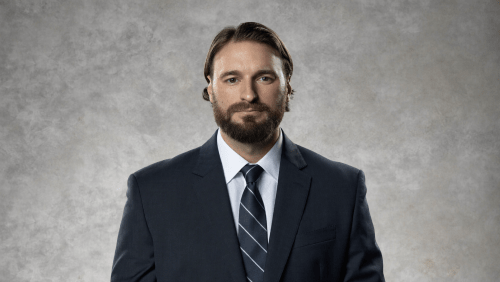
Alistair Shaw • Director at Livingston James
Alistair Shaw, is a director at Livingston James, a Scotland-based executive search specialist that supports... Read more