Proof Over Pitch
A British entrepreneur on start-ups in the AI age

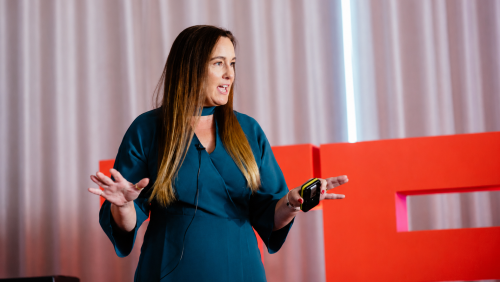
Mike Greene
Business mentor and entrepreneur
Opinions expressed by Entrepreneur contributors are their own.
You're reading Entrepreneur United Kingdom, an international franchise of Entrepreneur Media.
“In 2024, using AI felt like trying to squeeze answers from a confused intern – slow, vague, and always needing correction.” By 2025, says entrepreneur and mentor Mike Greene, things have changed. “Now, it’s like having a sharp-thinking partner who’s always on.”
He points to a shift in pace: “Say I’ve got to prep a talk for a room of B2B founders. In under 10 minutes, AI helps me outline it, punch it up, and add a data-driven hook. That used to take a day.” He continues: “Or say I’m building a go-to-market strategy, I’ll drop in a few bullet points, and it helps me instantly spot gaps or test positioning angles I wouldn’t have thought of at speed.”
“Last year, it was impressive but unreliable. Now it’s sharper and I use it for idea generation and writing. I move through execution faster than ever. It’s not about replacing anyone. It’s about removing friction so you can focus on your core priorities.”
This clarity extends beyond technology. Greene is blunt about his own mistakes: “I no longer fall for polished decks and big promises. I’d take case studies at face value. ‘We helped Company X 10x their revenue in 3 months!’ Sure you did.”
“This can be an expensive mistake as you are taking presentation for performance. Instead, I now ask for specifics. I look for independent proof, not the one client who loved them, but patterns, repeatability and raw data.”
“I’ve stopped confusing activity with accomplishment. Posting on LinkedIn doesn’t mean someone’s growing the business. Jumping on Zooms all day isn’t execution. Since only trusting what can be evidenced, the quality of people and results around me has gone up massively.”
He has changed his view on team-building too. “I used to think hiring fast showed ambition, that the more people on the payroll, the more serious you looked. Turns out, more people often mean more overhead, more complexity, and more distractions from actually building something that works.”
“With focus, AI, and external input, you can avoid bad hires and stay agile. From six to seven figures, you need others to give you that push in the right direction as you can’t be an expert in everything. Eight to nine? It’s all about building it to run without you.”
For UK founders, Greene believes one of the greatest assets remains underappreciated. “Brand Britain.”
“Look past the headlines. Outside the UK, ‘British’ still signals quality. We’ve got a global trust halo that most founders don’t even realise they’re standing under.”
“And then there’s the structural support: schemes like SEIS and EIS mean UK startups can de-risk early investment like almost nowhere else.”
“If you know how to position it, the UK’s still a phenomenal place to start, grow, and raise. But too many founders ignore that edge, trying to mimic Silicon Valley instead of doubling down on what makes Britain bankable.”
“We’ve got investor appetite, consumer trust, and a strong ecosystem, if you know how to use it.”
Looking to the future, Greene sees substance overtaking noise. “The noise fades. Truth rises.”
“Right now, startup culture is noisy. As capital tightens and AI levels the playing field, only the founders who deliver real value will last, backed by proof not hype equipped with real results that speak for themselves.”
“In 2024, using AI felt like trying to squeeze answers from a confused intern – slow, vague, and always needing correction.” By 2025, says entrepreneur and mentor Mike Greene, things have changed. “Now, it’s like having a sharp-thinking partner who’s always on.”
He points to a shift in pace: “Say I’ve got to prep a talk for a room of B2B founders. In under 10 minutes, AI helps me outline it, punch it up, and add a data-driven hook. That used to take a day.” He continues: “Or say I’m building a go-to-market strategy, I’ll drop in a few bullet points, and it helps me instantly spot gaps or test positioning angles I wouldn’t have thought of at speed.”
“Last year, it was impressive but unreliable. Now it’s sharper and I use it for idea generation and writing. I move through execution faster than ever. It’s not about replacing anyone. It’s about removing friction so you can focus on your core priorities.”