Kate Fletcher on Why Old School Leadership Is Struggling and How Collective Intelligence Wins

Kate Fletcher, Founder of FutureX Leaders
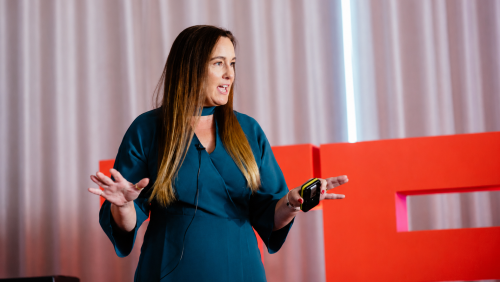
Kate Fletcher, founder of FutureX Leaders, says leadership hasn’t died; it is just moving faster than the systems around it. The real question is no longer whether leaders are good enough, but whether leadership environments are structured for how work really happens. “We have spent decades training leaders one by one,” she says. “But the world doesn’t operate at the speed of individuals anymore; it moves at the speed of systems, teams, and collective capacity.”
Her perspective comes from practice, not theory. With extensive experience coaching executives across many industries, she has seen a common pattern: committed, capable leaders working in setups that move too fast for old processes to keep up. Fletcher views modern leadership as balancing two converging pressures: external forces, the constant change, uncertainty, and complexity, and internal responses, the brittleness, anxiety, and overwhelm. One lens captures the shifting world outside; the other reveals the emotional landscape within.
Fletcher argues that these dynamics create a bottleneck at the top. “Older models assumed pressure arrived in waves, allowing you to respond sequentially,” she says. “Today, however, challenges multiply, stack, and overlap. Decisions are made in conditions that change faster than reflection cycles. Even systems that look solid can wobble under strain.”
She emphasizes that the human toll is predictable but often overlooked in organizational design. “Exhaustion becomes normal. Priorities get unclear. Activity gets mistaken for progress,” Fletcher explains. “We think more hours will create clarity, but without a systems view, we just make more noise, faster.”
In Fletcher’s perspective, this systemic blindness can create downstream effects. Short-termism can replace real curiosity. “Leadership doesn’t fail because people stop caring,” Fletcher notes. “It fails when we stop connecting the dots.”
FutureX Leaders is built as a peer-learning environment where leaders think together, test decisions in collective forums, and normalize uncertainty instead of disguising it. She emphasizes that breakthroughs begin when leaders admit they don’t have all the answers, are courageous to show vulnerability, and invite others into their thinking. For her, real learning happens when leaders work through hard problems together instead of carrying them alone.
The next era of leadership, Fletcher explains, will be defined by navigation: shifting from directing to convening, from answers to inquiry, from control to trust. It appears that effective leaders set the conditions, clear purpose, simple decision rules, and safe rooms for dissent, so the best ideas can surface and gain momentum. “Authority is shifting from knowing to navigating,” she says, “from certainty to curiosity.” In practice, it means creating rhythm rather than rigidity, spaces to pause, learn, and adapt before moving again with clearer intent.
This shift also redefines strength. Where leadership was once framed by individual command and control, it is now earned through adaptation, facilitation, and psychological safety. According to her, future leaders will be those who have the capability of asking great questions, hold a room without needing to own every idea, and listen well before they decide.
Kate Fletcher, founder of FutureX Leaders, says leadership hasn’t died; it is just moving faster than the systems around it. The real question is no longer whether leaders are good enough, but whether leadership environments are structured for how work really happens. “We have spent decades training leaders one by one,” she says. “But the world doesn’t operate at the speed of individuals anymore; it moves at the speed of systems, teams, and collective capacity.”
Her perspective comes from practice, not theory. With extensive experience coaching executives across many industries, she has seen a common pattern: committed, capable leaders working in setups that move too fast for old processes to keep up. Fletcher views modern leadership as balancing two converging pressures: external forces, the constant change, uncertainty, and complexity, and internal responses, the brittleness, anxiety, and overwhelm. One lens captures the shifting world outside; the other reveals the emotional landscape within.
Fletcher argues that these dynamics create a bottleneck at the top. “Older models assumed pressure arrived in waves, allowing you to respond sequentially,” she says. “Today, however, challenges multiply, stack, and overlap. Decisions are made in conditions that change faster than reflection cycles. Even systems that look solid can wobble under strain.”