How Juliet Barratt Turned Career Doubts into a £200 Million Success Story
Juliet Barratt didn’t set out to become one of the UK’s most recognisable entrepreneurs – she simply saw a gap, seized an opportunity, and never looked back.
Aug 01, 2025

Grenade
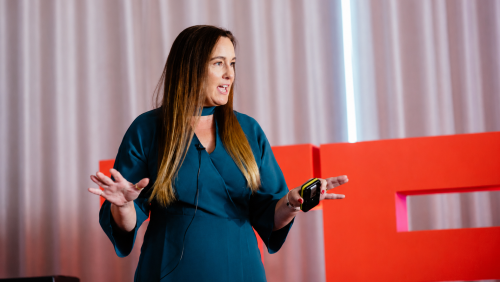
Juliet Barratt, co-founder and former CMO, Grenade
As the co-founder and former CMO of Grenade, a Solihill founded performance‑nutrition brand, she helped grow a household name from humble beginnings into a £200m powerhouse in the health and performance nutrition industry.
With a sharp instinct for branding and an unwavering appetite for calculated risk, Juliet played a pivotal role in scaling Grenade from a living-room idea to a globally distributed brand. Today, she is a mentor, investor and one of the UK’s leading entrepreneur speakers, known for her straight-talking advice on resilience, business leadership, and navigating the challenges of scale. In this exclusive interview with Entrepreneur UK, Juliet reflects on her entrepreneurial journey, the lessons she learned building a high-growth company from scratch, and why authenticity is the most underrated tool in business.
You began your career in education. What inspired the leap into entrepreneurship?
It’s so difficult because I don’t think anyone ever sets out to be an entrepreneur. I had a teaching background. So I had a very traditional school, university, then qualified as a teacher, but I was absolutely awful. So I was like Cameron Diaz in Bad Teacher, but not as hot. So it was never my vocation. And actually, I think when you have a job first, you realise what you do want to do and what you don’t want to do. So I found my life being ruled by a bell, and it just wasn’t for me.
I had to be certain places at certain times, and I just didn’t like that. So I then left teaching and worked for a national charity doing training to try and get young people to experience risk. I was always a bit of a risk taker. So I met Al – the other founder in the business – on a very drunken night out – and went to work for his distribution business, selling other people’s products to gyms and health clubs. And we realised very early on that we could do something ourselves, hence the starting of Grenade.
You helped turn Grenade into a £200m success. What were the most important lessons along the way?Everything – resilience, stubbornness, how to deal with things when it goes wrong, but just the fact that you have to do everything. And everyone always says, what’s the one thing that you did in your business that made it so successful? And there just wasn’t one thing. We had to do everything. But we weren’t trained businesspeople. So we didn’t go to university to have a business degree or an MBA or anything like that. So everything that we did in Grenade, we learned on the job. And there was definitely a case of winging it sometimes. I know it would be ChatGPT now, but we were googling how to do a barcode and how to do this and how to do that. It was learning on the job.
In your experience, what are the defining qualities of a successful entrepreneur?
So, to be an entrepreneur, I think you need to be a good all-rounder. So you need to be stubborn, you need to be determined, you need to have a clear vision. It’s all about following your gut feeling and having genuine belief in what you’re doing. But also, it’s being able to do everything. So driving a forklift, looking at the numbers, looking at the branding, testing products – so it’s about actually getting involved in every stage of that business and having your eyes on that. So I learned how to do graphic design, I learned to drive a forklift very, very badly. We learned about forecasts and P&L and spreadsheets and everything else. And it’s about knowing every aspect of your business.
How can established businesses encourage a start-up mentality within their teams?
It’s really difficult because a corporate background and start-ups are very different. But I think it’s about encouraging staff to be entrepreneurial. So if there’s a process that’s been done in a business, and it’s been done and it’s been working perfectly well for 10, 15 years, that’s great. But someone with that entrepreneurial mindset might look at it in a completely different way. So for example, we employed at Grenade an Finance Director who was from a very corporate background. He had a very different mindset and viewed things very differently from Al and I, who were very entrepreneurial. The two balanced each other out. So I’d encourage all businesses, if you’ve got people with that entrepreneurial mindset, to give them a problem to solve, because I guarantee they’ll look at it in a very, very different way.
As the co-founder and former CMO of Grenade, a Solihill founded performance‑nutrition brand, she helped grow a household name from humble beginnings into a £200m powerhouse in the health and performance nutrition industry.
With a sharp instinct for branding and an unwavering appetite for calculated risk, Juliet played a pivotal role in scaling Grenade from a living-room idea to a globally distributed brand. Today, she is a mentor, investor and one of the UK’s leading entrepreneur speakers, known for her straight-talking advice on resilience, business leadership, and navigating the challenges of scale. In this exclusive interview with Entrepreneur UK, Juliet reflects on her entrepreneurial journey, the lessons she learned building a high-growth company from scratch, and why authenticity is the most underrated tool in business.
You began your career in education. What inspired the leap into entrepreneurship?
It’s so difficult because I don’t think anyone ever sets out to be an entrepreneur. I had a teaching background. So I had a very traditional school, university, then qualified as a teacher, but I was absolutely awful. So I was like Cameron Diaz in Bad Teacher, but not as hot. So it was never my vocation. And actually, I think when you have a job first, you realise what you do want to do and what you don’t want to do. So I found my life being ruled by a bell, and it just wasn’t for me.