Fail Fast, Learn Quick
How Marc Churchouse built a £50m digital consultancy without external investment
Mercator Digital
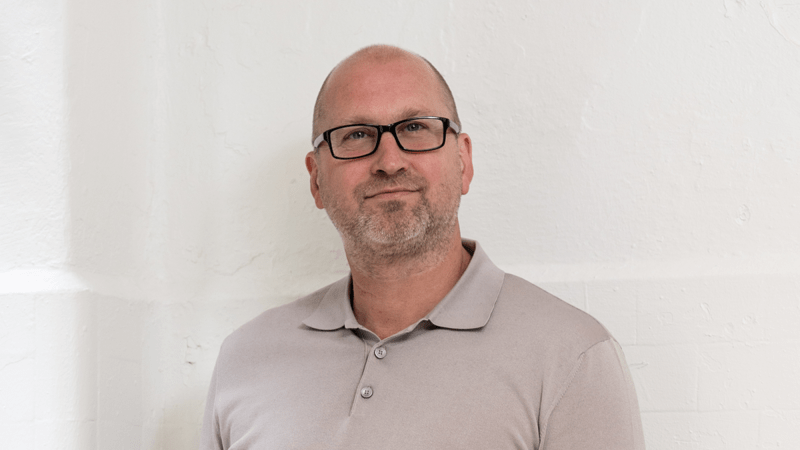
Marc Churchouse, founder and CEO, Mercator Digital
Opinions expressed by Entrepreneur contributors are their own.
You're reading Entrepreneur United Kingdom, an international franchise of Entrepreneur Media.
In an industry often dominated by big-name players and billion-pound investments, London based Mercator Digital stands out – not just for its exponential growth, but for the way it got there. “When we started Mercator in 2006, it was a modest recruitment business,” says Marc Churchouse, founder and CEO. “But today, it’s an award-winning, global digital consultancy truly impacting our clients, the public and employees.”
This year, Mercator was named one of the UK’s Best Workplaces 2025 by Great Place To Work, ranking 3rd in the medium company category and also earning accolades for wellbeing and supporting women. It’s the third time in five years the company has appeared on the list – an achievement Churchouse doesn’t take lightly. “From a very young age, I remember always wanting to work for myself and earn my own money,” he recalls. “After college, I launched a video game company supplying arcade machines to pubs and clubs, which I grew and successfully sold by the age of 27. That entrepreneurialness naturally led me into the tech sector, where I saw even greater opportunity.”
That drive laid the foundations for Mercator, which Churchouse co-founded with Marcus Clemens without a penny of outside funding. “We have never had investment other than our own,” he says. “Marcus and I didn’t need to draw a salary from the business for the first six months as we had our own savings.” Instead, they used factoring services to manage early cash flow. “By being careful as we grew and never over-extending ourselves, we were able to scale the business without the need for external funding. This has also allowed us the flexibility to remain in charge of our business decisions which keeps us truly agile.”
That agility was tested – successfully – during the pandemic. “Like so many companies, the COVID-19 pandemic presented unique challenges… However, rather than slow down, we found opportunity in the disruption,” Churchouse explains. “With the UK government facing remote working, furlough, and Brexit challenges, and Mercator already experienced in delivering large-scale digital transformation remotely, we were actually well positioned to support public sector bodies adapting to new ways of working. It was a ‘perfect storm’ and one we were ready for.” Between 2020 and 2022, Mercator doubled its workforce from 100 to over 200. “I think the key was in our flexibility and readiness to jump at new opportunities,” he says.
Today, the company turns over nearly £50m and holds a strong foothold in the public sector – success Churchouse attributes to both strategic thinking and a strong internal culture. A major milestone came when Mercator secured a 29% share of a £300m deal with Atos to transform Central Government digital services. “That one win saw annual revenue surge from £17m in 2020 to £34m in 2021, reaching £39m in 2022, and culminating in £48m for the 15-month period ending March 2024,” says Churchouse. “It was the kind of opportunity that doesn’t just land in your lap; you need the right team, culture and mindset in place to both attract and deliver on deals like that, which we had.”
Crucially, Churchouse believes that culture and success are inseparable. “Focus on your people first,” he advises. “It seems like simple advice, but so many don’t grasp the importance of prioritising your team and how that directly impacts revenue.” At Mercator, that starts with recruitment. “We keep recruitment in-house – which is unlike most other consultancies. That way, we can make sure every new hire is a cultural fit, and it’s paid off – we see high retention and a real sense of team ownership.”
Wellbeing is also baked into the business. “For me, it’s not just a nice-to-have, it’s core to performance. From our Employee Assistance Programme to monthly check-ins and our team ‘houses’ that even raise money for charity, it all helps keep people engaged and motivated and feel a part of something.” It’s a long way from the start-up bootstraps of 2006, but one thing hasn’t changed – Mercator’s attitude toward failure. “I think failure is a natural part of innovation,” says Churchouse. “At Mercator, we encourage our teams to experiment and take risks, even if a project might not succeed – in fact, we expect that some ideas won’t work out.” “What’s important is that the environment you create is one where people aren’t scared to fail. What matters is that we ‘fail fast, learn quick’ and use that learning to improve.”
And for those looking to emulate his path and scale up to that elusive £5m milestone? “Yes, chase the opportunities,” he says, “but don’t forget to build the team that can deliver when they come.”
In an industry often dominated by big-name players and billion-pound investments, London based Mercator Digital stands out – not just for its exponential growth, but for the way it got there. “When we started Mercator in 2006, it was a modest recruitment business,” says Marc Churchouse, founder and CEO. “But today, it’s an award-winning, global digital consultancy truly impacting our clients, the public and employees.”
This year, Mercator was named one of the UK’s Best Workplaces 2025 by Great Place To Work, ranking 3rd in the medium company category and also earning accolades for wellbeing and supporting women. It’s the third time in five years the company has appeared on the list – an achievement Churchouse doesn’t take lightly. “From a very young age, I remember always wanting to work for myself and earn my own money,” he recalls. “After college, I launched a video game company supplying arcade machines to pubs and clubs, which I grew and successfully sold by the age of 27. That entrepreneurialness naturally led me into the tech sector, where I saw even greater opportunity.”
That drive laid the foundations for Mercator, which Churchouse co-founded with Marcus Clemens without a penny of outside funding. “We have never had investment other than our own,” he says. “Marcus and I didn’t need to draw a salary from the business for the first six months as we had our own savings.” Instead, they used factoring services to manage early cash flow. “By being careful as we grew and never over-extending ourselves, we were able to scale the business without the need for external funding. This has also allowed us the flexibility to remain in charge of our business decisions which keeps us truly agile.”

Patricia Cullen • Features Writer
Entrepreneur Staff